Top 10 Engine Thermostat Manufacturers and Brands for Aftermarket Buyers
Views: 0 Author: Site Editor Publish Time: 2026-04-24 Origin: Site
Choosing the right engine thermostat brand starts with the application—not the name on the box. Before comparing suppliers, buyers should establish the required part number, product configuration, and technical specifications.
This guide compares ten engine thermostat manufacturers and aftermarket brands, highlighting their published product ranges and the checks that matter when selecting replacement parts. It is a practical purchasing reference, not an official global sales ranking or an independently tested durability ranking.
Start with the brand comparison below, then use the selection guide to narrow down suitable options. For product browsing, explore our engine coolant thermostat range and identify the references relevant to your vehicle and engine applications.
Brand/Company
Main Strength
Suitable Buyer Type
Best-Fit Market or Application
Product Focus
Gates
Strong aftermarket recognition and OE-equivalent positioning
Importers, distributors, broad aftermarket buyers
North America, global aftermarket, mixed vehicle coverage
OE-equivalent engine thermostats, cooling system replacement parts
MAHLE / MAHLE Original
Thermal management reputation and OE-style aftermarket positioning
European vehicle parts distributors, premium aftermarket buyers
European passenger cars, OE-style replacement market
Engine thermostats, thermal management components
MotoRad / Stant
Specialist thermostat and thermal management supplier
Professional aftermarket distributors, thermostat-focused buyers
Japanese thermostat specialization and part-number-based sourcing
Buyers focused on Japanese applications and precise OE matching
Japanese and Asian vehicle applications
Automotive thermostats, thermo-sensors, temperature control parts
This comparison describes product scope rather than ranking manufacturing quality. Manufacturer, brand owner, and distributor are different roles, although a company may perform more than one. Buyers should confirm who supplies the order, who controls the product specification, and who handles quality claims.
A published product range also does not establish direct wholesale access, private-label availability, or authorization for another supplier to sell that brand.
What Is an Engine Thermostat?
An engine thermostat is a temperature-controlled valve installed in the cooling circuit. Its main function is to manage when coolant circulates between the engine and the radiator. When the engine is cold, the thermostat remains closed to help the engine warm up faster. Once the coolant reaches the designed opening temperature, the thermostat opens and allows coolant to flow through the radiator for heat dissipation.
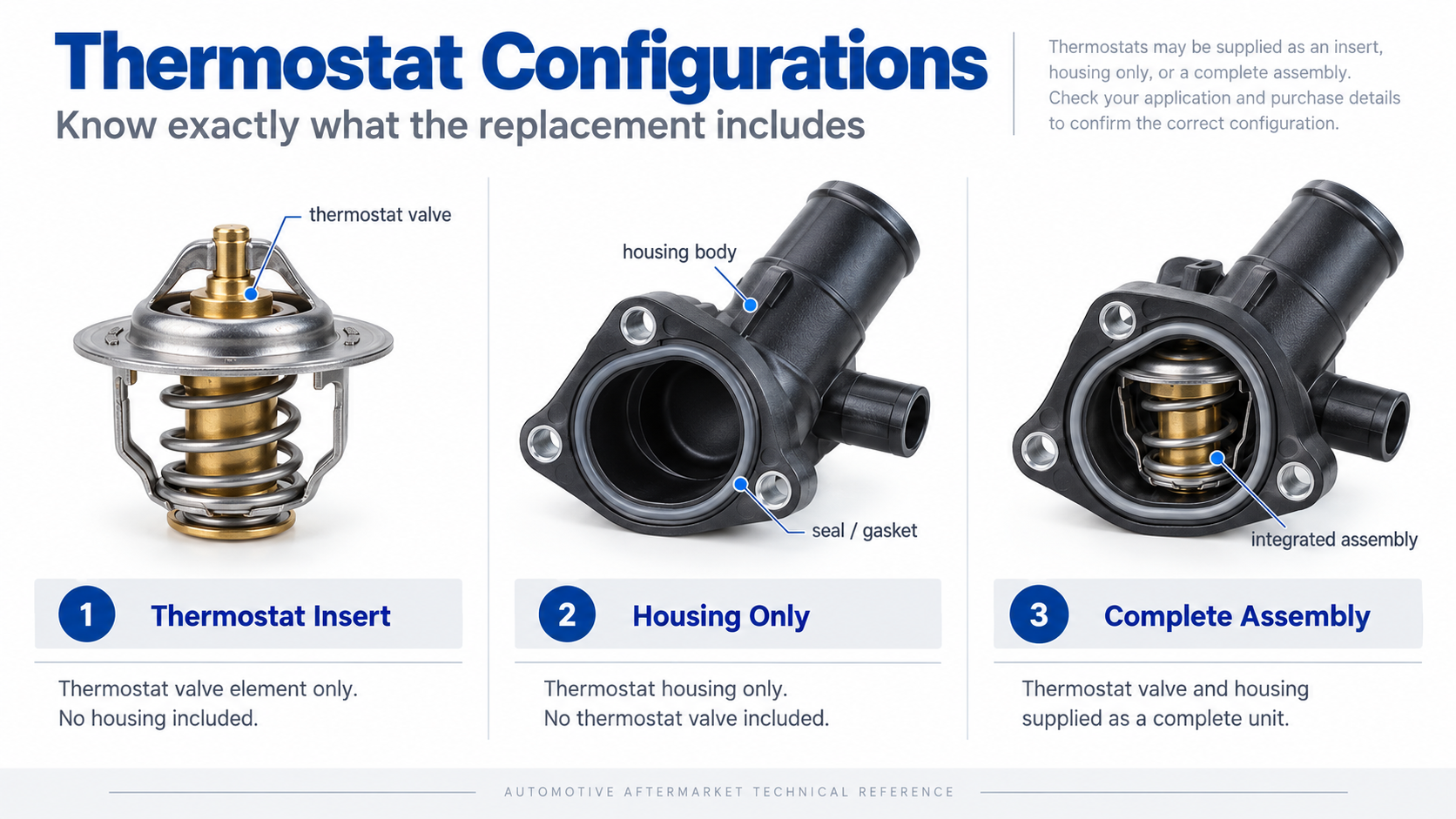
Common aftermarket thermostat products include wax-type thermostat inserts, engine coolant thermostats with housing, complete thermostat housing assemblies, and electronically controlled or map-controlled thermostats. Although these parts may look similar, they can differ in opening temperature, housing design, gasket structure, sensor integration, and installation position.
For accurate replacement, the thermostat should be identified by OE number, vehicle application, engine code, temperature rating, and product structure rather than appearance alone. This is especially important when the same vehicle brand uses different thermostat designs across engines, years, or regional models.
Engine thermostats are important aftermarket replacement parts because they directly affect temperature control, engine warm-up, fuel efficiency, heater performance, and cooling system reliability. When a thermostat fails, the engine may run too hot, warm up too slowly, or operate below the ideal temperature range. These problems can lead to higher fuel consumption, poor cold-weather usability, unstable cabin heating, or increased stress on other cooling system components. For diagnosis, compare the patterns in thermostat stuck open vs stuck closed.
For importers, distributors, and wholesalers, engine thermostats are a practical product category because they cover a wide range of passenger cars, light commercial vehicles, heavy-duty trucks, and industrial engine applications. Many thermostat orders are driven by OE number replacement demand, vehicle application matching, and regional repair market needs. This makes accurate cross-reference support especially important for aftermarket buyers who manage multiple vehicle brands and engine types.
Another reason thermostats matter in the aftermarket is their connection with other cooling system parts. Buyers often source engine coolant thermostats together with water pumps, radiator hoses, coolant temperature sensors, thermostat housings, radiators, and expansion tanks. For distributors, adding thermostats to a broader cooling system product line can help improve category coverage and support repeat purchasing from repair channels and wholesale customers.
However, thermostat sourcing also requires careful confirmation. Similar-looking thermostats may have different opening temperatures, housing structures, gasket designs, or sensor connections. For bulk orders, importers should confirm OE number, engine code, vehicle model, production year, temperature rating, and product structure before placing an order. This helps reduce wrong-part risk and improves the reliability of aftermarket replacement supply.
How We Selected These Engine Thermostat Manufacturers and Brands
The engine thermostat market includes different types of companies, such as original equipment suppliers, aftermarket brands, specialist thermostat manufacturers, thermal management companies, and replacement parts suppliers. For this guide, we selected brands based on their relevance to aftermarket buyers rather than ranking them only by company size or global sales volume.
The selected engine thermostat manufacturers and brands generally meet several criteria: recognized presence in automotive thermal management, available thermostat or thermostat-related product lines, OE or OE-equivalent replacement positioning, international aftermarket visibility, and relevance to importers, distributors, wholesalers, and private label buyers.
It is also important to understand that not every brand in this list plays the same role. Some companies are known for thermal management systems and OE/OES supply, some are specialist thermostat manufacturers, while others are aftermarket replacement brands with strong catalog coverage. For buyers, the key question is not simply which brand is the most famous, but which supplier can provide the right thermostat type, accurate OE cross-reference support, stable bulk supply, and suitable product coverage for their target market.
The following list is arranged for editorial readability and buyer reference. It should not be understood as an official global sales ranking. Instead, it provides a practical overview of well-known engine thermostat brands that aftermarket buyers may encounter when comparing products, building a cooling system category, or sourcing OE-grade replacement thermostats.
Selection Criteria
We considered the following factors when preparing this list:
Thermostat product range
OE-equivalent positioning
Aftermarket visibility
Vehicle application coverage
Buyer relevance
Bulk sourcing value
Top 10 Engine Thermostat Manufacturers and Brands
The following engine thermostat manufacturers and brands are widely recognized in the automotive aftermarket, thermal management, or replacement parts industry. Each brand has a different market position: some are known for OE or OES supply, some focus on aftermarket replacement coverage, and some specialize in thermostat-related thermal management products. For importers, distributors, and wholesalers, understanding these differences can help when comparing product lines, sourcing replacement thermostats, or building a broader cooling system category.
Gates offers OE Type thermostats and states that it works with OE thermostat manufacturers. Its published information covers conventional replacement features and map-controlled options, while its product tables distinguish details such as temperature, flange dimensions, and venting features.
For distributors evaluating Gates references, the useful starting point is the specific catalog listing rather than the brand’s wider reputation. Confirm application coverage, assembly contents, and the required operating specification. Do not assume that a shared brand name establishes the same construction or manufacturing source across every reference.
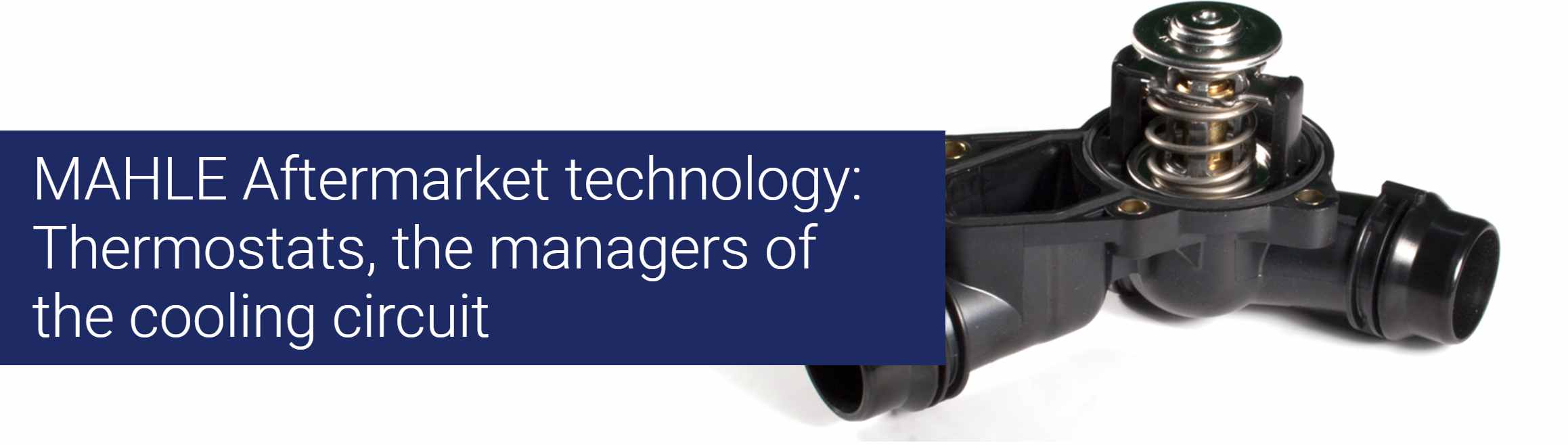
MAHLE’s thermostat portfolio includes inserts, integral thermostats, housing thermostats, map-controlled products, and sleeve-valve designs. Its technical information distinguishes these configurations rather than treating thermostats as one uniform product category.
Buyers comparing MAHLE references should first identify the required product type, then verify the application and package contents. For a distributor managing several engine families, use the catalog to build a reference-by-reference shortlist. Product-range breadth should not replace confirmation that the exact thermostat configuration required by the customer is available.
MotoRad develops and manufactures thermal-management products, including several thermostat product lines. Its portfolio covers conventional thermostats and integrated-housing configurations, giving buyers different product categories to evaluate rather than one interchangeable thermostat design.
Before ordering, identify the exact product line, application reference, and included components. Avoid extending a feature associated with one range to every MotoRad thermostat. Buyers considering both brands can use our MotoRad vs Gates thermostat comparison to organize a part-specific comparison rather than selecting a brand-wide winner.
Calorstat by Vernet is a recognized European thermal management brand with thermostat products for automotive, truck, marine, and other mobility applications. Its product range includes standard thermostats, map thermostats, and motorized thermostats, while Vernet Group describes Calorstat products as designed and manufactured according to strict quality criteria.
For aftermarket buyers, Calorstat by Vernet is especially relevant when sourcing European vehicle thermostat references or building a cooling system product line for passenger cars and commercial vehicles. The brand’s focus on thermostat diversity also makes it useful for understanding how modern thermostat categories extend beyond simple mechanical valves.
AISIN includes coolant thermostats in its aftermarket cooling product range. Its thermostat information emphasizes coolant-flow regulation and replacement fit, form, and function, with access to application-search resources.
For an AISIN shortlist, begin with confirmed vehicle and engine information, then check the exact part number and supplied configuration. Ask whether the offer includes the required seals, housing, or other installation components. Avoid assuming that the brand name alone establishes coverage for a particular vehicle or that every replacement is supplied as a complete assembly.
Dayco’s published thermostat range distinguishes standard products from complete thermostat configurations. Its product information also directs buyers to application catalogs, making reference identification an important part of evaluating the range.
For distributors reviewing Dayco products, confirm the required reference through the relevant regional catalog and sales channel. Compare the actual housing configuration, temperature specification, and package contents before assessing the quotation. Treat general product-range information as an introduction; the purchase record should identify the specific item approved for the intended application.
FACET’s thermostat range includes conventional and bypass-valve designs, products integrated into plastic or aluminum bodies, and map-controlled thermostats. Its documentation also describes housings with cooling-system connections and temperature-related components.
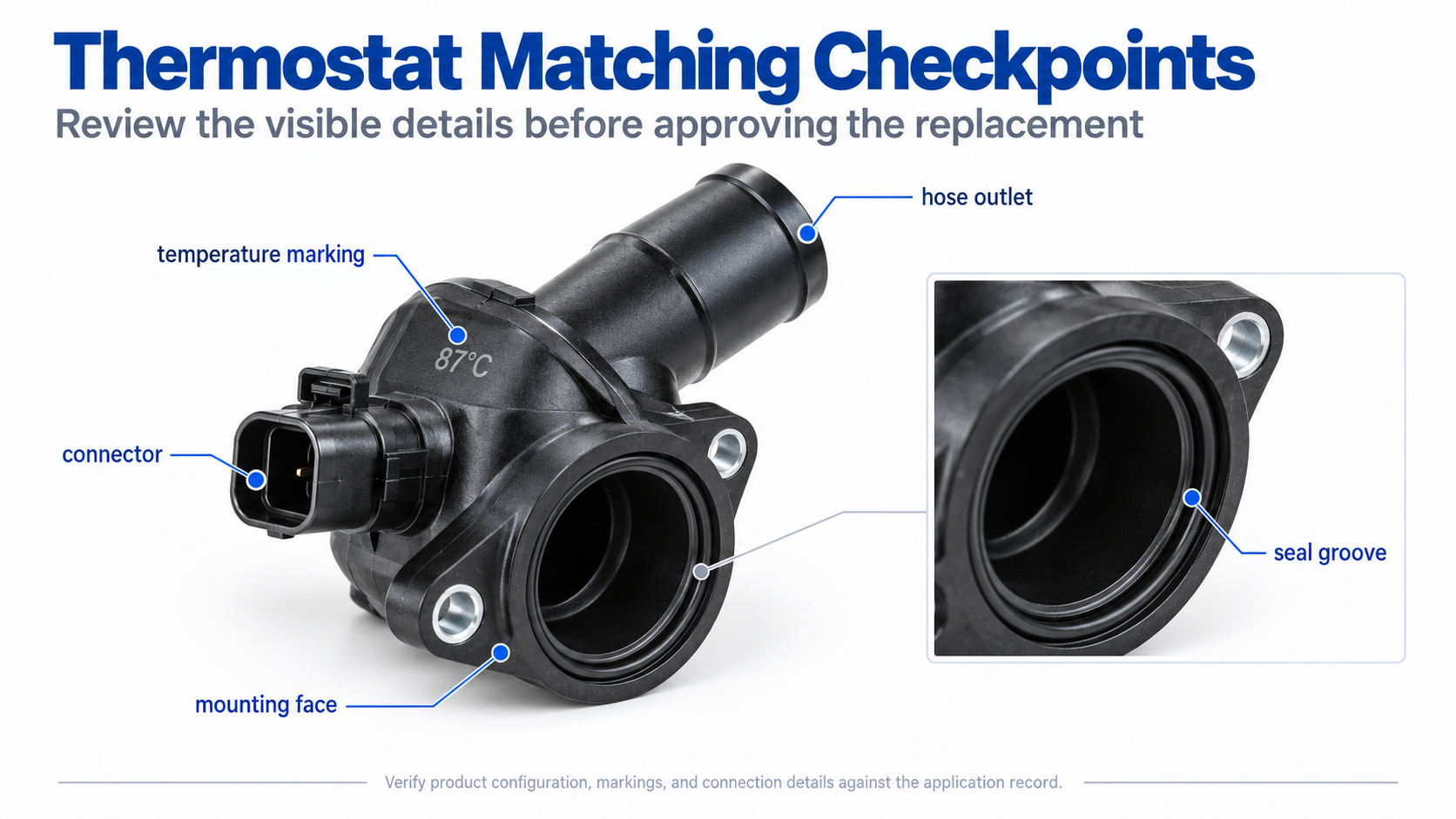
For buyers evaluating integrated assemblies, use that information to prepare a detailed configuration check. Confirm the mounting arrangement, hose connections, bypass features, and electrical functions where fitted. Request drawings or additional photographs when catalog images leave these details uncertain. A similar external shape should not be used as the final basis for approving a replacement.
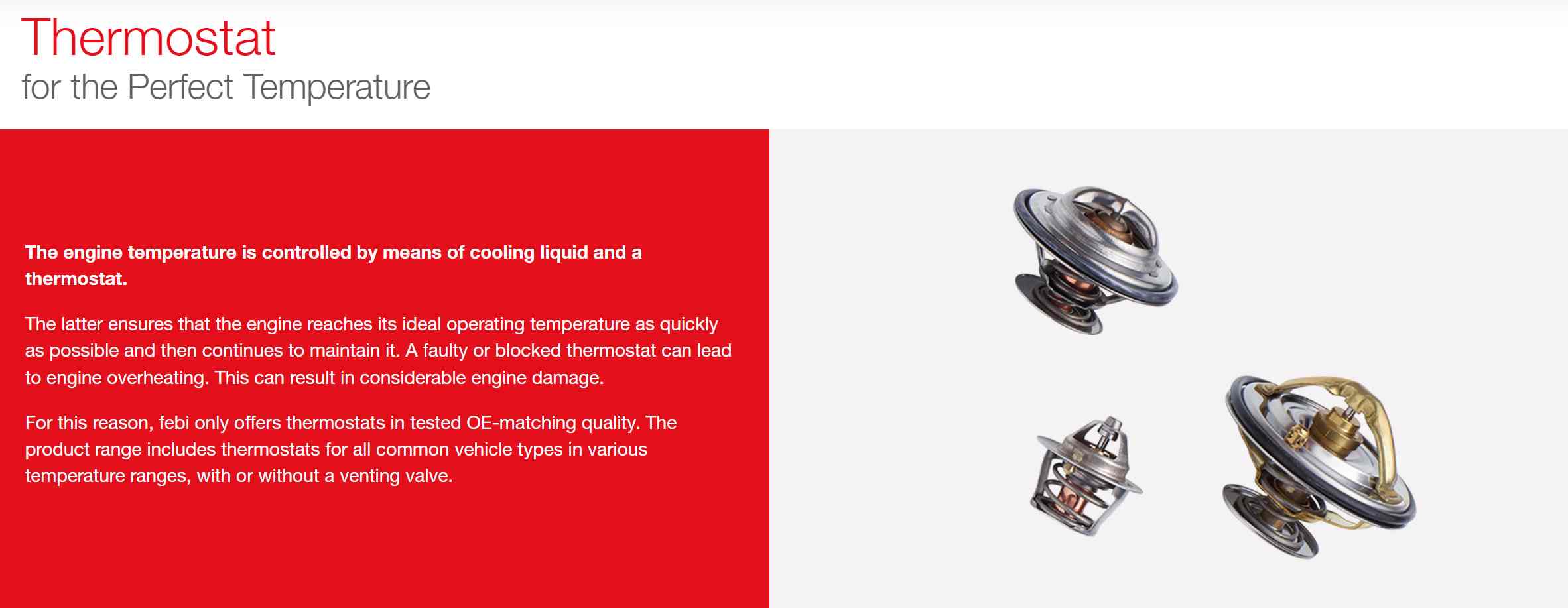
febi bilstein offers thermostats within its engine thermal-management range. Its published product information identifies different temperature ranges and versions with or without a venting valve, alongside other engine-cooling components.
For a distributor considering multiple febi references, use an application-level list rather than a general vehicle-brand description. Confirm the temperature rating, venting configuration, supplied seals, and any relevant catalog restrictions. Compare the thermostat and associated components individually; ordering several cooling products under one brand should not replace checking the requirements of each reference.
Dorman offers thermostat housings and complete housing assemblies. Its catalog includes products without a thermostat as well as assemblies containing a thermostat and gasket. Selected OE FIX references also use application-specific aluminum replacement housings.
For repair-channel buyers, the first comparison should be the complete contents of the proposed replacement. Confirm what is included and what must be purchased separately. Evaluate any material or design change against the listed application rather than assuming that a metal housing is automatically a suitable replacement for every plastic design.
Nippon Thermostat specializes in temperature-control products for automotive and other engine applications. Its published business information describes uses beyond passenger cars, making it relevant when researching specialist thermostat manufacturing rather than only aftermarket brand portfolios.
Buyers should distinguish Nippon Thermostat from TAMA Enterprises. Nippon Thermostat lists TAMA among its customers, while TAMA maintains its own thermostat search resources. Confirm the product identity, catalog reference, and purchasing channel separately instead of treating the two company names as interchangeable.
Which Thermostat Brand Fits Which Buyer?
Different engine thermostat manufacturers and brands serve different aftermarket needs. Some brands focus on OE-equivalent thermostats, some are stronger in European thermal management, while others are more relevant for thermostat housing assemblies, Japanese vehicle applications, or broad cooling system category coverage. For importers, distributors, and wholesalers, this comparison can help identify which type of thermostat brand is most relevant to their target market.
Manufacturer vs Brand vs Supplier: What Buyers Should Know
When comparing engine thermostat manufacturers, buyers should understand the difference between a true manufacturer, an aftermarket brand, and a supply partner. These roles are often connected, but they are not always the same. A well-known brand may have strong catalog coverage and market recognition, while a specialist manufacturer may focus more on production, technical development, and product consistency. A supply partner, on the other hand, helps buyers match OE numbers, confirm applications, organize multiple product references, and manage bulk sourcing requirements.
For importers, distributors, and wholesalers, choosing the right engine thermostat supplier is not only about selecting a famous brand. In many aftermarket projects, buyers need flexible sourcing, accurate OE cross-reference support, private label packaging, and stable supply across multiple vehicle applications. This is especially important when building a cooling system product line that includes engine coolant thermostats, thermostat housing assemblies, radiators, water pumps, coolant temperature sensors, and related replacement parts.
A global brand can be useful as a market reference, but a reliable aftermarket supply partner can help buyers turn product demand into a workable purchasing plan. The right partner should understand OE replacement logic, vehicle application differences, temperature ratings, packaging requirements, and the commercial needs of wholesale buyers.
Where ElecduraFits as an Aftermarket Supply Partner
Elecdura is positioned as a B2B aftermarket auto parts supply partner for importers, distributors, wholesalers, and private label buyers. Instead of positioning itself as a genuine OEM parts brand, Elecdura focuses on OE-grade aftermarket replacement parts, helping buyers source engine thermostats and related cooling system components according to OE numbers, vehicle applications, engine information, and market requirements.
One of Elecdura’s key advantages is supply chain integration. By working with a broad network of qualified Chinese auto parts factories, Elecdura can support buyers who need more than a single thermostat item. This is valuable for distributors who want to expand a cooling system category or source multiple replacement parts together, such as engine coolant thermostats, radiators, AC condensers, cooling fans, fan clutches, water pumps, sensors, and other aftermarket components.
For B2B buyers, Elecdura also supports OE cross-reference checking, application confirmation, bulk order supply, private label packaging, customized labels, and long-term product development support. This makes Elecdura especially suitable for buyers who need flexible sourcing, multiple SKU matching, and stable aftermarket replacement supply rather than only purchasing products from one global brand catalog.
OE-grade aftermarket replacement focus Not genuine OEM parts, but replacement solutions developed for aftermarket distribution.
OE number and application matching Support for OE cross-reference checking, vehicle application confirmation, and product structure comparison.
Broad cooling system coverage Support for engine thermostats, radiators, AC condensers, cooling fans, fan clutches, water pumps, sensors, and related parts.
Bulk order and wholesale supply Suitable for importers, distributors, wholesalers, and brand owners managing multiple SKUs.
China factory resource integration Access to multiple qualified factory resources for flexible sourcing and category expansion.
How to Choose the Right Engine Thermostat Brand
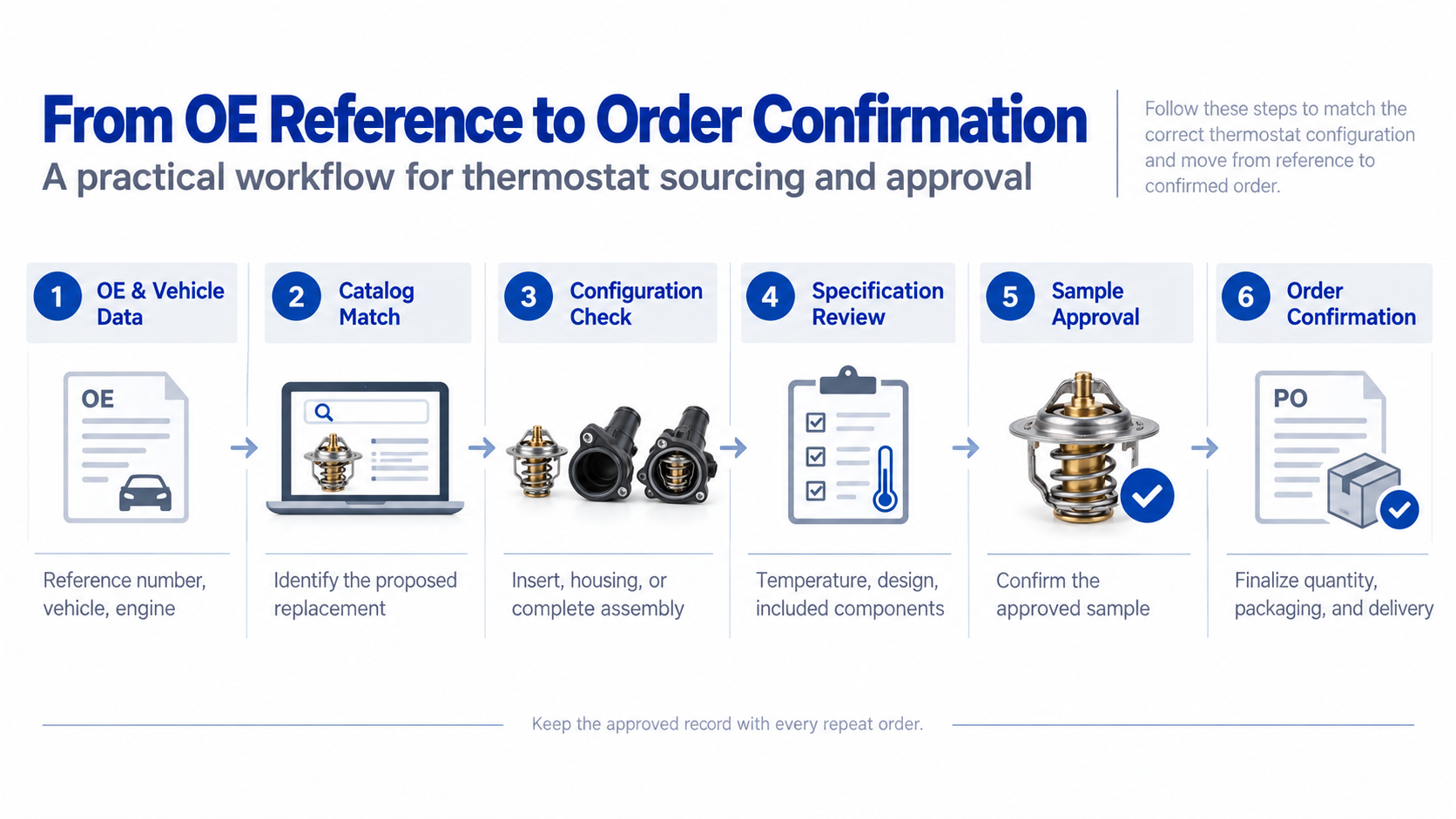
A brand comparison becomes useful only after the replacement requirements are clear. Use the following steps to separate application matching, product evaluation, and commercial selection. This approach helps you compare equivalent offers instead of treating every thermostat quotation as the same product.
1. Start With Fitment, Not Brand Name
Begin with the OE reference, vehicle model, production year, and engine code. Include the VIN and destination-market specification where available. Use this information to identify candidate replacements before comparing brands or prices.
For each proposed reference, request an application record showing the original number, replacement number, product configuration, and any unresolved fitment questions. Keep uncertain matches separate from approved items.
2. Confirm Whether You Need an Insert, Housing, or Complete Assembly
A thermostat insert, an empty housing, and a complete housing assembly are not the same purchase. Catalog descriptions should be checked against the actual package contents.
Dorman, for example, lists housing products without an included thermostat as well as assemblies supplied with a thermostat and gasket. MotoRad also identifies integrated-housing products in which the thermostat is not serviceable separately.
Ask the supplier to confirm the thermostat, housing, seals, sensors, and hardware included in each quotation. Where sealing details are unclear, review our thermostat seal orientation guide before approving the configuration.
3. Verify Temperature Rating and Control Design
Match the replacement to the documented temperature requirement rather than choosing a rating by preference. Do not select a lower-temperature thermostat solely because the destination market has a warm climate.
Also identify the operating design. A map-controlled thermostat can contain an electrical heater in its wax operating element, with heating controlled by the engine control unit. The electrical connection should therefore not automatically be treated as a coolant-temperature sensor connection.
Ask for confirmation of the required temperature specification, control function, connector configuration, and any applicable bypass features before approving a substitute.
4. Compare Catalog Support and Cross-Reference Quality
Ask each supplier to show how the proposed replacement was identified. A useful matching record should connect the OE reference with the vehicle application, replacement part number, configuration, and relevant catalog notes.
Catalog functions differ. TAMA, for example, supports thermostat searches using genuine part numbers, its own part numbers, vehicle information, and engine models.
For distributors handling multiple references, request a matching spreadsheet rather than relying on scattered messages. Record any exclusions or unresolved questions so that the same uncertainty does not return with the next order.
5. Evaluate Product Evidence and Repeat-Order Consistency
For a new sourcing program, request evidence for the actual reference being quoted—not only a general statement about factory quality.
Agree which characteristics need verification, such as dimensions, thermal operation, assembly leakage, and electrical function where applicable. Define the acceptance criteria and sampling arrangements before reviewing the results.
Keep the approved specification, sample identity, and packaging record together. Ask how material, component, or design changes will be communicated before repeat production.
6. Choose Around Your Market and Order Plan
After technical matching, compare the commercial offers against your actual sales requirements. A mixed-reference distributor, a specialist repair supplier, and a private-label buyer may need different packaging, replenishment, and documentation arrangements.
Request quantities and availability by reference, not only a general promise of supply. Clarify lead times, minimum order quantities, labeling requirements, and the process for handling shortages or substitutions.
Review warranty terms in writing, including the evidence required and the remedy offered. Compare equivalent product configurations and service commitments rather than choosing solely by the lowest initial unit price.
Common Issue
Buying Risk
What Buyers Should Confirm
Matching by appearance only
Wrong part supplied
OE number, engine code, product structure
Ignoring opening temperature
Poor temperature control
Temperature rating and OE specification
Confusing insert and assembly
Structure mismatch
Insert, housing, sensor, gasket, connector
Incomplete application data
Catalog or fitment error
Make, model, year, engine, market region
Overlooking related parts
Missed category expansion
Thermostat housing, water pump, sensors, radiator
Choosing price only
Warranty and repeat-order risk
Quality control, supply stability, packaging support
Thermostat Purchasing Checklist for Importers and Distributors
Before requesting a quotation, prepare a requirement sheet for each thermostat reference. Separate confirmed information from details that still require checking.
Ask the supplier to return the sheet with the proposed replacement, included components, and unresolved questions. This creates a consistent record for sample approval, order confirmation, and repeat purchasing.
Information to Prepare
What to Confirm
OE reference
Complete number, including relevant suffixes and known replacement references.
Vehicle and engine details
Make, model, production year, engine code, and VIN where available.
Required configuration
Thermostat insert, housing only, or complete assembly.
Technical specification
Required temperature rating and control design, supported by application documentation.
Reference photographs
Mounting face, hose ports, connectors, identifying marks, and included components
Package contents
Thermostat, housing, seals, sensors, and hardware included or excluded.
Quantity by reference
Initial order quantity and expected replenishment needs for each item.
Market and packaging
Destination, labels, barcodes, neutral packaging, or private-label requirements.
Acceptance arrangements
Sample approval, inspection requirements, change notification, and claim process.
Do not leave an unresolved technical difference hidden inside a general “equivalent replacement” description. Confirm the difference before approving the order.
How Elecdura Supports Thermostat Buyers
Elecdura helps importers, distributors, wholesalers, and private label buyers source OE-grade aftermarket engine thermostats and related cooling system parts. Buyers can send OE numbers, product photos, vehicle applications, or sample information for cross-reference checking and product confirmation.
For buyers managing multiple replacement parts, Elecdura can also support category expansion across engine thermostats, radiator parts, AC condensers, cooling fans, fan clutches, water pumps, sensors, and other aftermarket cooling system components. With bulk order support, customized packaging, private label options, and supply chain integration, Elecdura helps buyers build a more complete aftermarket product range for long-term distribution.
Who are the leading engine thermostat manufacturers and brands?
Some well-known engine thermostat manufacturers and brands include Gates, MAHLE / MAHLE Original, MotoRad / Stant, Calorstat by Vernet, AISIN, Dayco, FACET, febi bilstein, Dorman OE Solutions, Nippon Thermostat, and TAMA. These brands are commonly recognized in the aftermarket, thermal management, or replacement parts industry. However, buyers should understand that this is not an official global sales ranking. Different brands may be stronger in different markets, vehicle applications, or thermostat product types.
What is the difference between an engine thermostat and a thermostat housing assembly?
An engine thermostat is the temperature-controlled valve that regulates coolant flow between the engine and the radiator. A thermostat housing assembly usually includes the thermostat together with a housing, gasket, connector, sensor port, or additional cooling circuit structure. Some vehicles use a simple thermostat insert, while others require a complete thermostat housing assembly. For aftermarket replacement, buyers should confirm the OE number, product structure, engine code, and installation position before ordering.
Can aftermarket engine thermostats replace OEM thermostats?
Yes, OE-grade aftermarket engine thermostats can be used as replacement parts when they are correctly matched by OE number, vehicle application, engine code, opening temperature, and product structure. However, aftermarket thermostats should not be described as genuine OEM parts unless they are supplied through the original equipment channel. For importers and distributors, the key is to source reliable OE-grade replacement thermostats with accurate cross-reference support and consistent quality.
What information should buyers provide when sourcing engine thermostats?
To source the correct engine coolant thermostat, buyers should provide the OE number, vehicle make and model, production year, engine code, opening temperature, product photos, sample details, target quantity, and packaging requirements. If the thermostat includes a housing, connector, sensor, or gasket, buyers should also confirm the complete product structure. This information helps suppliers reduce wrong-part risk and provide more accurate quotations for bulk orders.
Why is OE number matching important for thermostat sourcing?
OE number matching is important because many engine thermostats look similar but are not interchangeable. Differences in opening temperature, housing angle, gasket design, sensor connection, and engine application can affect fitment and performance. For wholesale buyers, accurate OE cross-reference checking helps reduce wrong shipments, returns, catalog errors, and warranty pressure.
What types of engine thermostats are available in the aftermarket?
Common aftermarket thermostat types include wax-type thermostat inserts, engine coolant thermostats with housing, complete thermostat housing assemblies, electronically controlled thermostats, and map-controlled thermostats. The correct type depends on the vehicle application, engine design, opening temperature, housing structure, and whether the thermostat is integrated with sensors or connectors.
How do importers choose a reliable engine thermostat supplier?
Importers should evaluate suppliers based on OE cross-reference capability, application confirmation, product quality control, catalog accuracy, bulk supply stability, packaging options, and communication efficiency. A reliable engine thermostat supplier should help buyers confirm OE numbers, vehicle applications, engine codes, temperature ratings, and product structures before bulk ordering.
Do engine thermostat suppliers support private label packaging?
Many aftermarket thermostat suppliers can support private label packaging, customized labels, neutral packaging, barcode labels, and market-specific packaging requirements. For brand owners, distributors, and wholesalers, private label support can help improve product presentation, warehouse management, and brand recognition in regional aftermarket channels.
Are engine thermostats suitable for wholesale and bulk supply?
Yes. Engine thermostats are suitable for wholesale and bulk supply because they cover many vehicle applications and are often sourced by OE number, engine type, or product structure. For distributors, thermostats can also be combined with other cooling system parts, such as water pumps, radiator hoses, coolant temperature sensors, thermostat housings, radiators, AC condensers, cooling fans, and fan clutches.