You are here:Home » Resources » Blog » Industry Insights » Top 10 Automotive Radiator Suppliers in the USA for Passenger and Light Truck Aftermarket
Top 10 Automotive Radiator Suppliers in the USA for Passenger and Light Truck Aftermarket
Views: 0 Author: Elecdura Publish Time: 2026-09-01 Origin: Site
The United States radiator market includes large North American aftermarket manufacturers, global OE brands, import-brand channels, and domestic performance or custom fabricators. Ten useful sourcing candidates are Spectra Premium, CSF, DENSO, TYC Americas, Koyorad, APDI, OSC Automotive, Northern Radiator, U.S. Radiator, and Griffin Thermal Products. They do not serve the same buyer: catalogue brands suit broad passenger and light-truck replacement coverage, while U.S. Radiator and Griffin are stronger candidates for classic, performance, or custom cooling needs.
“USA supplier” describes market access, not necessarily country of manufacture. Ask where the quoted reference is produced, which company owns the brand, and who handles warranty in the destination. For a consolidated alternative covering common applications and private-label requirements, Elecdura's wholesale radiator program can support OE cross-reference, sample, packaging, and mixed-order discussions.
USA automotive radiator supplier comparison
Supplier
Role
Best fit
Primary check
Spectra Premium
North American aftermarket manufacturer and brand
Passenger, light-duty, heavy-duty, and classic coverage
Verify production origin and exact configuration
CSF
Cooling specialist brand with broad US catalogue
OE replacement and performance segments
Select the correct product tier
DENSO
Global OE manufacturer and US aftermarket brand
Premium application-specific replacements
Confirm current US availability
TYC Americas
Aftermarket manufacturer/brand and US channel
Catalogue-led import and domestic applications
Review origin and application qualifiers
Koyorad
Japanese cooling brand with US organization
Asian and broader replacement coverage
Confirm Koyorad service number and channel
APDI
Aftermarket cooling brand/distribution program
Broad interchange-led replacement demand
Lock the exact brand and supplied configuration
OSC Automotive
North American aftermarket cooling brand
Value-oriented passenger and light-truck lines
Validate sample, catalogue notes, and warranty
Northern Radiator
US cooling supplier and manufacturer
Automotive, commercial, agriculture, and custom needs
Separate stocked replacements from custom builds
U.S. Radiator
US custom aftermarket radiator manufacturer
Classic, restoration, and application-specific cooling
Define core, tanks, mounting, and duty
Griffin Thermal Products
US performance/custom manufacturer
Performance cars, trucks, and custom packages
Provide complete thermal and packaging brief
1. Spectra Premium
Spectra Premium presents itself as a major North American aftermarket radiator manufacturer and supplies passenger-car, light-duty, heavy-duty, and classic-vehicle cooling products to the US market. Its attraction is scale: distributors can source radiators alongside condensers, heater cores, cooling-fan assemblies, and other categories through an established catalogue and channel.
Confirm the production location and specification for each reference instead of applying a brand-level assumption to the full range. Request the current Spectra number, vehicle qualifiers, transmission-oil-cooler and engine-oil-cooler provisions, core dimensions, port details, country of origin, warranty route, and packaging. Where the same application has superseded parts, establish which stock version will ship.
2. CSF
CSF is a dedicated cooling-products specialist with extensive radiator fitment in the United States. It offers different construction types and serves both normal replacement and higher-performance demand. This makes CSF relevant to distributors who want a recognizable cooling brand and the ability to position OE-style and upgraded products separately.
Do not compare a CSF performance aluminium radiator with a standard plastic-aluminium replacement solely by price. Record the product line, core construction, row count, tank material, cooler provisions, pressure-cap arrangement, fan or shroud compatibility, and intended use. Ask whether the selected reference is stocked domestically and who supports warranty for export sales.
3. DENSO
DENSO is a global OE thermal supplier with a US aftermarket radiator program. It is a strong premium candidate for applications where workshops value original-equipment engineering, precise configuration, and a well-known brand. DENSO's wider engine-cooling range also helps buyers match related fan and climate components.
Availability is application and market specific. Confirm the current US service number and do not assume every OE DENSO radiator is sold independently. Review automatic versus manual transmission, tow package, engine, model-year break, cooler ports, filler neck, sensor provisions, and included hardware. Buy through a documented channel because counterfeit or relabeled stock can undermine both fitment and claims.
4. TYC Americas
TYC Americas provides a broad catalogue for US passenger and light-truck applications. Its product pages can expose useful attributes such as core dimensions, oil-cooler type, port sizes, application qualifiers, interchange numbers, origin, and lifecycle status. That data depth supports distributors handling domestic and imported vehicle populations.
Use the complete qualifier set, not only the interchange number. Check engine, trim, drivetrain, transmission, production date, primary or auxiliary position, and cooler connections. Record the country of origin shown for the current part because it may vary across the range. Verify that the physical sample matches the catalogue's actual configuration and not merely its cross-reference family.
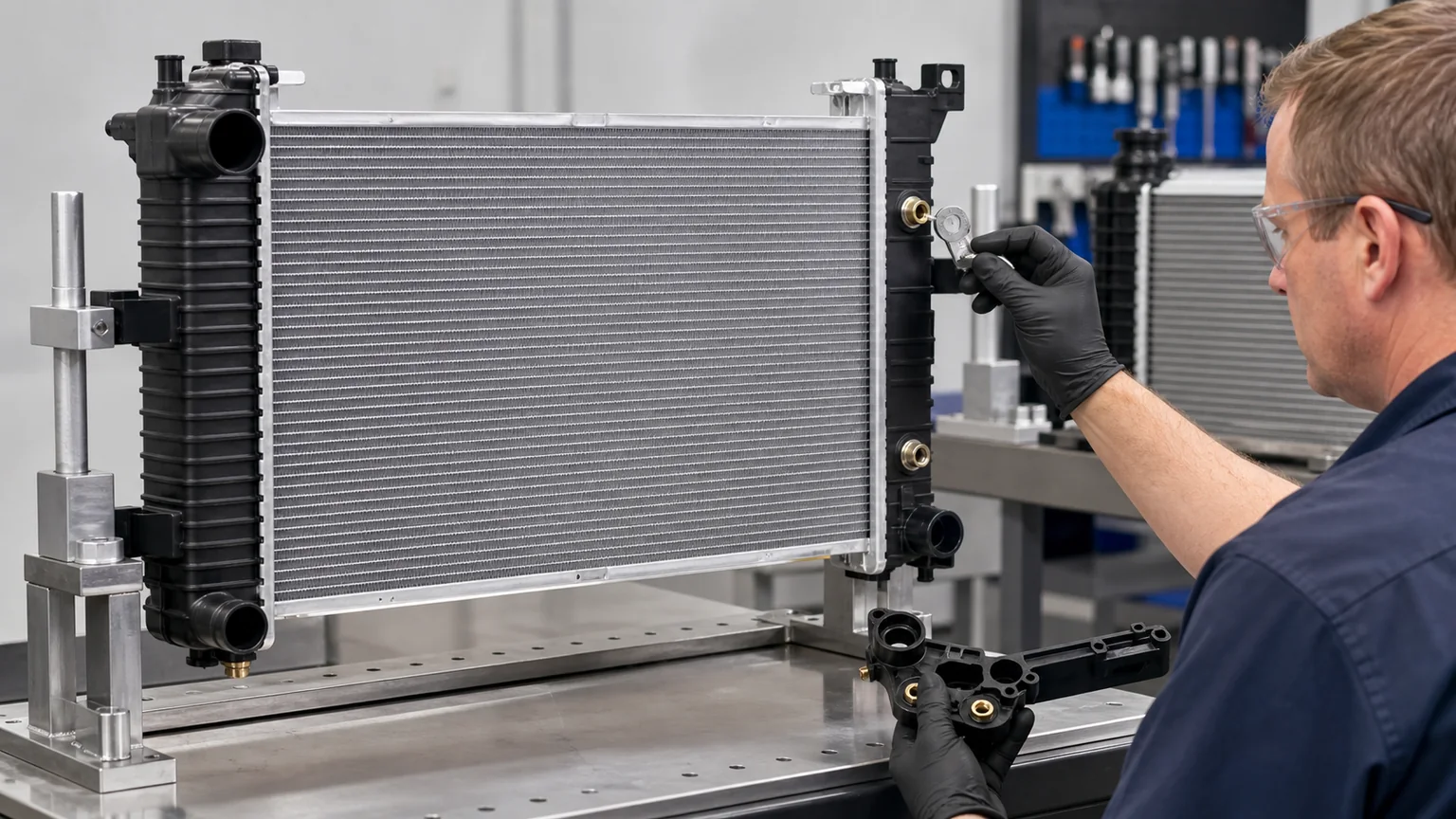
Core size, tank shape, hose necks, mounting points, cooler ports, drain, and sensor provisions control fitment.
5. Koyorad
Koyorad Cooling Systems has a US organization and supplies automotive radiators and related cooling products. The brand is particularly familiar in Asian-vehicle cooling and also participates in performance applications. It can suit distributors seeking a Japanese cooling identity with North American market support.
Confirm the service number, exact range, and authorized supply route. A “Koyo” description in a marketplace listing is not sufficient evidence that the unit belongs to Koyorad's current aftermarket program. Request label and carton photographs, origin, cooler specification, application data, batch trace, and warranty owner. Keep standard replacement and performance lines distinct in the catalogue.
6. APDI
APDI radiator numbers appear widely in North American interchange data and distribution. It is a practical catalogue-led option for wholesalers that need broad coverage and familiar crosses. The commercial value is availability across many applications rather than a claim that every line shares one manufacturing origin.
Ask the seller to identify the exact APDI brand and part, current source, included coolers, origin, warranty, and lifecycle status. Avoid purchase orders that permit an unapproved “APDI equivalent” without naming the substitute. If multiple brands use the same interchange, inspect samples because fin density, tank reinforcement, fittings, and carton protection can still differ.
7. OSC Automotive
OSC Automotive is a North American aftermarket cooling brand serving passenger-car and light-truck replacement demand. It can provide a value-oriented alternative when a distributor needs broad application coverage, common interchange data, and US-market support rather than a custom engineering program.
Review a representative sample from each construction family before scaling the line. Confirm core dimensions, tube and fin geometry, tank molding, crimp consistency, transmission and engine-oil coolers, port threads, brackets, drain, cap neck, and included fittings. Ask OSC or its distributor for the current catalogue feed, country of origin, batch trace, stock location, supersession policy, and warranty evidence required from installers.
8. Northern Radiator
Northern Radiator serves several cooling segments, including automotive, commercial, agricultural, construction, and custom requirements. Its breadth is useful to distributors whose light-truck customers overlap with pickups, work vehicles, specialty conversions, and equipment. A US technical and warehouse relationship can also help with unusual radiator dimensions or duty cycles.
Separate a stocked OE-style replacement from a custom or universal radiator in the RFQ. For a direct-fit part, supply the vehicle, engine, transmission, towing or cooling package, OE number, and original photographs. For a custom build, provide heat load, coolant flow, allowable pressure drop, airflow, envelope, mounting, hose positions, cap or expansion arrangement, materials, and cooler loads. Commercial terms, development time, and validation responsibility differ substantially between the two routes.
9. U.S. Radiator
U.S. Radiator is a domestic custom aftermarket manufacturer with a long position in classic and specialty cooling. It is a stronger candidate for restoration, hot rod, older truck, and application-specific work than for a distributor seeking thousands of late-model commodity references. Its value lies in radiator design and construction choices tailored to the vehicle and duty.
Define whether originality, cooling reserve, appearance, or installation simplicity has priority. Provide the vehicle, engine output, transmission, air-conditioning load, fan and shroud, driving pattern, climate, radiator envelope, inlet and outlet, filler, mounting, and cooler needs. Ask which core design, tube size, row arrangement, fin, tank material, and coating are proposed. A custom unit should be approved against a signed drawing rather than a verbal model description.
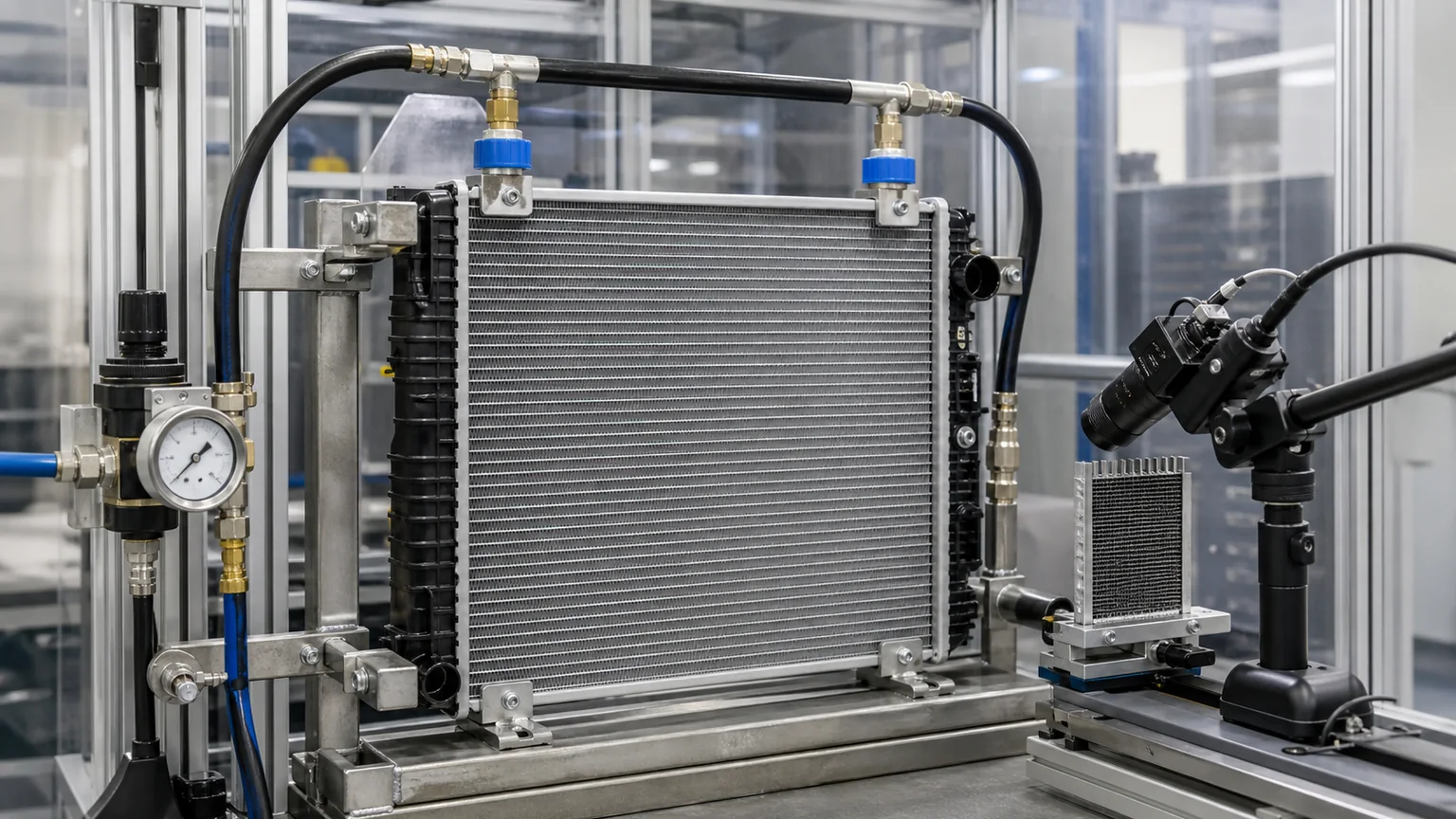
Pressure cycling, leakage, fin consistency, crimp geometry, and integrated-cooler isolation need product-specific evidence.
10. Griffin Thermal Products
Griffin Thermal Products manufactures performance and custom radiators in the United States for cars and trucks. It belongs on the shortlist when higher engine output, restricted packaging, towing, racing, or a conversion exceeds the assumptions behind a standard replacement radiator. Performance buyers may also need a matched fan and shroud package rather than only a larger core.
Do not order by overall width and height alone. Supply heat rejection and vehicle-use information, then confirm tube, fin, rows, tank, hose, cap, mounting, cooler, fan, and shroud details. Ask how the proposed product is rated, what airflow it assumes, which pressure it supports, and whether the warranty covers the intended duty. Custom fabrication and premium aluminium construction should be represented accurately in the distributor catalogue.
Direct-fit, performance, and custom radiators are different programs
An OE-style direct-fit radiator should reproduce the original interfaces and support the vehicle's intended thermal duty. A performance radiator may increase capacity or durability but can require changes to fans, shrouds, hoses, brackets, or available space. A custom radiator starts from an agreed specification and places more responsibility on the buyer to provide correct operating data.
Classify every line in the product master. Do not imply that a thicker core automatically improves real-world cooling. Extra thickness can increase restriction to airflow, and a poorly sealed shroud may let air bypass the core. Elecdura's main automotive radiator range illustrates the application-led organization needed before construction upgrades are discussed.
Application data for passenger cars and light trucks
Start with VIN, OE number, engine, model year, transmission, drivetrain, and cooling package. Light trucks add towing, payload, heavy-duty cooling, and snow-plow or off-road options. Record whether the original radiator has a transmission-oil cooler, engine-oil cooler, both, or neither. Note line fitting type and size; an unused or wrong cooler interface is a frequent source of returns.
Vehicle name alone is insufficient. A Chevrolet pickup can have multiple radiator dimensions and cooler arrangements within one year. A focused Chevrolet radiator collection should still be filtered by the complete application. The same applies to imported models: use the OE label, configuration, and the Toyota radiator collection together rather than assuming one core fits every regional variant.
Measure the interfaces that create returns
Request core width, height, and thickness plus overall dimensions. Record tank shape, mounting pins and cushions, side brackets, fan and condenser mounting points, hose neck diameter and direction, filler neck, pressure cap, drain, bleed, sensor, overflow, cooler ports, and quick connectors. Clear photographs should show the actual product from front, rear, top, bottom, and both sides.
Compare the sample with the OE unit on a fixture or vehicle. Check that shrouds and fans sit without stress, hoses clear surrounding parts, transmission lines align, and the radiator does not contact the body. A supplier drawing linked to the part revision provides stronger control than an unscaled catalogue image.
Core, tank, and crimp construction
Most current replacement radiators use an aluminium core with plastic tanks. Important controls include alloy and temper, tube geometry, fin pitch, brazed joint quality, header flatness, tank material, gasket, crimp height, and reinforcement around necks and fittings. A visually similar radiator can fail early if tank resin, crimp compression, or thermal expansion behavior is wrong.
All-aluminium performance products use different fabrication and fatigue controls. Inspect weld penetration, distortion, cleanliness, brackets, and stress concentrations. Copper-brass products remain relevant to some classics, heavy-duty repairs, and restorations. Compare materials within the intended product class rather than declaring one construction universally superior.
Integrated oil cooler verification
An automatic-transmission cooler inside a radiator must remain isolated from engine coolant. Request leakage and pressure evidence for the cooler circuit as well as the coolant circuit. Confirm fitting type, thread, depth, included adapters, and whether the cooler matches the heat load of towing or heavy-duty packages. Engine-oil coolers require the same discipline and may use different pressures.
Do not cap an unused port simply because the replacement has more fittings. First determine whether the tank contains an optional independent cooler, a shared configuration, or a required connection. The supplier should explain the application note and provide plugs only where approved. Catalogue staff must not convert a technical uncertainty into installation advice without confirming the internal layout.
Test evidence to request
Ask which units receive production leak tests and what gas, pressure, hold time, and reject limit are used. Request type-test evidence for proof pressure, pressure cycling, thermal cycling, vibration, corrosion, coolant compatibility, tank aging, hose-neck load, cooler isolation, and heat rejection where applicable. A quality-system certificate alone does not prove performance for the quoted part family.
Review the supplier's control plan, gauge calibration, batch trace, nonconformance handling, and change notification. For high-volume private-label lines, retain an approved sample and dimensional report. Repeat verification after a tooling, plant, material, or sub-supplier change.
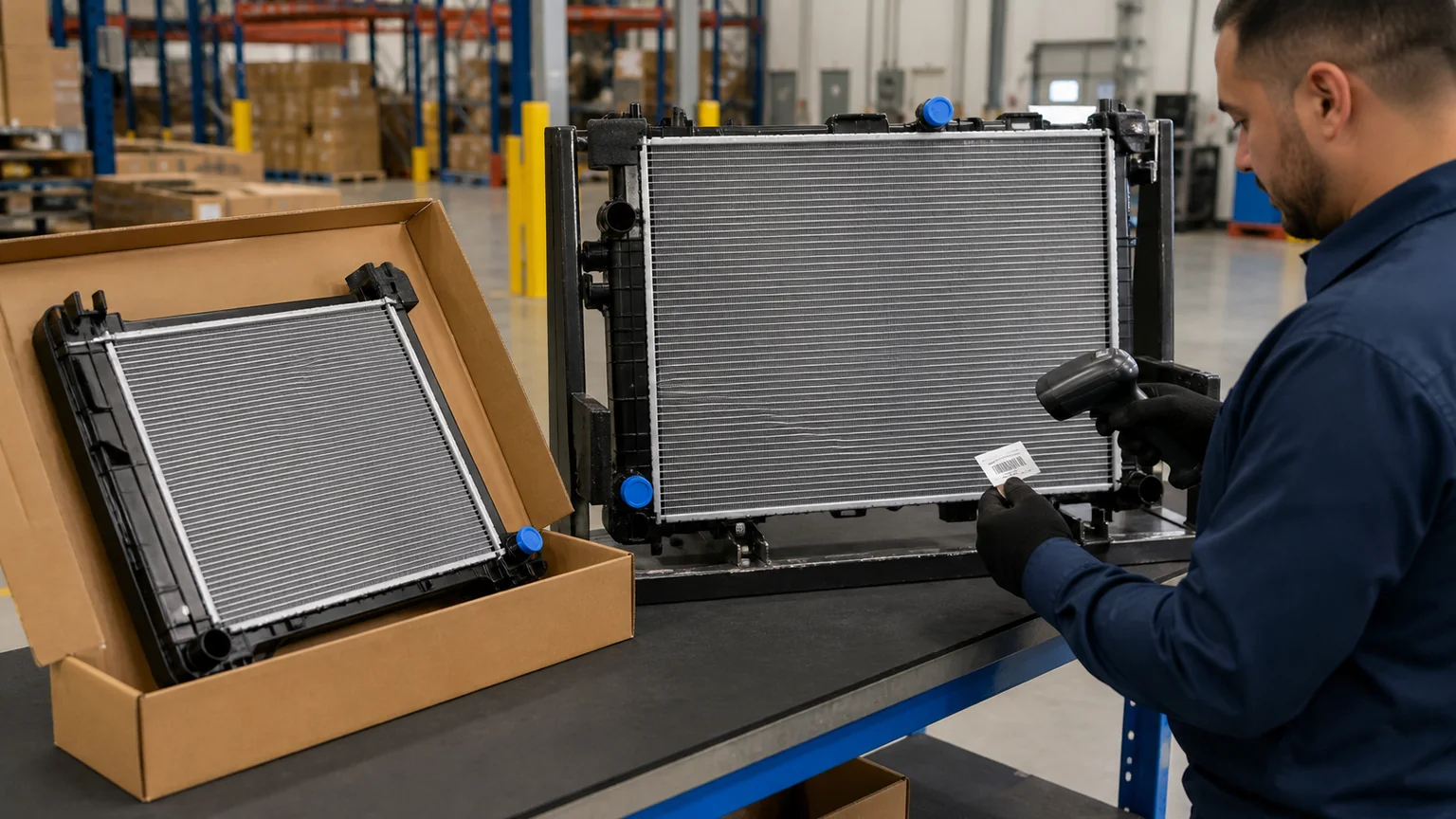
Receiving inspection should link the radiator, brand, batch, label, carton, caps, corner protection, and approved configuration.
Packaging for US parcel and pallet networks
Radiators are large, light, and easily damaged. Packaging must protect fins, hose necks, mounting pins, drain fittings, cooler ports, and tank corners without pressing on the core. Specify fitted supports, port caps, a clean bag, corner clearance, strong carton, orientation marks, and pallet stack limits. The fan side and condenser side should be identifiable before the unit leaves the box.
Validate the packed sample through the actual distribution route. Parcel shipments experience drops and edge impacts that a full pallet may avoid. Inspect for fin crush, tank cracks, bracket distortion, cap loss, carton abrasion, and label damage. A cheaper radiator with a higher concealed-damage rate can create more cost than a premium line.
Stock, data, and warranty evaluation
Compare US warehouse coverage, fill rate, backorder age, catalogue update frequency, ecommerce content, images, interchange licensing, minimum order, freight, returns, and supersession handling. Ask whether export buyers receive the same warranty as domestic accounts and where claims are inspected. Performance and custom products may have different return restrictions from standard replacements.
Define claim evidence for leaks, cooler cross-contamination, cracked tanks, failed necks, damaged fittings, overheating, and shipping damage. Record installation date, mileage, cap pressure, coolant, vehicle modification, photographs, and failure location. Track claims by part, batch, construction, application, warehouse, and carrier to distinguish product, catalogue, installation, and logistics causes.
Recommended RFQ
Send each candidate a spreadsheet containing OE number, vehicle, engine, model years, transmission, drivetrain, towing or cooling package, cooler configuration, annual demand, first order, destination, required brand tier, packaging standard, barcode, and delivery region. Attach original-unit photographs and drawings for sensitive applications.
Require the supplier to return its part number, role, brand, country of origin, dimensions, construction, cooler data, included fittings, stock location, MOQ, price, lead time, warranty, test records, and deviations. Approve representative passenger and light-truck samples before a full rollout. To request an Elecdura review, send the OE/application list, annual demand, packaging standard, sample plan, required test evidence, and destination.
Keep the approved drawing, sample photographs, carton specification, and test evidence under one revision so purchasing, receiving, sales, and claims teams work from the same configuration.