You are here:Home » Resources » Blog » Industry Insights » Top 10 Engine Valve Cover Suppliers in Poland for European Aftermarket Buyers
Top 10 Engine Valve Cover Suppliers in Poland for European Aftermarket Buyers
Views: 0 Author: Elecdura Publish Time: 2026-09-01 Origin: Site
Poland is one of Europe's strongest independent-aftermarket distribution bases, giving buyers access to local brands, importers, and large multi-brand wholesalers. Ten useful valve-cover sourcing routes are ESEN SKV, Dr.Motor Automotive, KAMOKA, MAXGEAR, NTY, FAST, Inter Cars, Auto Partner, Borsehung, and febi or VAICO through Polish distribution. The first six are brand-led sources with Polish market roots or a strong local position; Inter Cars and Auto Partner are distribution platforms; Borsehung, febi, and VAICO are imported brands available through regional channels. Buyers must verify the role behind each quotation rather than assuming every Polish supplier manufactures the cover.
Price comparisons are meaningful only when the bill of material is equal. One valve cover may be a bare shell, while another includes the perimeter gasket, spark-plug tube seals, PCV diaphragm or valve, oil cap, bolts, grommets, hose fittings, and a heat shield. Elecdura's wholesale engine valve cover program can be used as a reference for OE-number matching, included-part declarations, samples, and private-label enquiries.
Poland valve cover supplier comparison
Supplier
Market role
Best fit
Buyer priority
ESEN SKV
Poland-headquartered aftermarket brand
Broad catalogue and European wholesale enquiries
Confirm production source and exact kit content
Dr.Motor Automotive
Polish engine-parts brand and specialist
Engine repair parts and detailed application matching
Check PCV and seal contents by reference
KAMOKA
Aftermarket brand with strong Polish distribution
Value-oriented European coverage
Validate current catalogue, batch trace, and warranty
MAXGEAR
Auto Partner's aftermarket brand
Consolidation through a large Polish distributor
Separate brand ownership from manufacturing location
NTY
Polish-market aftermarket brand/import program
Wide application range and price-led lines
Inspect sample consistency and supersessions
FAST
Commercial-vehicle-focused aftermarket brand
Fiat, Iveco, Renault, and van applications
Confirm vehicle segment and included hardware
Inter Cars
Large Polish multi-brand distributor
Brand comparison, stock access, and European logistics
Record the actual product brand on each line
Auto Partner
Polish importer and European distributor
Mixed-brand orders and logistics consolidation
Compare MAXGEAR and third-party brand tiers
Borsehung
VAG-focused brand sold through Polish channels
Volkswagen Group application depth
Check genuine catalogue and seller legitimacy
febi / VAICO
Established German aftermarket brands in Polish distribution
Premium independent-market position
Confirm brand, kit content, and local warranty owner
1. ESEN SKV
ESEN SKV is headquartered in Poland and operates as a broad European aftermarket brand. It publishes a dedicated valve-cover catalogue and emphasizes TecDoc data, product identification, and availability across many parts groups. For distributors seeking a Polish commercial partner, this can offer an accessible route to engine covers alongside electrical, chassis, thermal, and other replacement components.
Brand location does not prove that every cover is physically manufactured in Poland. Ask for the production country and supplier-control model for the selected family. Review the current catalogue reference, OE crosses, engine code, included gasket and PCV components, authenticity marks, batch trace, and warranty process. Sample at least one plastic cover with integrated ventilation because function depends on internal passages and diaphragm calibration as well as external fit.
2. Dr.Motor Automotive
Dr.Motor Automotive is a Polish engine-parts specialist whose catalogue approach is relevant to repair-focused distributors. A specialist can be valuable where the valve cover is connected to PCV hoses, diaphragms, seals, caps, oil-system components, and engine-code distinctions. It may provide more useful repair context than a general importer carrying only a few high-volume covers.
Ask whether the quoted line is a complete assembly or a component repair solution. Some engines allow PCV diaphragm service; others require a complete cover to restore calibrated ventilation and sealing. Confirm the engine code, emissions generation, cover material, ports, sensor or solenoid provisions, gasket, tube seals, bolt grommets, fasteners, cap, and fittings. A photograph of the actual underside is essential when internal labyrinths or welded chambers differ.
3. KAMOKA
KAMOKA is a recognizable aftermarket brand in Poland and other European markets. It is relevant to buyers seeking value-positioned, catalogue-driven replacement coverage through established distributors. Its commercial attraction can include broad vehicle reach and consolidation with other repair categories.
For valve covers, verify the current KAMOKA number and application notes through a reliable catalogue rather than marketplace titles. Request the production batch, country of origin, warranty owner, and an exact contents image. A price comparison should state whether the gasket and crankcase-ventilation components are installed, packed separately, or absent. Track early claims by engine family because a single broad brand-level return rate can hide a problem limited to one mold or diaphragm design.
4. MAXGEAR
MAXGEAR is associated with Auto Partner's distribution platform and gives buyers a private-brand option within a large Polish logistics system. It may suit customers who want one invoice and warehouse route for many categories while maintaining a consistent value-brand position. Auto Partner's European reach can be useful for exports and multi-line replenishment.
Describe MAXGEAR correctly as a brand and supply program, not automatically as the physical manufacturer. Ask Auto Partner for the exact product status, origin, batch coding, TecDoc data, included parts, packaging, and claim route. If the product source changes, require a change notification and new sample approval for sensitive integrated-PCV covers. Private-brand continuity is strongest when the distributor manages supplier changes transparently.
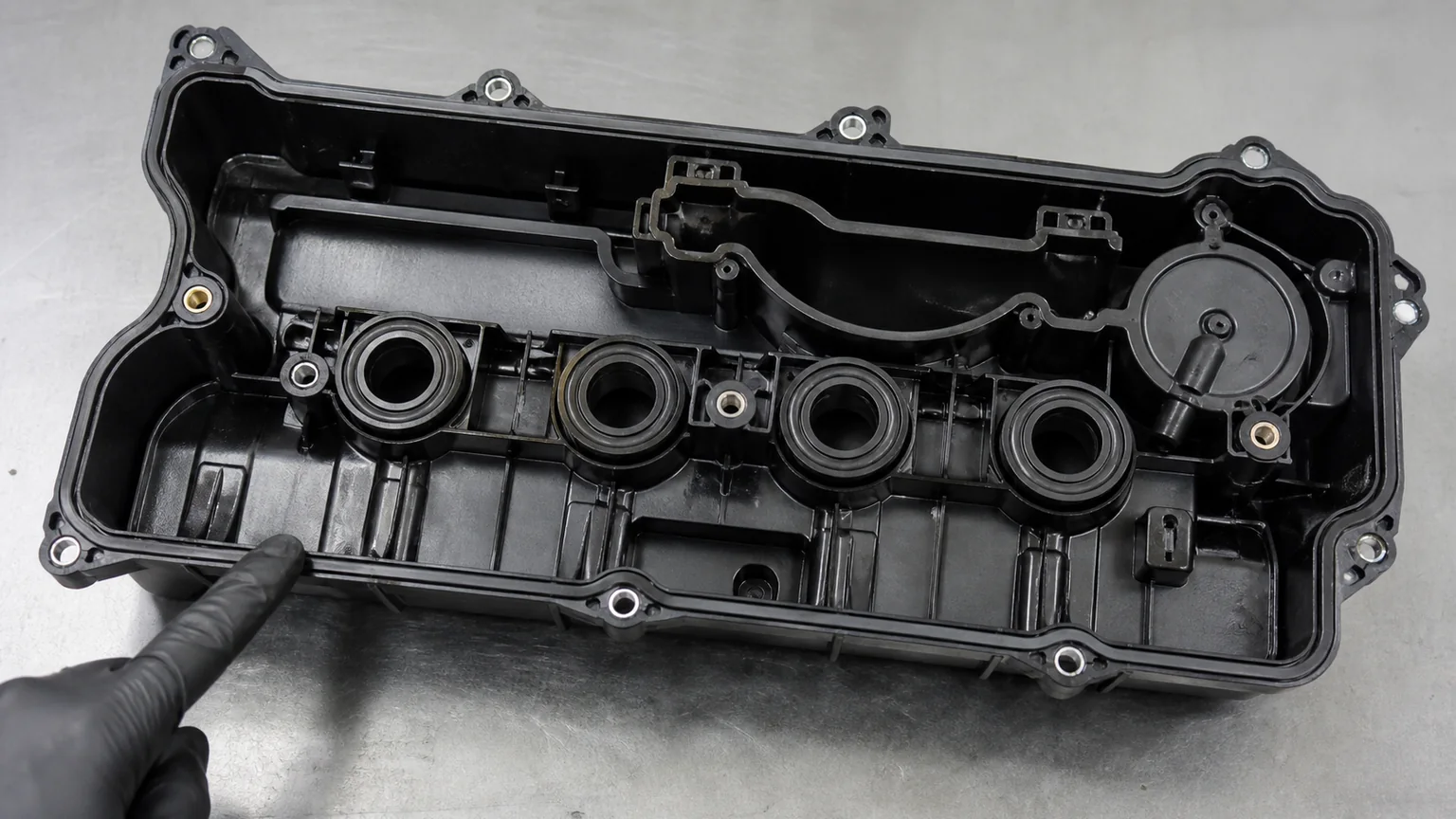
Inspect the underside, gasket channel, PCV labyrinth, diaphragm housing, tube seals, bolt grommets, and hose fittings.
5. NTY
NTY is widely encountered in Polish and Central European aftermarket catalogues. It can offer broad application coverage and a competitive price tier for distributors serving older European and Asian vehicles. This breadth makes it a practical longlist candidate, especially when the buyer needs many low- and medium-volume references rather than a narrow OE-brand range.
Qualification should focus on reference stability and sample consistency. Confirm the seller's legitimate source, NTY number, OE crosses, engine code, actual brand marking, origin, and batch trace. Compare flange flatness, insert placement, welded joints, PCV function, gasket material, and packaging between samples from different lots. Ask how supersessions are announced and whether a source or design change triggers new validation.
6. FAST
FAST is well known in European light-commercial-vehicle parts, with strong relevance to Fiat, Iveco, Renault, and other van applications. It deserves a place in a Polish sourcing comparison when the buyer's demand includes delivery fleets and commercial workshops rather than only passenger cars. Van covers can have different hose connections, brackets, oil-fill arrangements, and service expectations.
Submit the complete commercial-vehicle application, including engine code and power rating. Do not use a broad model name such as Ducato or Daily without generation detail. Ask whether gaskets, bolts, caps, breathers, and fittings are included. Fleet customers value fast replacement, so confirm Polish stock, replenishment lead time, and claim turnaround as well as purchase price.
7. Inter Cars
Inter Cars is a major Poland-based distributor rather than a single valve-cover manufacturer. Its value is access to multiple engine-parts brands, extensive catalogue infrastructure, and regional logistics. A buyer can compare premium gasket and engine-component brands with broader replacement brands through one commercial relationship and potentially consolidate deliveries.
Every RFQ line must record the actual brand and part number; “Inter Cars valve cover” is not a sufficient product identity. Ask the account manager to return all available brand alternatives and stock locations. Compare identical contents and warranty terms, then lock the selected brand on the purchase order. If substitutions are permitted, define an approved list rather than allowing an unreviewed equivalent to ship automatically.
8. Auto Partner
Auto Partner is a large Polish importer and distributor serving cars and light commercial vehicles across many European markets. It operates a substantial logistics network and offers its own brands plus global aftermarket names. It is useful for distributors seeking mixed orders, data feeds, frequent replenishment, and export service from Poland.
Ask for valve-cover alternatives by brand tier and make the selection explicit. A MAXGEAR cover, febi cover, Victor Reinz-related sealing product, or another catalogue option has a different brand owner and possibly different contents. Confirm stock feed, minimum order, export delivery, return window, catalogue licence, barcode, and claims administrator. For high-volume references, approve an actual unit from the same source intended for recurring supply.
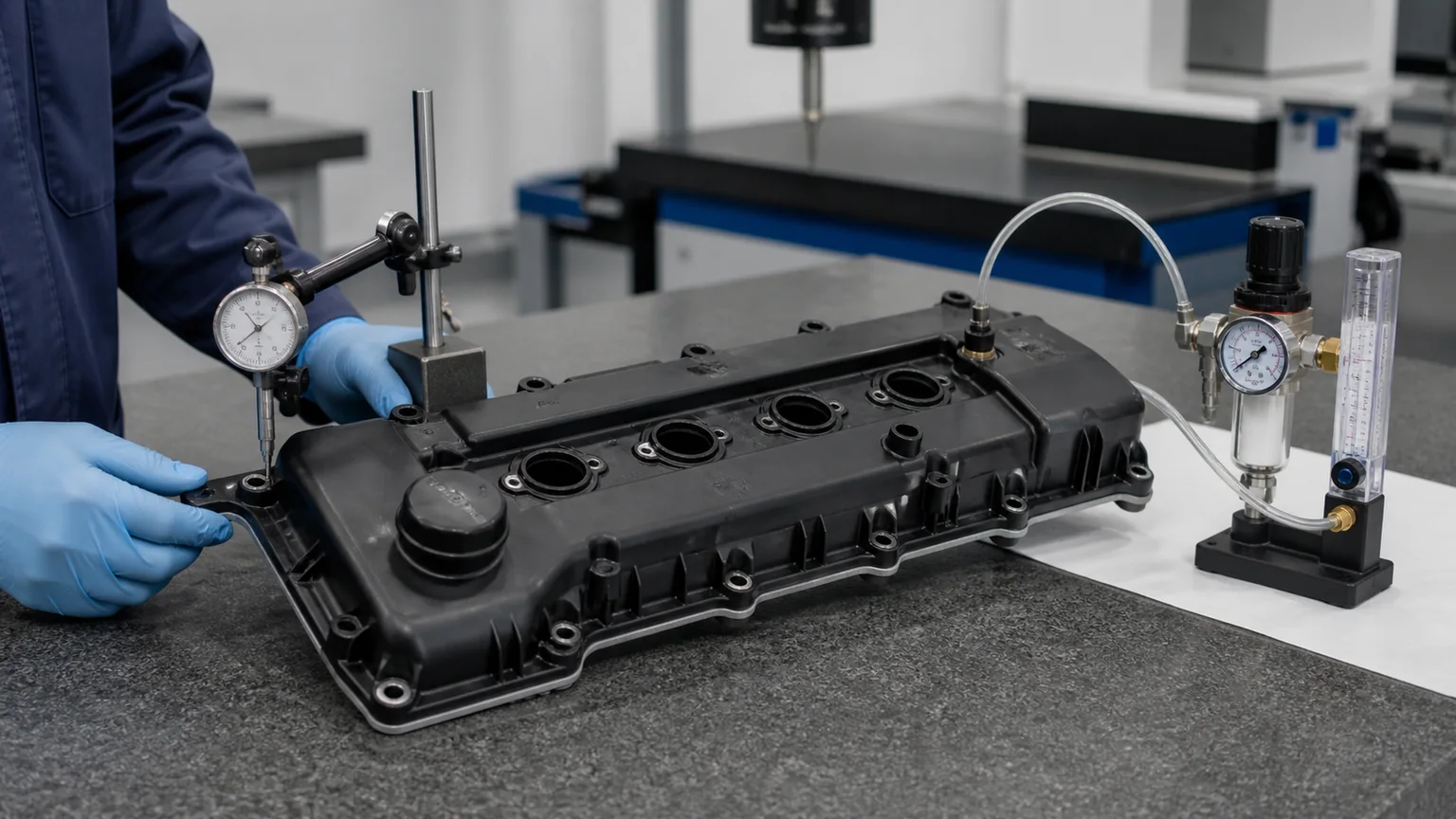
Flatness measurement and controlled PCV flow or diaphragm checks reveal risks that an exterior fitment photo cannot show.
9. Borsehung
Borsehung is strongly associated with Volkswagen Group replacement applications and is available through Polish aftermarket channels. It can be relevant to buyers whose valve-cover demand is concentrated on Volkswagen, Audi, Škoda, and SEAT engines. A VAG-focused range may provide more precise engine-family coverage than a general brand.
Verify the approved seller and current Borsehung catalogue number. VAG applications can differ by engine code, emissions level, integrated oil separator, breather heating, sensor provision, and hose connection even when exterior shapes look close. Request photographs of label, top, underside, ports, and contents. Check whether the brand's warranty is administered by the Polish seller or another regional entity.
10. febi or VAICO through Polish distribution
febi and VAICO are established German aftermarket brands carried by Polish distributors. Either can serve as a premium independent-market reference point for buyers comparing Polish local brands and distribution options. Their catalogue and brand recognition can support workshops that want a clear alternative to dealer OE parts.
They should be treated as separate brands with separate part numbers, product contents, and warranty terms, even when both appear in one distributor's search result. Confirm which brand is quoted, the exact kit image, application notes, origin marking, and local claim route. Use their price and documentation as a benchmark, then assess whether a value line delivers equivalent fit, ventilation function, sealing components, and traceability.
Why valve-cover assembly content changes the real price
A bare cover can look inexpensive until the buyer adds a gasket, tube seals, PCV valve, diaphragm, cap, bolts, grommets, and shipping for missing items. Create a required-content matrix for each engine family. Record whether every component is integrated, included loose, optional, or not applicable. The main engine valve cover range should be catalogued with these details so sales teams do not promise a complete assembly based only on a thumbnail.
Integrated PCV systems deserve particular attention. A valve cover may contain a calibrated orifice, check valve, diaphragm, pressure-regulating spring, labyrinth, and oil-separation passages. Incorrect flow can cause whistling, rough idle, lean faults, oil leakage, oil consumption, turbo inlet contamination, or excessive crankcase vacuum. An inexpensive shell with the wrong internal function is not an equivalent replacement.
Application matching by engine code
Start with OE number and engine code, then use VIN and production date where available. Record body style only as supporting information. European model names can carry several engines, and one engine family may use different covers after an emissions or ventilation-system change. Compare the old cover's ports, diaphragm housing, electrical provisions, oil-fill position, fastener pattern, and underside.
Volkswagen Group demand is especially sensitive to engine codes and ventilation layout. Elecdura's Volkswagen valve cover collection and Audi valve cover collection provide application-led starting points, but the physical OE number and engine evidence should still control final approval.
Material and molding checks
Modern covers commonly use glass-reinforced engineering plastics, while older and specialist applications may use aluminium. Ask the supplier to state the material specification and whether the product matches the thermal, chemical, and mechanical demands of the original design. Plastic samples should be checked for warpage, sink, flash, incomplete fill, weld-line weakness, damaged threads, poor insert retention, and inconsistent sealing grooves.
Metal covers require checks for casting porosity, machining, surface treatment, flatness, thread quality, and baffle attachment. In either material, measure the flange on a controlled fixture. Do not force a distorted cover flat with bolts; this can crack the part, squeeze the gasket unevenly, or strip cylinder-head threads.
Gaskets, seals, and fastener control
Confirm gasket material, hardness range, profile, molded corners, joint quality, oil and temperature resistance, and packaging. A gasket installed in the cover should remain seated during transport without permanent compression. Spark-plug tube seals must face the correct direction and fit their bores without damage. Bolt grommets influence clamp load and should not be replaced with visually similar hard rubber.
Ask whether bolts are captive, reusable, or included loose, and state the installation sequence and torque. Some covers use shoulder bolts that limit compression. Substituting ordinary fasteners can crack the cover or crush the gasket. Claims involving flange cracks should be reviewed against bolt type, torque method, and sequence as well as material quality.
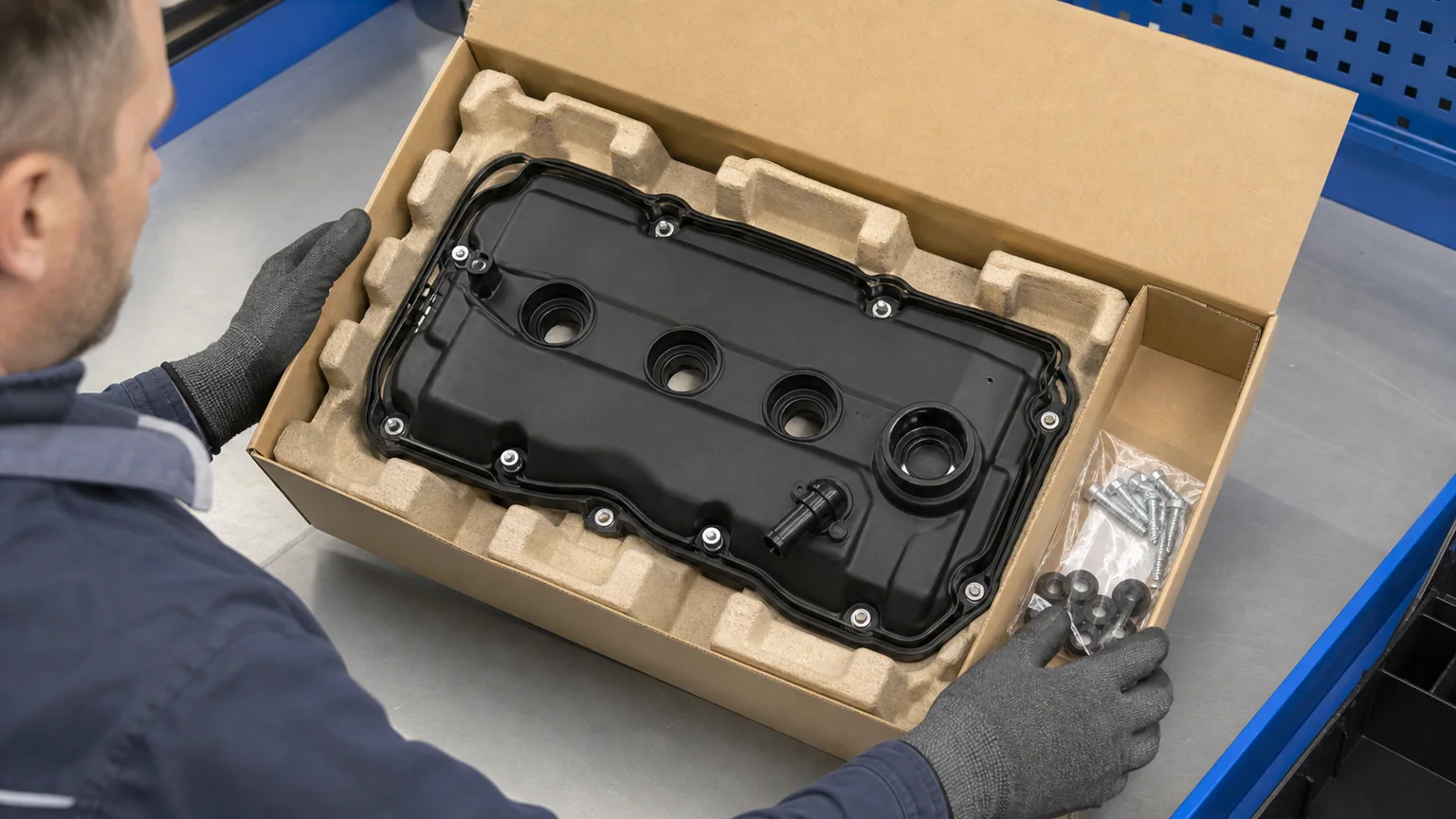
A fitted tray should protect the flange, gasket, PCV fittings, oil neck, sensors, and fragile brackets without loading them.
Quality evidence for sample approval
Request an application drawing or marked dimensions, material declaration, flange-flatness limit, leak-test method, PCV performance check, insert pull or torque evidence, thermal-aging plan, oil-resistance evidence, and batch trace. Not every supplier will disclose proprietary specifications, but it should show controlled acceptance criteria for the quoted family.
For PCV-equipped covers, a simple visual check is inadequate. Ask how opening pressure, flow restriction, check-valve direction, diaphragm travel, and leakage are verified. Compare a sample with a known OE unit using a controlled rig. Do not use unrestricted shop air that can damage the diaphragm or create meaningless results.
Packaging and warehouse handling
Plastic covers are light but easily damaged. Long breather nipples, oil-fill necks, electrical fittings, and heat-shield brackets need clearance and support. The sealing flange should not carry carton load, and the gasket should remain clean and uncompressed. Specify a fitted tray or supports, protective bags, component pockets, strong outer carton, and pallet stack limits.
Labels should show brand, part number, OE crosses where legally appropriate, batch code, country of origin, barcode, and quantity. If loose seals or bolts are included, list them on the label and use a sealed inner bag. Conduct parcel-drop and vibration checks on high-volume ecommerce references because damage patterns differ from pallet delivery.
Warranty and repeat-failure diagnosis
Agree the evidence needed for leakage, cracks, PCV faults, damaged fittings, and missing contents. The process should record mileage, installation date, engine code, fault codes, crankcase pressure symptoms, photographs, torque method, and failed area. A leaking cover may be caused by excessive crankcase pressure, blocked hoses, a warped mating surface, wrong sealant, or installation damage, so the warranty review should consider the system without dismissing every claim as installer error.
Track claims by supplier part number, batch, engine code, and failure mode. Separate gasket seepage, flange distortion, diaphragm rupture, fitting breakage, thread failure, and packaging damage. This evidence identifies whether to improve the product, catalogue, installation note, or carton.
Commercial evaluation and RFQ format
Compare MOQ per reference, mixed-order value, Polish warehouse stock, export countries, lead time, Incoterm, payment, catalogue feed, supersession notice, private-label threshold, packaging, return window, and warranty settlement. For multi-brand distributors, require the selected brand on every purchase order. For brand owners, ask how manufacturing-source and design changes are controlled.
Send a spreadsheet with OE number, engine code, vehicle, production range, cover material, PCV configuration, required contents, photographs of top and underside, annual volume, first order, destination, barcode, and target position. Ask the supplier to return its number, exact included components, brand, production country, MOQ, lead time, warranty, and deviations. To request an Elecdura cross-reference, send the OE number, engine code, cover photographs, PCV layout, included-part requirement, volume, and destination.