Views: 0 Author: Site Editor Publish Time: 2026-08-10 Origin: Site
Intake manifold leak symptoms depend on what is leaking. A vacuum leak can cause rough idle, lean codes, high idle, whistling, hesitation, and poor fuel trims. A coolant leak at or near the intake manifold can cause coolant loss, overheating, sweet smell, white residue, or coolant pooling in the valley of the engine. A gasket leak can create either air or coolant symptoms depending on engine design. A cracked manifold, worn runner flap, failed actuator seal, or wrong replacement part can also imitate a simple gasket problem.
This article explains how to recognize intake manifold leak symptoms, separate vacuum leaks from coolant leaks, choose the right diagnostic test, and confirm replacement matching before ordering parts. It is written for repair shops, distributors, fleet maintenance teams, and parts buyers who need practical evidence before replacing an intake manifold. Elecdura can support related engine and thermal parts alongside thermostats, radiators, cooling fans, and A/C compressor programs.
Quick Symptom Map
Symptom
Likely Leak Type
First Check
Rough idle and lean codes
Vacuum leak at gasket, port, hose, or cracked plastic
Smoke test and fuel trim data
Whistling noise
Air drawn through a small leak or PCV-related passage
Listen near manifold and breather connections
Coolant loss with sweet smell
Coolant passage or gasket leak
Pressure test and visual inspection
Coolant in engine valley
Manifold gasket, housing, pipe, or nearby component
Clean area, pressure test, trace source
Fault codes for runner/flap
Manifold actuator or flap mechanism issue
Scan data and actuator movement check
Vacuum Leak Symptoms
A vacuum leak at the intake manifold allows unmetered air to enter the engine. The engine control module may respond by adding fuel, which shows up as positive fuel trims. The driver may notice rough idle, idle surge, hesitation, poor acceleration, hard starting, or a check-engine light. Codes may include lean mixture codes, misfire codes, or idle-control codes depending on the vehicle.
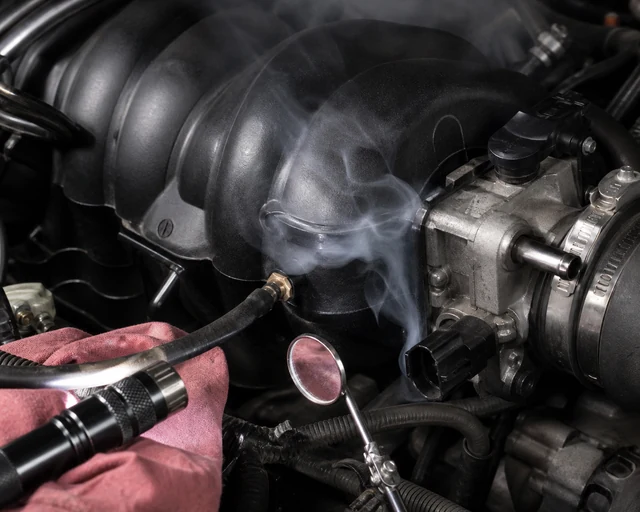
Vacuum leaks are often more noticeable at idle because the engine has high manifold vacuum and a small leak becomes a larger percentage of total airflow. At higher engine load, the symptom may feel less obvious. This is why a vehicle can drive acceptably but idle poorly at traffic lights. A smoke test is one of the most useful ways to find these leaks because it shows smoke escaping from gasket edges, vacuum ports, cracked plastic, or hose connections.
Coolant Leak Symptoms
Some intake manifolds seal coolant passages. A leak in that area can cause coolant smell, visible coolant, overheating, low coolant warning, white residue, or coolant pooling near the manifold. On some V-type engines, coolant may collect in the valley and be mistaken for another component leak. On other engines, the leak may run down the block and appear near the transmission or lower hoses.
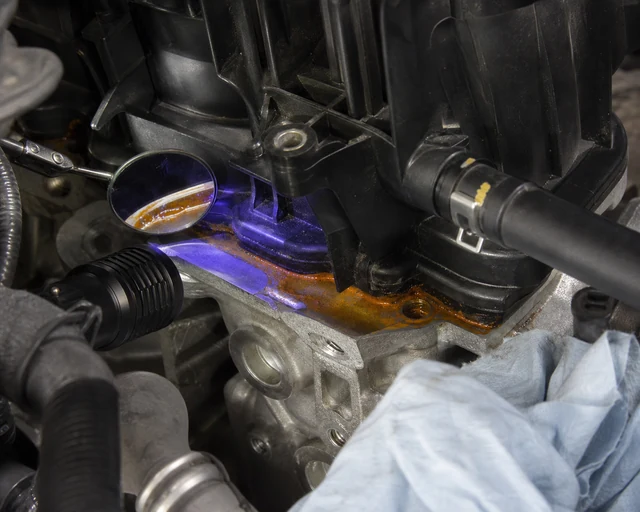
Coolant leaks should be pressure-tested when the engine is cool. Clean the area first so the source can be traced. If coolant appears at the manifold gasket, housing seam, coolant pipe, thermostat housing, or nearby hose, do not assume the manifold itself is cracked until the actual source is confirmed. A replacement manifold may be unnecessary if a hose, pipe, or gasket is the true fault.
Oil or PCV-Related Symptoms
Some intake manifold complaints are connected to crankcase ventilation. Oil mist in the intake, excessive vacuum, whistling, rough idle, or oil consumption may involve a PCV diaphragm, breather hose, valve cover, or separator rather than the manifold body. On engines where the intake manifold connects closely with PCV routing, a leak or blocked passage can create symptoms that look like an intake gasket fault.
Repairers should inspect breather hoses, valve cover PCV components, and oil residue patterns before replacing the manifold. For parts buyers, this matters because a customer may order an intake manifold when the correct part is a valve cover or breather assembly. Asking for symptom details and photos can prevent wrong-part sales.
Runner Flap and Actuator Problems
Modern intake manifolds may include runner flaps, swirl flaps, tumble flaps, or variable-length mechanisms. A fault in these systems may not be a leak at all. Symptoms can include limp mode, poor low-end torque, rattling, fault codes, or actuator position errors. The manifold may need replacement if the linkage is worn, the shaft leaks, or the plastic mechanism is broken, but diagnosis should confirm the failure.
Scan-tool data can show commanded and actual runner position on some vehicles. Visual inspection may reveal a loose linkage or broken actuator mount. If the replacement part is a bare housing without the required actuator, the repair may remain incomplete. When ordering, confirm whether the manifold includes the runner mechanism, actuator, gaskets, plugs, and hardware.
How to Diagnose an Intake Manifold Vacuum Leak
Start with fuel trims and idle behavior. Positive long-term and short-term trims at idle that improve at higher rpm often support a vacuum leak direction. A smoke test can then reveal leak points. Introduce smoke through the intake system with the engine off and watch gasket edges, hose ports, throttle body flange, brake booster port, PCV connections, and manifold seams.
Spray tests are sometimes used in the field, but they can be unsafe or unreliable if done carelessly. Smoke testing is cleaner and more visual. For workshops, documenting smoke-test photos helps justify the repair. For distributors, those photos help confirm whether the customer needs a gasket, hose, PCV part, or complete manifold.
How to Diagnose a Coolant Leak Near the Intake Manifold
Pressure-test the cooling system with the engine cool. Watch the manifold area, coolant pipes, thermostat housing, hose connections, and cylinder head mating surfaces. If the leak appears only when hot, use caution and follow safe procedures. Some leaks open with thermal expansion and may not show immediately during a cold test.
Check oil and coolant condition if internal leakage is suspected. Milky oil, unexplained coolant loss, steam from the exhaust, or pressure buildup soon after cold start may require deeper engine diagnosis. Do not blame the intake manifold until the path of the coolant is identified. On some engines, the intake gasket can leak coolant externally without internal engine damage; on others, symptoms may overlap with more serious faults.
Replacement Matching: Why the Old Part Matters
Intake manifolds can vary by engine code, build date, market specification, sensor port, EGR connection, coolant passage, throttle body flange, and runner actuator. A replacement that looks correct from the top may fail because the underside, port angle, or gasket shape differs. This is why old-part photos are critical before ordering.
Buyers should request top, underside, side, port, and actuator photos. Confirm OE number, engine code, gasket inclusion, hardware, and whether sensors or actuators are included. If the manifold includes coolant passages, check sealing surfaces and gasket material. If it includes runner flaps, check mechanism movement and actuator compatibility. Wrong matching can create new leaks or leave the original symptom unresolved.
When a Gasket Is Enough
A gasket replacement may be enough when the manifold body is intact, the sealing surfaces are clean and flat, the ports match, and the failure is clearly a hardened or damaged seal. This is common on some older engines where the manifold is metal or durable plastic and the gasket is the main wear item. The repair should still include cleaning mating surfaces, following torque sequence, and checking for warped components.
A complete manifold may be required when the plastic body is cracked, the runner mechanism is worn, threaded inserts are damaged, coolant passages are degraded, or the PCV or actuator function is integrated and failed. Choosing between gasket and manifold is a diagnostic decision, not a price-only decision.
Buyer Checklist
Confirm whether the complaint is vacuum leak, coolant leak, oil/PCV symptom, or runner fault.
Request OE number, engine code, production year, and old-part photos.
Compare gasket shape, port layout, throttle body flange, and sensor bosses.
Check whether actuator, runner mechanism, plugs, and hardware are included.
Confirm coolant passage design if the manifold seals coolant.
Ask for packaging that protects ports and flanges.
This decision tree is useful because intake manifold complaints are easy to oversimplify. A rough idle does not automatically mean a manifold gasket. Coolant in the valley does not automatically mean a cracked manifold. A runner fault code does not always mean an air leak. The first job is to define the failure type, then match the test to that failure type.
Why Intake Leaks Are Often Misdiagnosed
Intake leaks are misdiagnosed because symptoms overlap with ignition, fuel, EGR, PCV, turbo, and cooling-system faults. A lean code can come from a vacuum leak, but it can also come from low fuel pressure, a dirty mass airflow sensor, or an oxygen sensor issue. Coolant loss near the intake can come from a hose or thermostat housing. A whistling sound can come from the PCV system rather than the manifold body.
The cost of misdiagnosis is high because manifold replacement can require significant labor. If the wrong part is installed, the customer pays for time and the workshop loses confidence in the supplier. This is why diagnostic evidence should be part of the parts-buying process. Smoke-test photos, pressure-test results, scan codes, and old-part photos help the seller recommend the right item.
Installation Details That Cause Repeat Leaks
A new gasket can leak if the mating surfaces are dirty, scratched, warped, or tightened in the wrong sequence. Plastic manifolds can distort with age and heat. Bolts may bottom out, sleeves may be missing, or previous repairs may have damaged threads. If the manifold uses molded rubber seals, the gasket must sit correctly in the groove before installation. A pinched seal can create an immediate leak.
Torque procedure matters. Over-tightening can distort plastic and crush seals. Under-tightening can leave uneven pressure across the gasket. Some engines require a specific sequence from the center outward. If the supplier provides installation notes, include them with the part. If not, the workshop should follow vehicle service information. For distributors, installation-related failures should be recorded separately from true product defects.
Material and Design Differences in Replacement Manifolds
Replacement manifolds may be plastic, aluminum, or a combination of plastic housing with metal inserts. Plastic manifolds are common because they are light and cost-effective, but they can crack near ports, bosses, or seams after heat cycling. Aluminum manifolds may be more stable in some applications but still require accurate gasket sealing. The buyer should choose based on application design rather than assuming one material is always better.
Design differences matter as much as material. Some manifolds include integrated seals, some require separate gaskets, some include runner mechanisms, and some require transfer of sensors and actuators. A cheaper part that does not include required components may not be cheaper after the workshop buys additional seals or spends time transferring old parts. Supplier quotes should state exactly what is included.
Application Examples
Example one: a four-cylinder gasoline engine has rough idle and lean codes. Smoke escapes from the intake gasket near one runner. There is no coolant loss. The correct direction is gasket replacement if the manifold surface is flat and undamaged. A complete manifold may not be necessary.
Example two: a V-engine has coolant pooling in the valley. A pressure test shows seepage from a coolant pipe near the manifold, not the manifold gasket. Replacing the manifold would not fix the leak. The correct repair is the pipe, seal, or housing that actually leaks.
Example three: a diesel engine has swirl flap position codes and poor acceleration. Smoke testing does not reveal an external air leak. The manifold mechanism has excessive play. The correct part may be a complete manifold with runner mechanism, not just a gasket set.
Example four: an engine returns after a new gasket was installed. The old plastic manifold sealing rail is warped. The gasket was not the only failed item. A complete replacement manifold and correct torque procedure are needed to prevent another leak.
What Photos Should Buyers Request?
For remote matching, request top view, underside view, throttle body flange, each side of the manifold, gasket groove, sensor bosses, vacuum ports, coolant passage area, runner actuator mount, and old part label if available. A single catalog image from the top is not enough. Many wrong orders happen because the underside or side-port layout differs from the original.
For warranty review, request photos of the leak evidence. Smoke exiting a gasket edge, coolant residue at a passage, cracked plastic near a port, or broken linkage tells a better story than a general complaint. These photos also help suppliers improve catalog data and identify repeated weak points in a product line.
How to Build a Better Intake Manifold Stock Program
Distributors should separate intake manifold stock by risk level. Low-risk items are simple housings or gasket sets with stable demand and few variations. Medium-risk items include plastic manifolds with several ports or coolant passages. High-risk items include runner mechanisms, actuators, EGR connections, or market-specific versions. High-risk items should require OE number and photo confirmation before sale.
Keep records of returned parts and successful repairs. If a particular number often returns because the actuator is missing, the catalog description should be corrected. If another number returns because customers order by model name and ignore engine code, sales staff should require engine code before selling. A good stock program uses field feedback to reduce repeated mistakes.
Supplier Questions Before Bulk Ordering
Which OE numbers and engine codes are covered?
Is the part a complete manifold, bare housing, or gasket-only kit?
Are runner flaps, actuator, plugs, screws, and seals included?
Does the manifold carry coolant, vacuum, EGR, or PCV connections?
Can the supplier provide underside and port photos for every part number?
Has the sealing surface flatness been checked on samples?
How are ports and flanges protected during shipping?
What diagnostic evidence is required for warranty claims?
How Repair Shops Can Explain the Repair to Customers
A clear customer explanation should connect the symptom to the failed area. For a vacuum leak, explain that extra air is entering the engine after the airflow sensor, causing rough idle or lean codes. For a coolant leak, explain that the manifold or nearby seal is allowing coolant to escape and that pressure testing identified the source. For runner faults, explain that the air-control mechanism is not moving correctly and that the replacement part must include the correct mechanism.
This type of explanation builds trust because it is specific. It also protects the shop from customers assuming every manifold-related repair is the same. A gasket repair, complete manifold replacement, coolant pipe repair, and PCV repair solve different problems. The invoice should make that distinction visible.
When to Replace Related Parts
Related parts should be considered when they directly affect the leak or installation. Gaskets and seals should normally be replaced when the manifold is removed. Brittle vacuum hoses, cracked breather hoses, damaged coolant pipes, and old clamps should be inspected. If the thermostat housing sits near the manifold and shows seepage, replacing only the manifold may leave the cooling complaint unresolved.
For some engines, the valve cover PCV system, throttle body gasket, EGR seal, or coolant outlet should be checked at the same time. This does not mean replacing everything automatically. It means inspecting parts that can imitate or contribute to the same symptom. A complete repair prevents the customer from returning with a second leak that was already visible during the first job.
Final Recommendation
Intake manifold leak symptoms include rough idle, lean codes, whistling, hesitation, coolant loss, overheating, visible coolant, and sometimes runner-control faults. The correct diagnosis starts by separating vacuum leak, coolant leak, PCV-related issue, and actuator problem. Smoke testing, pressure testing, scan data, and old-part photos help prevent guessing.
When ordering replacement intake manifolds or gaskets, send the OE number, engine code, failure symptom, old-part photos, gasket requirement, port layout, and actuator details. Elecdura can help buyers match intake manifold parts and related thermal components so a leak repair solves the real problem instead of creating a second installation.