English
Views: 0 Author: Site Editor Publish Time: 2026-07-28 Origin: Elecdura
Canadian A/C compressor sourcing is not a simple brand ranking. A stronger approach is to compare the supplier options that Canadian importers, warehouse distributors, fleet maintenance groups, and repair networks are most likely to meet in real procurement. The best supplier for one program may be a premium OE linked compressor brand, a Canadian thermal parts distributor, a North American aftermarket climate control line, or an offshore wholesale partner used for private label and long tail references.
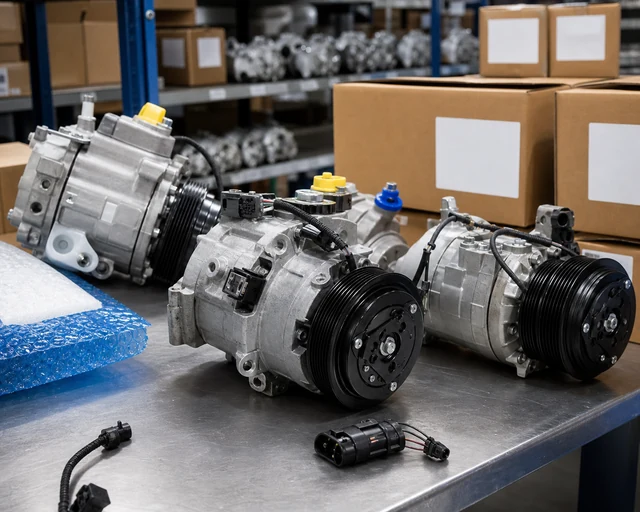
Canadian buyers should compare compressor availability, packaging, connector details, and warranty handling together.
This article compares 10 practical supplier options for Canada focused A/C compressor programs. The list is not a claim that every company is headquartered in Canada or that one public ranking can measure all suppliers. It is a procurement map for buyers who need to build compressor coverage for passenger cars, pickups, SUVs, light commercial vehicles, heavy use equipment, and mixed aftermarket demand. The main decision is fitment accuracy, catalog coverage, availability, claim control, packaging quality, and whether the supplier can support the buyer's target channel.
Supplier Option | Best Use | Procurement Strength | Risk to Check |
|---|---|---|---|
DENSO | Asian vehicles and OE sensitive repairs | Strong compressor engineering and brand trust | Higher cost and selective stock depth |
Sanden | Passenger, commercial, and specialty A/C references | Recognized compressor family knowledge | Reference matching must be exact |
Four Seasons | North American aftermarket climate programs | Broad temperature control coverage | Warranty requirements must be managed |
UAC | Value oriented aftermarket compressor coverage | Wide catalog reach and practical price points | Fitment and claim data need validation |
Spectra Premium | Canadian market replacement parts coverage | Local aftermarket recognition and climate control range | Availability and part number status vary by reference |
NAPA Canada | Local replenishment and workshop access | National parts network and multiple brand options | Not every listing equals wholesale program support |
Auto Kool | Canadian cooling and A/C specialist supply | Thermal parts knowledge and regional distribution | Program scale and private label needs should be checked |
Keep It Cool Air Conditioning | Ag, semi, construction, and automotive A/C parts | Mixed equipment identification support | Best for specialist support, not every bulk import program |
Nissens | Selected European and thermal system applications | European aftermarket credibility | Coverage must be checked reference by reference |
ACDelco and GM linked channels | GM vehicle coverage and OE familiar repair channels | Useful for Chevrolet, GMC, and related applications | May not solve broad import or private label coverage |
DENSO is one of the strongest compressor names for Canadian buyers serving professional repair shops that prefer OE grade replacement parts. It is especially relevant for Toyota, Honda, Lexus, Mazda, Subaru, and other Asian applications where repair customers often recognize DENSO as an original equipment supplier. In a market where labor cost is high and seasonal appointments are compressed into a short A/C service window, a distributor may use DENSO as a lower risk option for high value repairs.
The procurement value is not only the brand name. DENSO gives buyers a useful benchmark for compressor construction, clutch quality, electrical connector accuracy, oil handling, and application discipline. A Canadian importer comparing lower cost aftermarket units can use DENSO references as a standard for photo checks and dimensional confirmation. If the replacement compressor is intended to substitute for a DENSO reference, the buyer should require front view, rear head view, pulley groove count, label photo, connector close up, and port orientation before sample approval.
The limitation is cost and coverage strategy. Most distributors should not expect one premium brand to cover every slow moving compressor reference. DENSO works best for fast moving Asian vehicles, premium repair programs, and applications where a comeback would be more expensive than the price difference. For lower value vehicles or unusual references, buyers may need a second sourcing route with stronger flexibility.
Sanden remains important because many compressor families in passenger vehicles, commercial vehicles, and specialty A/C systems are identified by compressor family and configuration. Canadian buyers that serve agricultural equipment, service trucks, construction machinery, vans, and older platforms often need more than a year make model lookup. They need to know pulley alignment, clutch voltage, mounting ears, rear head layout, and whether the old unit belongs to a familiar Sanden family.
Sanden is valuable when technical identification is part of the sale. A compressor that looks close may still fail if the clutch connector is wrong, the displacement control is different, or the port position interferes with hose routing. For B2B buyers, Sanden references help build a stricter confirmation process. They also help separate a true compressor issue from a catalog mapping issue, which is important when a distributor handles warranty claims across several repair accounts.
The sourcing strategy should be selective. Use Sanden or Sanden equivalent references where the application is sensitive, the vehicle is commercial, or the old compressor family is known. For price sensitive references, compare validated aftermarket alternatives only after the technical details are documented. Compressors may sit through winter before the next summer rush, so sealing caps, oil condition, corrosion protection, label quality, and carton strength should be part of the approval process.
Four Seasons is relevant for Canada because it is built around aftermarket temperature control coverage. For a warehouse distributor, the advantage is category program logic. The same buyer may need compressors, accumulators, receiver driers, condensers, switches, expansion devices, sealing rings, and related A/C parts. This matters because compressor replacement often fails when the surrounding system is ignored after debris, moisture, or restriction.
From a procurement view, Four Seasons is strongest when the buyer needs North American catalog familiarity and a line that professional repair channels recognize. It can be useful for U.S. spec vehicles, pickups, SUVs, and common domestic applications. The buyer should still verify whether the compressor is new or remanufactured, whether the clutch is included, whether oil is prefilled, and what installation conditions are required for warranty.
Four Seasons should not be treated as a generic value line. Its role is stronger when a distributor wants climate control program credibility and related part coverage. If the purchasing team compares it with UAC, GPD, DENSO, or OE branded units, the comparison should be based on part number coverage, warranty rules, claim history, and customer segment rather than name recognition alone.
UAC is often considered by buyers who need broad aftermarket A/C coverage at practical price levels. For Canadian distributors, UAC type supply can support common passenger vehicles, pickup trucks, SUVs, and light commercial applications where availability and value matter. It is also relevant because the line covers many A/C components, allowing a distributor to build repair packages instead of selling a compressor as an isolated part.
The value is catalog width. Canada has large geography and uneven local stock. Regional repair networks may need options when a premium brand is unavailable or too expensive for a repair. UAC can help fill this gap, especially for common references with clear application data. Procurement teams should still review sample consistency, packaging, clutch inclusion, oil status, refrigerant compatibility, connector shape, and control valve style.
The risk is assuming that wide coverage automatically means low claim risk. A compressor installed into a contaminated system can fail regardless of brand. For wholesale planning, UAC should be managed with reference level validation. Track early returns, inspect high volume references, and separate installation related failures from part related defects. This gives the buyer a more reliable view of where the line performs well.
Spectra Premium is relevant because it is a Canadian aftermarket name with a climate control range that includes A/C compressors. For Canada focused programs, this gives buyers a local market reference point rather than only a U.S. or offshore view. Spectra Premium can be useful for distributors that want recognizable replacement parts coverage and practical access through Canadian parts channels.
The procurement strength is not only origin or brand familiarity. A Canadian buyer can use Spectra Premium references to understand what is visible in the local aftermarket, which applications have local coverage, and which compressor part numbers may deserve deeper stocking. This is useful when building seasonal inventory before warm weather. If a reference is commonly visible through local channels, it may face stronger price comparison. If coverage is thin, it may become a long tail opportunity for a distributor with better fitment confirmation.
The limitation is that brand presence does not remove the need for exact matching. Compressor details can vary by engine, production date, clutch type, displacement control, and rear head design. Buyers should request OE cross numbers, product photos, packaging details, and availability by reference. Spectra Premium can be one useful part of the Canadian sourcing picture, but it should be compared against premium brands, local distributors, and wholesale alternatives.
NAPA Canada is important as a local parts network and replenishment route. For repair networks, fleet maintenance teams, and regional buyers, access can matter as much as brand. NAPA listings show that Canadian buyers can encounter compressors under brands such as NAPA, Spectra Premium, MAHLE, DENSO, and other lines depending on application and channel. This makes NAPA useful as a market reference and local availability path.
For B2B procurement, NAPA should be evaluated differently from a manufacturer. It is not only a compressor producer. It is a distribution channel where brand mix, local stock, delivery options, and account support affect the purchasing decision. A fleet buyer may use it for urgent replenishment. An importer may use it to benchmark price bands and local availability. A warehouse distributor may study it to decide which references are already competitive and which references require differentiated sourcing.
The limitation is program control. A local channel may solve availability for individual jobs but may not provide the private label, MOQ, carton design, mixed factory loading, or special long tail sourcing that an importer needs. Buyers should decide whether they need local job support or a controlled wholesale program. These are related but different procurement problems.
Auto Kool is relevant as a Canadian cooling and A/C aftermarket specialist. The company is associated with radiators, heaters, condensers, compressors, and HVAC related parts, which makes it useful for buyers who want local thermal parts knowledge. For Canada, a specialist can be more helpful than a general listing when the vehicle is older, the compressor label is damaged, or the repair shop needs help separating compressor failure from another A/C system problem.
The B2B value is regional support and category focus. A Canadian distributor may need a supplier that understands local demand, seasonal A/C spikes, and related cooling parts. Auto Kool style sourcing can help when the buyer needs faster communication and practical application knowledge. This is especially useful for repair networks that do not want to identify every odd reference alone.
The limitation is scale and program fit. A specialist may be excellent for technical support and local inventory, but the buyer still needs to confirm whether the supplier can support bulk purchasing, private label planning, export packing, and repeated mixed reference orders. Use this route for Canadian expertise and urgent application help, then combine it with other suppliers when broader procurement control is needed.
Keep It Cool Air Conditioning is relevant for buyers serving agriculture, semi trucks, construction equipment, and mixed automotive A/C demand. Canada has large rural, resource, and heavy use segments where standard passenger car catalog logic is not enough. A compressor for a farm machine, service truck, or construction vehicle may require identification by old unit photos, mounting pattern, pulley alignment, hose connection, and duty cycle rather than only by vehicle name.
This supplier route is most useful when the buyer needs specialist identification support. It can help repair channels and regional distributors that handle equipment outside normal passenger car references. In that environment, the procurement risk is wrong matching, not just price. A wrong compressor can delay a machine during a short work season, which may cost more than the part itself.
The limitation is that specialist support does not automatically mean the best option for every bulk import program. Buyers should confirm availability, account terms, regional delivery, technical documentation, and whether the supplier can support repeated commercial demand. For importers, Keep It Cool style specialists can also provide demand signals for off highway references that may be worth building into a direct sourcing program later.
Nissens can be useful for Canadian distributors serving European vehicles and technical repair channels. Canada has demand for Volkswagen, Audi, BMW, Mercedes-Benz, Volvo, and other European applications where compressor replacement often requires careful reference matching. The value for compressor buyers is European application coverage, catalog discipline, and thermal system credibility.
Nissens should be considered when the buyer wants a structured aftermarket option for selected European applications. It can also help frame a system level repair conversation, because compressor life may be affected by condenser condition, cooling fan airflow, moisture control, and debris after internal failure. This does not mean unrelated parts should be mixed into the compressor category. It means the buying team should understand which related A/C conditions can cause a new compressor to fail.
Canadian buyers should check Nissens availability reference by reference. One supplier rarely covers every compressor family in the market. For European vehicles, the confirmation package should include OE number, compressor label, rear head photo, connector close up, pulley detail, and whether the vehicle uses a variable displacement or electronically controlled compressor. This keeps the decision technical rather than promotional.
ACDelco is relevant for Canadian buyers that handle Chevrolet, GMC, Cadillac, Buick, and other GM linked vehicle applications. For repair networks with strong domestic vehicle demand, an ACDelco option can provide OE familiar positioning and clearer expectations for GM platforms. This can be useful for fleets, service vans, pickups, SUVs, and local repair shops that want a recognizable line for domestic repairs.
The procurement value is strongest where GM application coverage matters. A distributor may not use ACDelco for every import reference, but it can use the line as part of a segmented program. Premium or OE familiar options can be assigned to high value domestic repairs, while aftermarket alternatives can support price sensitive demand. The buyer should still confirm compressor type, clutch inclusion, oil information, warranty terms, and related service requirements before stocking deeply.
The limitation is breadth. ACDelco does not replace the need for DENSO, Sanden, Four Seasons, UAC, Spectra Premium, local specialists, or wholesale sourcing across other applications. It is a useful option inside a Canada program, not the full program by itself.
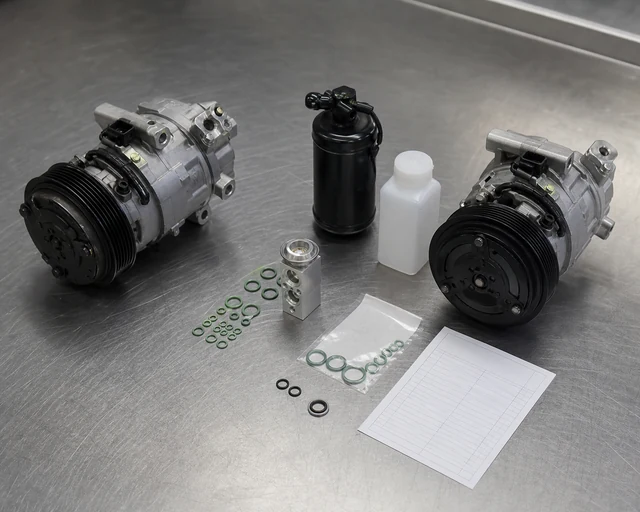
Some Canada repair channels need a kit decision, not only a bare compressor price comparison.
Procurement Field | Why It Matters | Evidence to Request |
|---|---|---|
OE number and compressor family | Vehicle names often hide engine and production splits | Old label photo, OE cross, catalog note |
Pulley and clutch details | Wrong grooves, diameter, or voltage can stop installation | Front photo, pulley measurement, connector photo |
Rear head and port position | Hose routing must match the vehicle layout | Rear view photo and port angle confirmation |
Oil and refrigerant compatibility | Incorrect oil handling can damage the replacement compressor | Oil status, refrigerant type, installation note |
Warranty conditions | Claims often depend on system repair evidence | Drier, condenser, flushing, and pressure reading records |
Packaging standard | Compressors are damaged by poor caps, weak cartons, and moisture | Carton photo, port caps, foam protection, label format |
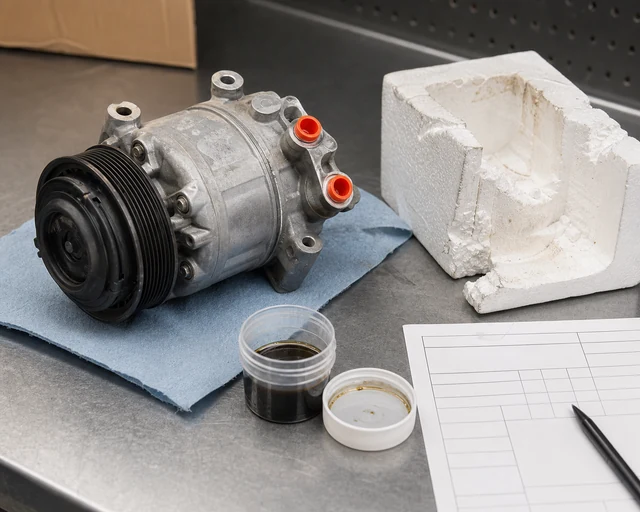
Warranty review is clearer when the distributor records oil condition, port caps, packaging, and installation evidence.
A strong Canada compressor program should not depend on one supplier. Segment the inventory into premium OE sensitive references, fast moving seasonal references, value line references, heavy use or off highway references, and long tail special order references. Each segment needs a different supplier mix. Premium applications may use DENSO, Sanden, ACDelco, or similar lines. Broad aftermarket demand may use Four Seasons, UAC, Spectra Premium, Nissens, or other catalog brands. Local support may come from NAPA Canada, Auto Kool, or Keep It Cool type channels. Flexible import and private label planning can use qualified wholesale suppliers outside Canada.
The buyer should also separate local availability from long term category control. Local distribution is useful when a shop needs a compressor quickly. Direct wholesale sourcing is useful when the importer wants packaging control, planned margin, mixed references, and a repeatable purchasing system. Both are legitimate. The mistake is using one route for every job.
Seasonality matters in Canada. Summer demand can rise quickly, while inventory may sit through winter before sale. This makes carton strength, port caps, corrosion control, label accuracy, and shelf planning more important than many buyers expect. A compressor that arrives with open ports or weak packaging can become a claim before it is installed. Serious buyers should check packaging during sample approval, not after the first bulk shipment.
Elecdura is not presented here as a Canadian local warehouse supplier or an OE tier brand. Its role is different. Elecdura can support importers, wholesalers, and private label buyers that need mixed reference aftermarket A/C compressor sourcing, part number confirmation, packaging discussion, and related cooling or A/C parts from one sourcing partner.
For conventional compressor programs, buyers can review Elecdura's wholesale A/C compressor category and the broader air conditioning compressor range. For electrified applications, electric A/C compressors require stricter voltage, connector, oil, and insulation checks. The useful inquiry package should include OE number, old compressor photos, vehicle application, target quantity, packaging needs, and any current supplier gap.
If your team is preparing a Canada compressor program, build a reference list before asking for quotations. Start with the 20 to 30 fastest moving numbers, confirm samples, inspect packaging, and record early installation feedback. After the core list performs well, expand into lower volume references. This gives buyers a controlled path from local market understanding to broader aftermarket sourcing.
Most importers should use several supplier types. Premium OE linked brands can support sensitive applications, Canadian distribution channels can support urgent local replenishment, and qualified wholesale suppliers can support planned mixed reference orders. The important point is to assign each supplier type to the right demand segment instead of forcing one route to cover every reference.
Send the OE number, compressor label photo, front and rear photos, pulley groove count, connector photo, port position, vehicle application, target quantity, packaging expectations, and the current sourcing problem. For electric compressors, also confirm voltage, connector layout, oil requirement, and vehicle platform. This allows the quotation to be based on evidence rather than a broad vehicle name.
Start with a small group of validated fast moving references, then confirm the supplier's current MOQ, sample timing, production lead time, packaging plan, and reorder window before expanding the list. A planned compressor program should be built before the warm season, because emergency orders during peak demand usually reduce choice and increase total procurement risk.