
English
Views: 0 Author: Site Editor Publish Time: 2026-08-10 Origin: Site
Australia is a demanding market for engine valve covers because many vehicles work in heat, dust, long commuter distances, towing duty, and mixed urban-idle conditions. For a distributor or repair network, a good engine valve cover supplier is not simply the company with the lowest moulded plastic cover price. The supplier must help confirm the integrated PCV design, gasket material, oil separator layout, bolt pattern, breather hose connection, and carton protection before stock is ordered. This is especially important on late-model European and Asian engines where the valve cover is often a functional breather assembly, not just a lid over the camshaft.
This supplier list is written for Australian importers, wholesalers, parts chains, mobile repair networks, and workshops that buy in quantity. It compares common supply channels and explains what to verify before placing a repeat order. Elecdura can support this type of sourcing when buyers need aftermarket valve covers, related cooling parts, and A/C parts in one coordinated procurement plan; for connected cooling-system lines, buyers can also review automotive thermostats, radiators, and cooling fan assemblies.
A valve cover supplier should be judged by fitment accuracy, functional testing, gasket reliability, and after-sales consistency. Many Australian buyers serve workshops that need the vehicle back quickly, so the first shipment may succeed or fail based on small details: whether the PCV diaphragm is included, whether the oil filler cap seals properly, whether the breather port angle clears the hose, whether the bolt sleeves are seated correctly, and whether the cover arrives flat after long-distance freight.
Australia also has a wide vehicle mix. A single parts business may see Toyota, Nissan, Mazda, Hyundai, Kia, Ford Ranger, Holden, BMW, Mercedes-Benz, Volkswagen, Audi, and Land Rover applications in the same month. That creates pressure on inventory quality. A supplier that is strong for simple metal rocker covers may not be strong for plastic covers with a diaphragm, cyclone separator, integrated gasket channel, or oil control valve passage. The safest shortlist includes more than one type of source: OE-linked brands for sensitive applications, local wholesalers for fast fill, specialist European channels for BMW and VAG applications, and direct aftermarket manufacturers for broader price coverage.
Supplier Type |
Best Use |
Main Risk to Check |
|---|---|---|
Local Australian wholesaler |
Fast stock fill and local warranty handling |
Limited depth on slow-moving valve cover numbers |
European aftermarket brand |
BMW, Mercedes, VAG, Mini, Volvo, and Land Rover coverage |
Higher landed cost and occasional supersession confusion |
Asian aftermarket manufacturer |
Competitive bulk purchasing for repeat applications |
PCV diaphragm quality and packaging control |
OE dealer network |
High-risk jobs and exact superseded references |
Price and supply delay |
Export sourcing partner |
Mixed container programs across cooling, A/C, and engine parts |
Requires disciplined sample and photo approval |
Repco is one of the best-known automotive parts channels in Australia, and many workshops already use it for urgent supply. For valve covers, Repco Trade is useful when a repairer needs a known local counter, quick branch support, and simplified warranty processing. This matters when a vehicle is already stripped and the old valve cover has a cracked breather port, hardened gasket, or failed PCV diaphragm.
The practical advantage is availability rather than unlimited range depth. A distributor should still check whether the listed cover includes the gasket, oil cap, PCV diaphragm, breather fitting, and bolt grommets. Some applications are sold as a complete cover, while others may require related parts separately. For B2B stock planning, Repco-style local supply is best used as a benchmark for fast-moving references and as a backup channel for urgent fill, not always as the lowest-cost bulk source.
Burson is another major Australian trade supplier with strong workshop relationships. It is useful for buyers who want trade support across mainstream passenger and light commercial applications. Valve cover demand often appears after workshops diagnose oil leaks, rough idle, whistling, crankcase pressure problems, or repeated gasket seepage. Having a local trade channel helps when the job needs same-day or next-day movement.
For procurement teams, the key is to record which Burson-listed items are complete assemblies and which are partial kits. A valve cover without a reliable gasket or breather assembly can create a comeback even when the moulding itself fits. Ask for clear photos of the underside, gasket groove, PCV area, oil separator shape, and mounting sleeves. If the item is being compared with a direct import alternative, use the local listing as a reference point for included components and application coverage.
NAPA Australia gives buyers another national trade channel with broad parts coverage. It is useful when a workshop network wants consistent ordering across multiple regions rather than relying only on independent local stores. For valve covers, the value is strongest when the application is common and the buyer needs dependable cataloging, invoice control, and local claims handling.
When shortlisting NAPA or similar channels, do not treat the catalog description as enough for bulk decision-making. Valve cover fitment can be affected by engine code, build date, breather hose style, and emission-system variation. On turbocharged engines, a small crankcase ventilation difference may produce idle issues or oil consumption complaints after installation. For repeat buying, record the OE numbers, engine family, chassis range, and visible port layout before ordering across branches.
Goss is widely recognized in Australia for fuel, engine management, and related replacement parts. Depending on application availability, Goss can be useful for buyers who want locally supported aftermarket parts rather than anonymous import stock. For engine valve covers with PCV or breather function, the supplier discussion should focus on functional details, not only fitment.
Ask whether the valve cover has been checked for vacuum stability, diaphragm response, oil separation, and sealing surface flatness. This is especially important when a failed valve cover causes symptoms that look like a sensor, turbo, or ignition problem. For distributors, Goss-type branded aftermarket supply can fill the space between dealer pricing and unbranded direct imports, especially when warranty documentation and local support are important.
Mace Engineering Group is known in Australia for performance and engine-related parts, and it may be relevant for buyers dealing with enthusiast, modified, or higher-output applications. Valve cover demand in this channel can be different from general replacement demand. Customers may care about material, finish, oil control, ventilation routing, and compatibility with modified intake or catch-can systems.
For mainstream wholesale stock, performance suppliers may not be the first source for broad coverage. However, they are useful for understanding what technically informed Australian buyers expect: clear installation notes, hose routing logic, gasket quality, and transparency about included fittings. If a distributor serves both repair and performance customers, keeping a separate category for performance-oriented covers can prevent misapplication and reduce returns.
Febi Bilstein is a strong aftermarket option for European vehicle applications, which are important in Australian metro markets. BMW, Mercedes-Benz, Volkswagen, Audi, Mini, and other European engines often use valve covers with integrated breather functions, oil separators, and application-specific gaskets. For these vehicles, a low-cost cover that only resembles the original part may create a second failure quickly.
Febi is useful when buyers need a brand with European catalog discipline and a broad replacement range. Still, procurement teams should confirm engine code and OE cross-reference carefully. A BMW or VAG valve cover can vary by production period, sensor boss, breather hose position, and gasket shape. When buying for stock, request underside images and packaging labels, then compare them with the old part or a known OE sample before approving a repeat order.
Vaico is another useful European aftermarket line for valve covers, breather components, and related engine parts. It is especially relevant when the target Australian customers repair European vehicles and want alternatives to dealer pricing. In this category, the technical value comes from matching the ventilation function and oil-separation path, not only the cover outline.
Buyers should check whether the valve cover includes the PCV membrane, pressure regulating valve, gasket, screw sleeves, and oil cap. Some failures are caused by the old breather hose, blocked separator, or excessive crankcase pressure, so the replacement cover must be sold with enough diagnostic context. A supplier that can provide application notes and photos helps workshops avoid blaming the new part for an unresolved engine condition.
Dorman is known for replacement assemblies and problem-solving parts in North America, and some applications are distributed internationally. For Australian buyers, Dorman can be useful where a redesigned replacement addresses a known OE weakness, such as a brittle plastic fitting, a failed diaphragm, or a cover that commonly warps with heat cycles.
The question is availability and landed economics. Dorman may be attractive for specific imported U.S. vehicles or shared global platforms, but not every number will be efficient for regular Australian stock. If using Dorman as part of the supplier mix, focus on application-specific demand, shipping lead time, and whether the part includes all installation hardware. It is a good benchmark for how a replacement assembly should be documented: clear photos, included components, and vehicle fitment boundaries.
Direct manufacturing channels in China, Taiwan, Thailand, and other Asian supply bases can be attractive for Australian importers because they offer wider price bands and private-label options. This channel is most useful for repeat applications where the buyer can control samples, packaging, and inspection standards. It is less suitable for a blind first order based only on a catalog title.
For valve covers, direct sourcing should include a sample approval process. Check gasket compression, plastic stiffness, cap thread feel, breather fitting strength, PCV diaphragm response, and flatness of the sealing rail. Ask for carton drop protection because valve covers can crack at hose ports and bolt ears during freight. For high-heat Australian applications, it is also sensible to ask about material grade, heat aging resistance, and whether the gasket is supplied in a separate bag or pre-installed in the groove.
Elecdura is a practical sourcing option for buyers that want engine valve covers to sit alongside cooling and A/C replacement parts in the same supply program. For Australian distributors, that can reduce communication friction because many workshops buy related parts together: valve covers for oil leak and PCV faults, thermostats for operating-temperature complaints, radiators for coolant loss, and cooling fans for overheating or A/C performance problems.
Elecdura's role is strongest when the buyer can provide OE numbers, old-part photos, engine code, and target vehicle applications. The quotation can then be based on evidence rather than a vague part name. For programs that also include wholesale A/C compressors, A/C condensers, or cooling modules, the valve cover line can be developed as part of a wider aftermarket replacement portfolio.
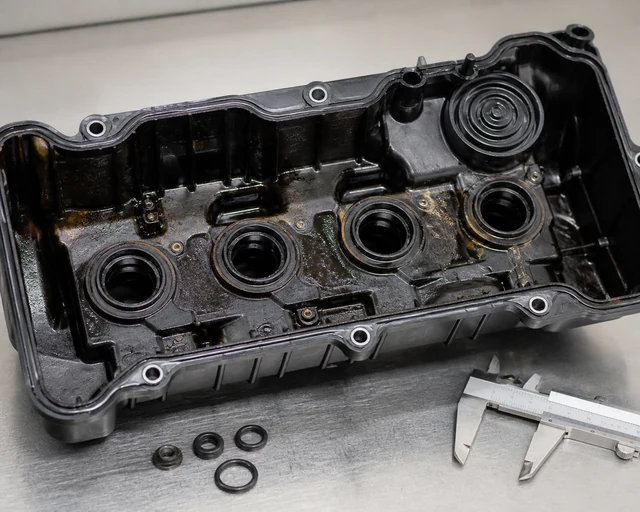
The most important matching point is the OE number, but it is not the only one. Many valve covers look similar from the top while differing underneath. For example, a cover may use a different oil separator path, a different PCV diaphragm cap, a different breather hose angle, or a different gasket shape. A workshop may only notice the difference after the old cover is removed, which creates downtime and customer frustration.
For bulk purchasing, ask suppliers to confirm the following fields before order approval: OE reference, engine code, model year range, material, included gasket, included PCV diaphragm, oil filler cap status, bolt set or sleeve status, breather port count, sensor or vacuum port openings, packaging method, and sample photos from at least three angles. If the supplier cannot provide underside photos, treat the listing as incomplete.
Check Point |
Why It Matters |
What to Request |
|---|---|---|
PCV diaphragm |
A failed diaphragm can cause whistling, rough idle, oil consumption, or pressure faults |
Close-up photo and confirmation that it is included |
Gasket channel |
Wrong gasket shape causes leaks even if bolt holes align |
Underside photo and gasket part status |
Breather hose port |
Angle or diameter changes can prevent hose connection |
Side photo with port diameter |
Sealing rail flatness |
Warped covers cause repeat oil leaks |
Sample inspection and flatness check |
Packaging |
Ports and bolt ears can crack in freight |
Carton and inner support photos |
Valve cover demand is often triggered by visible oil leakage, but that is only one part of the story. On integrated breather covers, the failure may show up as a high-pitched whistle, unstable idle, lean codes, oil smell, excessive crankcase vacuum, oil in the intake tract, or smoke after long idle. If a workshop replaces only the gasket while the diaphragm has failed, the vehicle may return with the same complaint.
Australian conditions can accelerate these failures. Heat cycles harden rubber gaskets, stop-start traffic increases crankcase vapor load, and dusty operating environments can make neglected maintenance more punishing. For buyers serving regional fleets or tradespeople, packaging and part durability matter because a comeback may mean the vehicle is unavailable for work rather than just inconvenient for a retail driver.
Price comparison should be done at kit level. One supplier may quote only the plastic cover, another may include gasket and cap, and a third may include the diaphragm and mounting hardware. If the buyer compares only the headline price, the cheaper item may become more expensive once missing parts, extra freight, and warranty risk are counted.
Ask suppliers to quote using the same checklist: complete assembly contents, minimum order quantity, lead time, packaging specification, sample policy, warranty process, carton quantity, barcode or private-label option, and whether mixed shipments are allowed. For importers, a slightly higher unit cost may be justified if the supplier reduces catalog errors and provides reliable photo confirmation before each shipment.
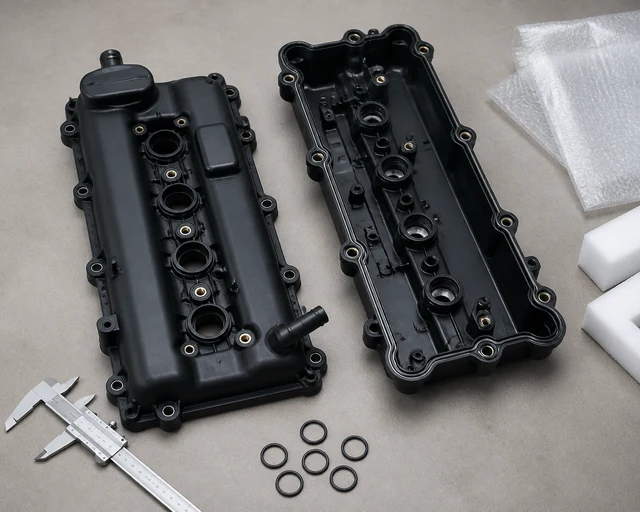
A practical Australian stocking plan usually separates valve covers into three groups. The first group is fast-moving mainstream applications where local demand is proven. The second group is European integrated PCV covers that create higher repair value but require stricter matching. The third group is slow-moving or specialty applications that should be ordered after OE confirmation rather than kept deeply in stock.
Use return data to refine the list. If a valve cover number has frequent warranty claims, check whether the failures are true part defects or diagnostic misses. A clogged breather hose, blocked oil separator path, worn engine, or incorrect installation torque can damage a new cover. Good suppliers help by providing installation notes and warning signs, not just replacement inventory.
Can you provide top, underside, side-port, and packaging photos before the first order?
Is the gasket included and pre-installed, or packed separately?
Is the PCV diaphragm included, and has the supplier checked vacuum response?
Which OE numbers and engine codes does the item replace?
Are bolt sleeves, grommets, oil cap, and breather fittings included?
Can mixed models be packed for one Australian shipment?
How are brittle ports protected during long-distance freight?
What evidence is required for warranty claims?
For Australian engine valve cover sourcing, the best supplier is rarely a single company for every application. Local trade suppliers help with urgent coverage and warranty support. European aftermarket brands are valuable for complex PCV and breather designs. Direct manufacturers can reduce cost for repeat applications when sample approval and packaging controls are strong. Elecdura fits buyers that want evidence-based matching and coordinated aftermarket sourcing across valve covers, cooling parts, and A/C components.
Before placing a bulk order, send the OE number, engine code, old-part photos, underside view, port view, target vehicle list, and required packing standard. That small amount of evidence protects margin, reduces returns, and gives workshops the confidence that the replacement cover will solve the leak or breather complaint the first time.


