Views: 0 Author: Site Editor Publish Time: 2026-07-28 Origin: Elecdura
Australia is a demanding market for fan clutch sourcing because many vehicles work under heat, towing load, long distance travel, off road use, mining support, agriculture, and heavy truck service. A buyer comparing fan clutch suppliers in Australia should not look only for a part that bolts on. The supplier route must support correct engine cooling performance, fan blade compatibility, thermal engagement behavior, bearing durability, and packaging that can survive long transport and warehouse storage.
Australian fan clutch programs often need heavier 4x4, utility, and light-truck coverage instead of only passenger-car parts.
This guide compares the brand options, demand benchmarks, and RFQ checks that matter to Australian fan clutch procurement. Some options are Australian manufacturers or distributors. Some are global brands with Australia market relevance. Some local channels are included only as demand benchmarks that help importers understand what repair networks and 4x4 users actually need. The article is written for importers, wholesalers, warehouse distributors, fleet buyers, and repair supply chains that need a practical B2B sourcing map rather than a retail repair recommendation.
Quick Comparison for Australian B2B Buyers
Brand, Supplier, or Benchmark
Best Use
Key Commercial or Technical Factor
Procurement Risk
Norman G Clark and Horton
Heavy duty truck and severe service fan drives
Australian manufacturing and Horton fan drive knowledge
Best fit for heavy duty programs, not every passenger reference
Alliance Truck Parts and Kit Masters
Truck fan clutch rebuild kits and replacement kits
Useful for fleet downtime and repair kit planning
Application must match the truck fan drive type
Dayco Australia
Passenger and light commercial fan clutch coverage
Australia office and aftermarket cooling system range
Part number coverage must be checked by application
GMB Oceania
Aftermarket engine cooling fan clutch references
Cooling system brand recognition and catalog access
Confirm exact bolt circle, height, and fan blade position
AISIN
Japanese vehicle applications and OE sensitive buyers
Useful for Toyota and Japanese platform confidence
Availability and price may limit broad stocking
Natrad demand benchmark
Australian local fan clutch and fan blade demand reference
Shows vehicle segments and local cooling parts demand
Use as market reference, not primary wholesale supply
Toyota genuine and 4x4 parts benchmarks
LandCruiser, HiLux, Prado, Patrol, and ute applications
OE reference confirmation for high demand 4x4 models
Retail fitment data does not replace wholesale sourcing checks
Nissens and European cooling brands
Selected European and catalog benchmark applications
Thermal system catalog discipline
Not every Australian 4x4 or truck reference is covered
Truck parts and mining support benchmarks
Road train, bus, mining, and agricultural service
Downtime, repair kit, and severe duty stocking logic
Must separate emergency retail supply from import sourcing
Elecdura wholesale sourcing support
Mixed aftermarket fan clutch and cooling parts programs
MOQ, lead time, packaging, and fitment evidence can be discussed before quotation
Compare samples against OE or recognized benchmark references
1. Norman G Clark and Horton
Norman G Clark and Horton are highly relevant for Australian heavy duty fan clutch sourcing. Norman G Clark publicly positions Horton engine cooling solutions in Australia and has long standing local manufacturing and repair kit expertise for Horton fan drives. For buyers serving heavy trucks, road trains, buses, and severe service vehicles, this is one of the clearest Australian references in the category.
The procurement value is technical depth. Heavy duty fan drives are not the same as simple passenger vehicle viscous clutches. Buyers may need to compare on and off fan drives, two speed fan drives, repair kits, high temperature bearing options, friction disc designs, and severe outback duty requirements. The supplier must understand torque, fan mass, operating temperature, uptime, and rebuild economics. A low cost part with weak bearing support can create more downtime than it saves.
For importers, Norman G Clark and Horton are also useful as a benchmark. Even when the buyer sources an aftermarket alternative elsewhere, the sample should be judged against the performance expectations of serious heavy duty fan drive programs. Confirm mounting, shaft stability, engagement method, rebuild kit availability, and service documentation before approving a replacement line.
2. Alliance Truck Parts and Kit Masters
Alliance Truck Parts in Australia promotes heavy duty fan clutch and engine fan solutions, including Kit Masters related rebuild and replacement kit coverage. This route is important because many Australian buyers are not only replacing light vehicle viscous clutches. They also handle trucks, fleets, and commercial vehicles where repair kits, downtime control, and parts continuity matter.
The value for B2B buyers is service program logic. A fleet buyer may prefer a rebuild kit for a known fan drive, while a warehouse distributor may stock replacement kits for high demand truck references. Kit Masters type programs also help buyers think in terms of fan drive family, clutch series, rebuild parts, and duty cycle rather than only a finished unit. This improves claim handling and reduces random substitution.
The risk is application mismatch. Heavy duty fan drive systems may differ by series, engine, fan diameter, air signal, drive type, and truck platform. A buyer should request the old unit tag, fan blade details, shaft information, repair kit number, and vehicle operating conditions. Without that evidence, a truck fan clutch order can become an expensive return.
3. Dayco Australia
Dayco Australia is relevant because it has an Australia presence and fan clutch coverage in the aftermarket cooling and power transmission category. For passenger vehicles, utes, SUVs, vans, and light commercial applications, Dayco can be a practical brand option when buyers need a recognizable aftermarket line with local support.
The B2B value is category fit. A distributor that already handles belts, cooling parts, and related engine components may find Dayco easier to integrate into an existing program than a one product supplier. Fan clutch demand often sits beside belts, pulleys, water pumps, fan blades, and other engine driven components. A brand with broader aftermarket category presence can simplify account management and counter catalog planning.
Before stocking deeply, buyers should validate part number coverage against Australian vehicle demand. LandCruiser, HiLux, Prado, Patrol, vans, and older imported vehicles may have multiple engine and production splits. Confirm bolt circle, pilot diameter, total height, fan blade offset, and thermal type. Also check warranty requirements and packaging, because Australian inventory may move through long regional routes before installation.
4. GMB Oceania
GMB Oceania is relevant as an aftermarket engine cooling fan clutch option. GMB's global cooling reputation makes it useful for buyers who need a recognizable brand for passenger and light commercial fan clutch references. The brand is also useful for buyers comparing fan clutches alongside water pumps and related cooling components.
The procurement strength is practical aftermarket coverage. A distributor may use GMB for applications where OE parts are expensive or difficult to obtain, but where the buyer still wants a brand with cooling system credibility. For Australian 4x4 and ute demand, sample validation is important because vehicles may work under towing heat, low speed tracks, and dusty conditions.
Inspect the sample beyond appearance. Check bearing play, silicone fluid leakage, cold drag, hot engagement response, housing balance, mounting surface, and fan blade position. A fan clutch can look correct but still create noise, vibration, late engagement, or excessive drag if the internal calibration is wrong.
5. AISIN
AISIN is relevant for Japanese vehicle applications and OE sensitive buyers. In Australia, Toyota platforms such as LandCruiser, Prado, HiLux, and commercial variants are important for 4x4, fleet, towing, rural, and mining support use. A buyer serving these applications may use AISIN or AISIN equivalent references as a quality benchmark for Japanese vehicle fan clutch demand.
The value is trust and technical fit. Japanese platforms often have strong owner expectations, and the cost of a failed cooling part can be high when a vehicle is used for towing or remote travel. A fan clutch must engage at the right thermal point, pull enough air through the radiator, and avoid unnecessary fan roar. Buyers should compare AISIN references with the old unit by OE number, fan blade offset, bolt pattern, and total height.
The limitation is commercial coverage. Premium Japanese brands may not be the lowest price option or the easiest route for every reference. Use AISIN where OE sensitive fitment matters, then compare validated aftermarket alternatives for price sensitive and lower volume applications.
6. Natrad as a Local Demand Benchmark
Natrad should not be treated as the main wholesale source for importers. Its value in this article is market intelligence. Natrad's public product categories show that fan clutches and fan blades are active replacement categories for Australian cars, 4x4s, and commercial vehicles. That helps B2B buyers understand where local demand exists and which vehicle segments may need stock support.
For importers and distributors, local service channels are useful because they reveal real repair patterns. If local networks often discuss fan clutches for 4x4 towing, overheating under load, or commercial vehicle cooling, those references may deserve deeper sourcing. The buyer should not copy retail pricing into a wholesale program, but can use the demand signal to decide which part numbers need sample validation.
This distinction matters. A local service network is valuable for understanding the Australian end market. A wholesale program still needs supplier qualification, MOQ, lead time, packaging, OE cross references, and repeat supply. Keeping those roles separate prevents the article from recommending a retail route as if it were a B2B import solution.
7. Toyota Genuine and 4x4 Parts Channels
Toyota genuine and specialist 4x4 parts channels matter because LandCruiser, HiLux, Prado, and related platforms are important in Australia. Nissan Patrol and other ute or 4x4 applications also create strong fan clutch demand. These channels are useful for OE reference confirmation, demand mapping, and understanding what repair customers expect from a cooling part used in towing, rural work, or remote travel.
For B2B buyers, these channels should be treated as application intelligence rather than the default bulk purchasing route. An importer can use genuine references to confirm the correct fan clutch, then compare aftermarket suppliers by dimensional accuracy, thermal response, packaging, and commercial terms. A distributor can also use 4x4 demand to prioritize which references deserve local stock before peak travel and towing seasons.
Do not approve a fan clutch only because it is listed for a vehicle name. Confirm engine, year split, fan blade, shroud clearance, bolt circle, pilot diameter, and total height. Australian 4x4 users are sensitive to cooling performance, so wrong substitutions quickly create complaints.
8. Nissens and European Cooling Brands
Nissens and similar European cooling brands can be useful for selected passenger and light commercial references, especially when buyers need catalog discipline and thermal system context. They should not be treated as complete Australia fan clutch coverage. Their role is strongest where the catalog supports the exact application and where the buyer values a structured aftermarket cooling brand.
For procurement teams, the useful point is reference discipline. Check whether the brand covers the application, whether the dimensions match the old part, and whether the supplier can provide consistent packaging and warranty terms. Do not use a European brand name to fill gaps where no actual fan clutch coverage exists.
When the application fits, Nissens type sourcing can help buyers compare thermal engagement behavior, cooling system compatibility, and related parts logic. The final approval should still be based on the exact fan clutch reference and commercial requirements.
9. Truck Parts Distributors and Mining Support Channels
Australia's truck, mining, road train, and agricultural sectors create fan clutch demand that is different from passenger vehicles. Truck parts distributors and mining support channels can show which severe service references move in the market. They are useful for demand mapping, emergency availability, and understanding downtime risk.
For B2B importers, the lesson is to separate emergency local supply from planned sourcing. A mine support vehicle may need a replacement immediately, while an importer needs predictable MOQ, lead time, packaging, and repeat supply. Both problems matter, but they should not be solved through the same buying process.
When planning heavy duty inventory, buyers should record fan drive type, vehicle platform, operating environment, fan diameter, expected duty cycle, and whether rebuild kits are part of the program. This makes the RFQ stronger and reduces the chance of buying a generic fan clutch for a severe service job.
10. Elecdura Wholesale Sourcing Support
Elecdura is not an Australian local repair chain or an Australian OE brand. Its role is wholesale sourcing support for importers and distributors that need aftermarket fan clutches, related cooling parts, mixed reference programs, and private label planning. This is useful when the buyer has already confirmed the OE reference or benchmark part and now needs a commercially workable aftermarket supply route.
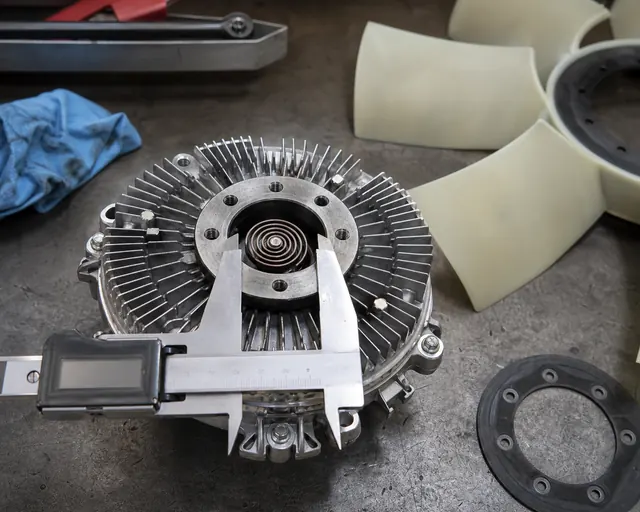
Elecdura can help compare fan clutch samples by OE number, old part photos, bolt circle, pilot diameter, total height, fan blade position, thermal spring side, and packaging needs. Buyers can use the fan clutch category as the starting point for a focused fan clutch program and keep sample approval centered on fan clutch fitment evidence.
For planned B2B orders, Elecdura can discuss a 60 day standard lead time and, for selected heavy duty or engineering equipment references, an MOQ from 20 units per model when technical evidence is complete. Final terms should be confirmed by part number, quantity, packaging, and production schedule.
Sample approval should be handled before the first broad purchase order. Ask for one sample from the target reference, compare it against the old unit or a trusted benchmark, inspect bearing play, housing finish, silicone fluid leakage, fan blade position, and carton protection, then record the result in the sourcing file. For Australian conditions, the buyer should also consider whether the vehicle works in towing, mining, long distance highway, or low speed off road duty. This prevents a supplier from quoting a light duty fan clutch into a severe service program only because the bolt pattern appears correct.
Pilot bore, bolt pattern, thermal setting, and fan blade compatibility should be checked before stocking remote-use applications.
RFQ Checklist for Australian Fan Clutch Buyers
RFQ Field
Why It Matters
Evidence to Attach
OE number and application
Australian vehicles often have engine and market splits
OE cross, vehicle model, engine, year range
Dimensions
Wrong height or pilot size causes no fit or vibration
Bolt circle, pilot diameter, total height, fan offset
Duty level
Towing, road train, mining, and 4x4 use need different expectations
Vehicle use, fan blade size, temperature environment
Commercial terms
B2B decisions require more than price
MOQ, lead time, warranty period, repeat supply plan
Packaging
Long transport can damage rotating parts and labels
Carton photo, inner support, label format, pallet plan
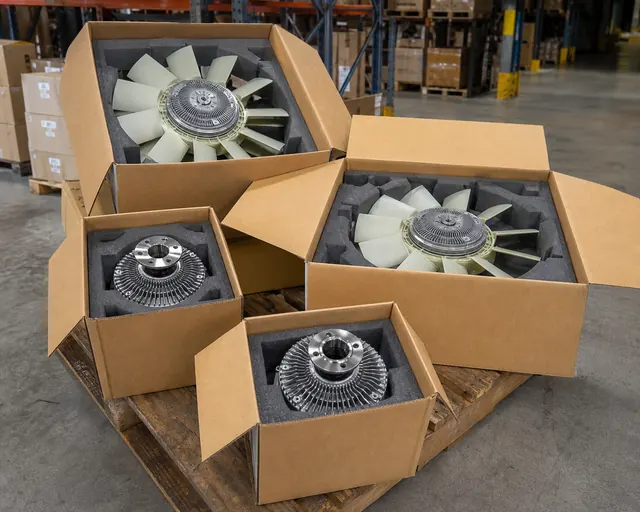
Remote stock orders benefit from stronger cartons and foam support because replacement opportunities may be far from major warehouses.
FAQ for Australia Fan Clutch Sourcing
Should an importer buy fan clutches from local repair channels?
Local repair and cooling networks are useful for demand signals, urgent support, and understanding which vehicle applications fail in the field. They are not usually the best route for a wholesale import program. Importers should use local signals to choose references, then qualify suppliers by OE matching, MOQ, lead time, packaging, and claim support.
Which Australian applications need extra fan clutch caution?
LandCruiser, HiLux, Prado, Patrol, heavy trucks, road trains, mining support vehicles, agricultural machines, and towing vehicles need extra caution because fan clutch performance affects engine cooling under sustained load. Buyers should verify thermal engagement, fan blade compatibility, bearing stability, and severe duty requirements before approving samples.
What is Elecdura's B2B advantage for Australia fan clutch buyers?
Elecdura can support mixed aftermarket fan clutch programs after the buyer confirms OE references or benchmark samples. The team can discuss fitment evidence, packaging, private label needs, a 60 day standard lead time, and an MOQ from 20 units per model for selected heavy duty or engineering equipment references when technical details are complete.