English
Views: 0 Author: Site Editor Publish Time: 2026-07-13 Origin: Site
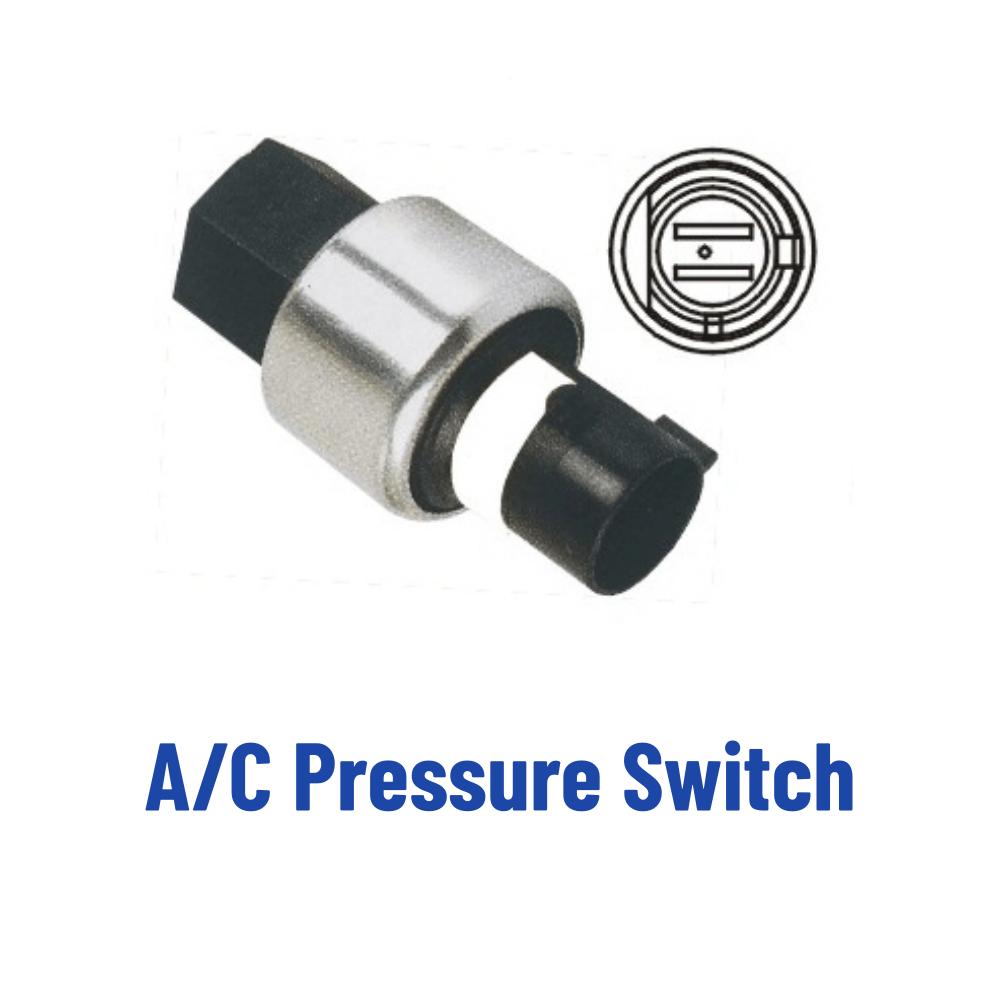
An automotive AC pressure switch can stop compressor engagement, trigger erratic cooling, or protect the system from unsafe pressure, but it should not be replaced blindly. Before ordering, confirm refrigerant charge, pressure readings, connector type, thread or port design, pin count, switch function, and vehicle application. Elecdura supports A/C pressure switch sourcing for importers and repair networks.
Searcher's question | Direct answer | Buyer risk |
|---|---|---|
What should be checked first? | Confirm symptoms, measurements, and related system faults before ordering. | Part replacement may not solve the real problem. |
What matching data is needed? | OE number, old-part photos, connector/port/mounting details, and vehicle or machine application. | Visual similarity can hide functional differences. |
What makes this a B2B topic? | Repeat orders, warranty handling, SKU data, packaging, and repair-network communication. | One wrong SKU affects many customers, not one repair. |
Automotive AC pressure switch replacement matching for A/C diagnosis
Many public repair resources answer consumer price questions, but importers face a harder problem: how to avoid receiving a compressor that fits the bracket yet fails because the pulley, clutch, control valve, refrigerant, oil, connector, or vehicle market is different. That gap is important for distributors because one wrong compressor can create a chain of warranty claims, labor disputes, and lost workshop trust.
A repair article written only for a vehicle owner often misses the procurement layer. Importers and distributors must decide what information to require from workshops, which SKUs deserve inventory, how to handle claim evidence, and how to communicate fitment limits. That is why the first screen should answer the core symptom or replacement question, then quickly move into practical decision support.
For Elecdura buyers, the useful approach is to build a repeatable confirmation workflow. Each incoming inquiry should capture the failed part photo, OE number, vehicle or machine data, measurable symptom, and replacement goal. This makes quotation faster and reduces the chance that a salesperson, buyer, and workshop are using different assumptions.
A strong buyer resource in this topic area should give symptoms, test steps, cost or risk context, and matching criteria. The B2B layer is how to turn those diagnostic facts into a safer sourcing program for importers, wholesalers, and repair supply chains.
Confirmation field | Why it matters | What to send or record |
|---|---|---|
OE number or old-part label | This is the fastest way to narrow the correct family. | Photo of label, stamped number, packaging, or invoice. |
Connector, port, or fitting view | Many parts look similar from the front but differ at the connection point. | Close photos of connector pins, ports, hose fittings, or threads. |
Vehicle or machine application | Year, engine, market, and chassis range can change the part. | Make, model, year, engine, VIN/chassis when possible. |
Failure symptom | The symptom decides whether related parts must be checked. | Temperature, pressure, leak location, noise, warning code, or performance complaint. |
Installation environment | Heat, dust, vibration, and fleet duty affect durability expectations. | Passenger, truck, off-highway, fleet, or repair-network use case. |
Begin with the symptom, not the catalog. A part that is replaced because it looks suspicious may not be the part that failed. Use simple observations first: leak location, operating temperature, pressure behavior, electrical command, noise, vibration, smell, and warning codes. Then decide whether the part is failed, mismatched, or only affected by another upstream problem.
For workshops, a short diagnostic sequence is easier to follow than a long theory section. For importers, the same sequence becomes a claim-screening tool. When the distributor asks for the test result before approving a replacement, the conversation becomes technical rather than emotional.
If a part is installed in a dirty, overheated, contaminated, or electrically unstable system, the new replacement can fail quickly. That is why the sourcing guide should always include related checks. A supplier should not only ship the part; it should help the buyer avoid repeat failure.
Record the customer complaint in plain language before selecting a SKU.
Take photos of the failed part from front, side, rear, connector, port, bracket, and label.
Check related sensors, wiring, hoses, seals, fluid condition, or airflow before replacement.
Compare the old part with the replacement before installation, especially connector and mounting details.
Keep installation and test evidence for warranty review.
The first mistake is replacing the visible part without checking the system around it. A leaking cover, overheating fan system, or low-boost charge cooler can be caused by related seals, hoses, wiring, sensors, or control logic. The replacement part then receives blame because it is the most recent item installed.
The second mistake is treating aftermarket and OE numbers as perfectly interchangeable without checking supersession and application notes. Aftermarket catalogs are useful, but they can group similar variants. For B2B orders, photos and dimensional checks are still needed.
The third mistake is not defining warranty evidence before selling the part. If the buyer does not know what photos, test values, or installation records are needed, every claim becomes a negotiation. A clear evidence list protects both sides.
Decision point | Recommended check | Sourcing implication |
|---|---|---|
Symptom confirmed | Use measurements or visible evidence, not only customer description. | Quote the part with confidence and note related risks. |
Connection type | Inspect connector, port, thread, fitting, or hose direction. | Avoid wrong functional variant. |
Mounting shape | Compare brackets, holes, tabs, and core dimensions. | Avoid installation-time return. |
System condition | Check contamination, heat, pressure, airflow, or fluid quality. | Protect warranty and repeat repair outcome. |
Stock priority | Use inquiry frequency, vehicle population, and SKU uniqueness. | Keep fast movers in stock and quote long-tail items by order. |
A procurement team should build an inquiry form for this part family. The form should include OE number, application, old-part photos, measurable symptom, quantity, packaging requirement, and market. Over time, this form becomes a database that shows which applications generate repeat demand and which ones are risky long-tail orders.
When comparing suppliers, do not judge only by unit price. Ask whether the supplier can confirm variants, provide photos before shipment, support neutral or private-label packaging, and explain warranty evidence. For small importers, technical communication can be more valuable than saving a small amount per unit.
Elecdura's role is strongest when the buyer sends enough matching information. With old-part photos, OE numbers, and target quantities, Elecdura can help confirm the replacement route and recommend related categories when the fault may involve more than one component.
Fast-moving SKUs deserve clean labels, stable cartons, and reorder points. Slow-moving SKUs should be handled through quotation unless the buyer has confirmed fleet demand. This prevents inventory from becoming a shelf full of similar-looking but hard-to-identify parts.
For repair networks, include a one-page confirmation sheet with each product family. It should show the main checks, common misdiagnosis traps, and warranty evidence requirements. This reduces repeated questions and improves claim quality.
If the part is sold under a private label, keep the supplier's technical data internally. The customer-facing brand can be simple, but the distributor's internal file should preserve OE crosses, photos, application notes, and replacement warnings.
Repair networks should report not only the failed part but also the reason it was diagnosed. A photo plus a symptom is good; a photo, symptom, measurement, and related-system check is much better.
Distributors should compare repeated claims by workshop, vehicle model, and failure type. If many claims share the same symptom, the issue may be diagnosis, installation, or a related component rather than the product itself.
For related Elecdura categories, buyers can cross-check aftermarket applications, on-highway parts, and off-highway solutions depending on vehicle type.
Confirm OE number, application, and old-part photos before quotation.
Check connector, port, thread, fitting, mounting, and dimensional details.
Ask the repair network for symptom evidence, not only a part name.
Decide whether related parts should be inspected or offered as a kit.
Keep warranty evidence rules visible before the first bulk order.
Send the final part list to Elecdura through Contact for matching support.
If you are building a replacement program for this product family, send Elecdura your OE numbers, old-part photos, current demand list, target market, packaging needs, and claim concerns. Our team can help confirm fitment and prepare aftermarket sourcing options for importers and distributors.
An A/C pressure switch or pressure sensor should be tested as part of the system, not as an isolated guess. A low-pressure cutout may prevent compressor engagement because the refrigerant charge is low. A high-pressure signal may stop the compressor because condenser airflow is poor, the fan does not run, or the system is overcharged. Replacing the switch without checking pressure can hide the real fault.
For distributors, the practical question is whether a pressure-switch inquiry is a replacement demand or a diagnosis problem. Ask the repair shop for gauge readings, compressor command status, fan operation, leak test result, connector condition, and any diagnostic trouble code. This information helps decide whether to supply the switch only or recommend related checks such as condenser fan, relay, or compressor control.
Test point | What it can reveal | Procurement note |
|---|---|---|
Gauge readings | Whether the pressure signal matches the actual system state. | Avoid replacing a switch when the charge is wrong. |
Connector voltage | Power, ground, and signal integrity. | Stock pigtails or note connector damage where common. |
Fan operation | High pressure may come from poor airflow. | Cross-link fan categories for repair networks. |
Leak evidence | Low pressure may come from refrigerant loss. | A switch replacement alone will not solve a leak. |
Pressure switches can look similar while using different thread sizes, sealing methods, pin counts, connector keys, pressure ranges, and signal types. Some are simple binary switches; others are pressure transducers that send a variable signal to the ECU. The buyer should confirm OE number, thread, connector, number of pins, switch location, and whether the vehicle uses a sensor or a switch.
For private-label programs, keep connector photos in the internal SKU file. Small pressure parts are easy to mispack because they are compact and visually similar. Clear bag labels, OE cross references, and pin-count notes reduce warehouse mistakes. If a repair network frequently asks for the same application, add a photo-based confirmation step to the ordering form.
When a pressure switch claim arrives, ask whether the system pressure was tested before and after installation. If the switch was installed into a leaking or overcharged system, the complaint may return even if the new part is functional. Also ask whether the connector was oil-contaminated, corroded, or loose. Electrical contact problems can imitate a failed switch.
Elecdura buyers can send OE numbers, connector photos, thread details, and target applications for matching. If the same customer also reports compressor non-engagement or fan problems, include those symptoms so the quotation can connect the pressure switch with related A/C and cooling-system parts.
Some A/C systems use a simple pressure switch that opens or closes at a pressure threshold. Other systems use a pressure transducer that sends a changing voltage signal to the control module. These parts can both be described casually as pressure switches, but they are not interchangeable. A buyer should confirm pin count, connector shape, thread, pressure range, and signal type before quoting.
This distinction matters for distributors because a wrong pressure sensor may fit the port but send the wrong signal. The compressor may still not engage, the fan may behave incorrectly, or the control module may store a pressure-sensor code. When a repair network cannot explain the part type, request an OE number and old-part photo before shipping.
Part type | Typical behavior | Matching risk |
|---|---|---|
Low-pressure switch | Cuts compressor operation when pressure is too low. | Wrong thread or threshold. |
High-pressure switch | Protects system from excessive pressure. | Wrong pressure range. |
Pressure transducer | Sends variable pressure signal to ECU. | Wrong signal or connector pinout. |
Combined switch/sensor | May control compressor and fan logic. | Misdiagnosis if fan fault is ignored. |
Customer service teams should ask whether the compressor clutch is being commanded, whether the condenser fan runs when A/C is requested, and what the static pressure is before the engine starts. A system that is empty because of a leak should not be treated as a switch defect. A system with high pressure because the fan is dead should not be solved by replacing the pressure sensor alone.
If a buyer repeatedly orders pressure switches for the same model, build a mini record: OE number, connector photo, thread size, pin count, common symptom, and related fan or compressor checks. This small database can turn a confusing low-cost part into a reliable repeat item.
Use sealed packaging to keep threads and O-rings clean.
Label pin count and OE cross clearly on the bag or box.
Do not mix visually similar switches in one carton without inner labels.
Ask whether O-rings are included or need separate sourcing.
For private label, keep technical photos internally even when the outer label is simple.
Before the order is confirmed, the buyer should make sure the part information, failure evidence, and commercial expectation all point in the same direction. Many aftermarket problems begin when one team talks about price, another team talks about fitment, and the warehouse receives only a short part name. A small amount of structure before payment saves much more time after arrival.
Do not mix pressure switches and pressure transducers in the same purchasing label.
Record thread size, O-ring requirement, pin count, and connector key shape.
Ask whether the switch is mounted on the high side, low side, condenser line, or receiver drier.
For repeated compressor non-engagement complaints, collect refrigerant pressure data before approving switch replacement.
For repeat programs, the supplier should be asked to preserve the matching record. This includes the old-part photo, OE number, confirmed replacement, packaging label, and any warning about related components. When the same inquiry returns later, the buyer can reorder from a controlled record instead of starting diagnosis again from memory.
Because pressure parts are small and inexpensive, they are easy to treat casually. That is a mistake. A wrong pressure signal can keep the compressor off, force fan behavior that looks strange, or create repeat diagnosis time for the workshop.
Pressure-switch sourcing should also consider warehouse control. Because many switches are small, similar, and shipped in large quantities, inner labels should show OE cross, pin count, thread style, and sealing note. If an order contains both binary switches and pressure transducers, separate them by carton or color label. This prevents a correct purchase from becoming a packing mistake. For repair networks, include a note that pressure data and leak testing should be checked before replacement. That one sentence can prevent many unnecessary claims.
Before adding automotive ac pressure switch symptoms, testing, and replacement matching to a repeat purchasing file, the buyer should save the final approved specification, the customer-facing part name, the internal matching notes, and the photos used for confirmation. This file should travel with the SKU from quotation to warehouse packing and later warranty review. A clean ordering file is especially useful when staff change, when the same customer reorders after several months, or when a similar-looking variant appears in a new inquiry. It turns the first successful order into a repeatable supply process instead of a one-time match.