In a conventional engine cooling system, hot coolant enters the radiator from the engine and returns to the engine after releasing heat through the radiator core. The upper radiator hose is often the inlet and the lower hose is often the outlet, but hose position alone does not establish coolant flow direction.
Radiator design determines the location of the coolant connections, while thermostat placement varies with the engine cooling circuit. Before ordering a replacement engine cooling radiator, confirm the coolant circuit, hose connections and internal flow configuration.
Which Direction Does Coolant Flow Through a Radiator?
In a typical engine cooling circuit, the water pump circulates coolant through the engine. Once the thermostat allows flow through the radiator, heated coolant travels to the radiator inlet, releases heat through the core and returns toward the pump inlet.
During engine warm-up, the engine coolant thermostat regulates coolant flow through the radiator. Many systems allow coolant to circulate through a bypass while the main radiator path is closed or restricted.
The thermostat may be located on the engine outlet side or the coolant return side. Its position varies with engine design, so the presence of a thermostat housing does not automatically identify a radiator inlet.
Downflow, Crossflow and Double-Pass Radiators
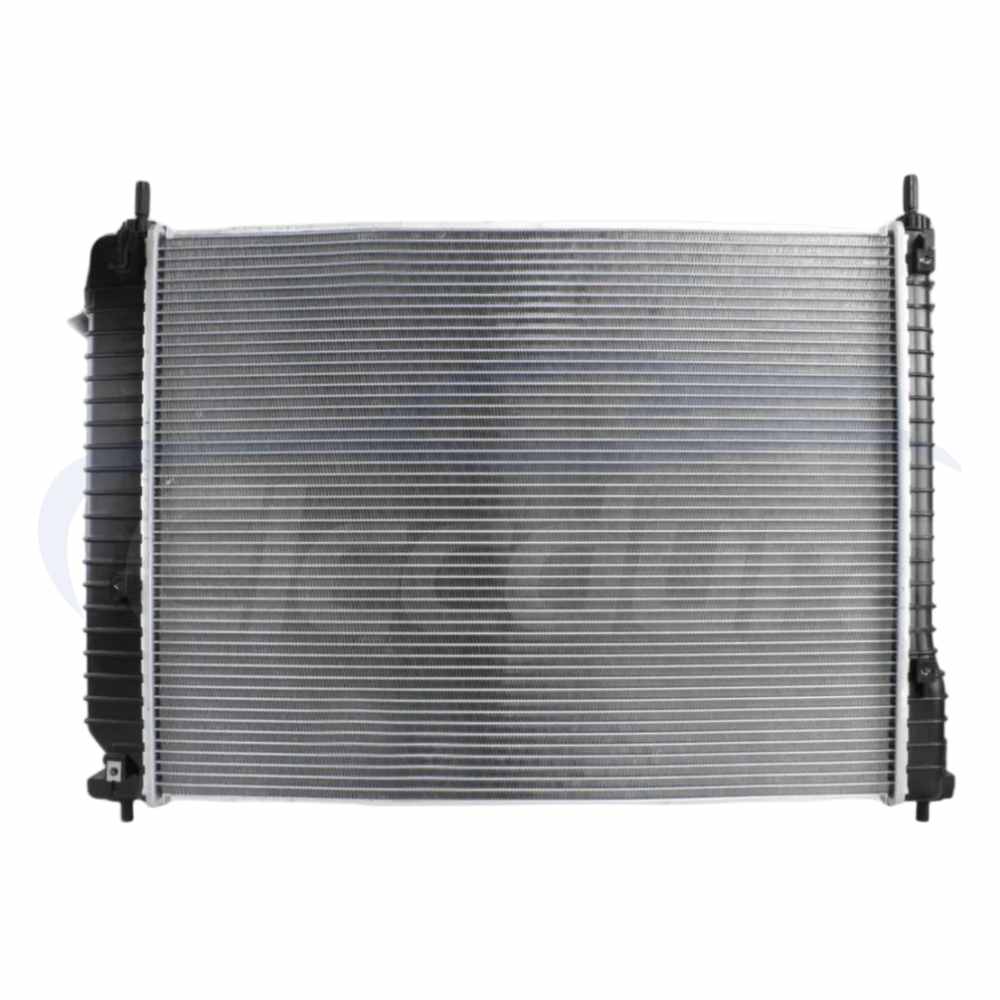
Radiator construction determines how coolant travels through the core. Tank position and internal partitions are important when comparing replacement parts.
| Radiator Design | Typical Coolant Path | What to Confirm |
|---|---|---|
| Downflow radiator | Coolant enters the upper tank, travels downward through the core and exits through the lower tank. | Upper and lower tank connections, neck positions and mounting points. |
| Single-pass crossflow radiator | Coolant travels across the core from one side tank to the opposite tank. | Which tank receives coolant from the engine and which provides the return path. |
| Double-pass crossflow radiator | An internal tank partition directs coolant across the core and back through a second section. | Internal partition layout, inlet and outlet positions, and the intended number of passes. |
Two radiators can have similar external dimensions and hose connections but different internal flow arrangements. External appearance is not enough to establish interchangeability.
How to Identify the Radiator Inlet and Outlet
1. Check the Vehicle Cooling System Diagram
Use the service information for the exact vehicle and engine. Identify the engine coolant outlet, radiator connections, thermostat, water pump and bypass circuit.
This is particularly important on vehicles with electric pumps, multiple cooling circuits or electronically controlled coolant valves.
2. Trace the Main Coolant Hoses
With the engine cold, follow the main hoses between the engine and radiator. Identify their connection points using the cooling system diagram rather than relying on hose height. Hose diameter alone does not identify the inlet or outlet.
Distinguish the main coolant connections from smaller bleed lines, expansion tank hoses and connections for integrated transmission oil coolers.
3. Check the Radiator Tank Arrangement
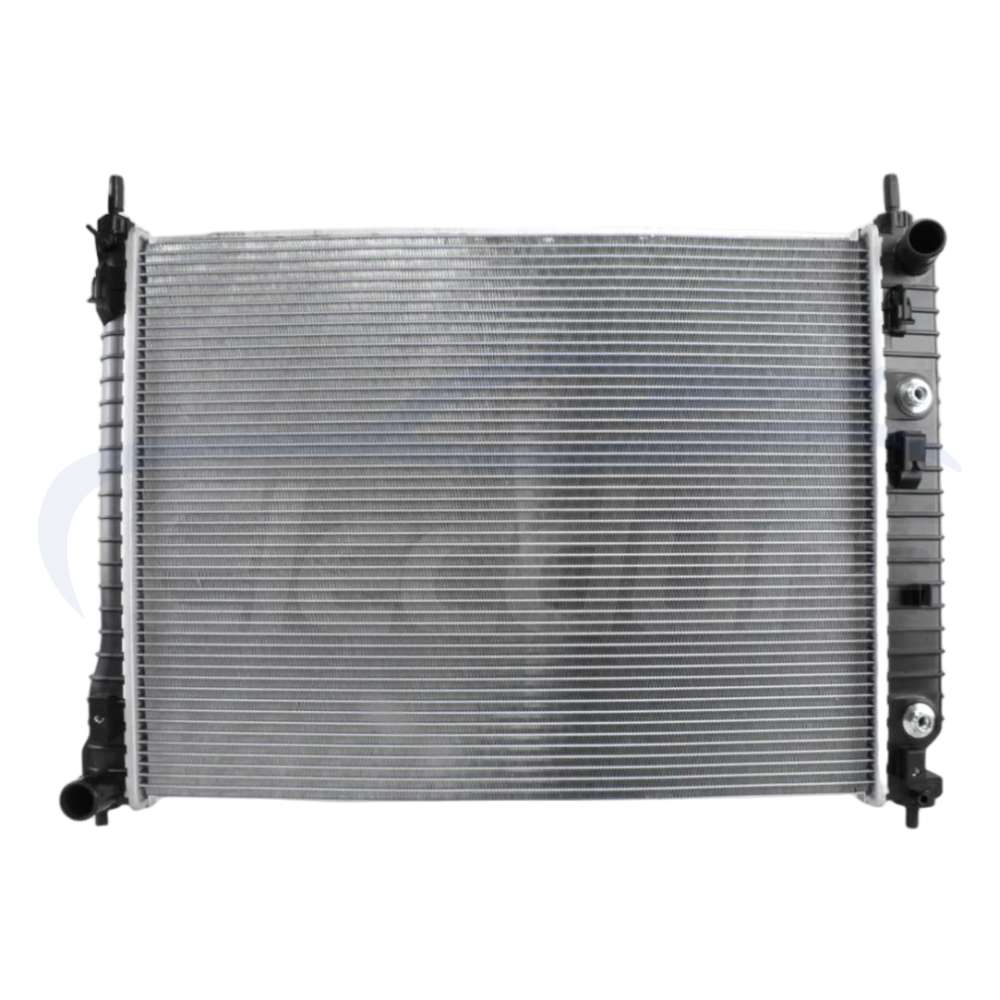
Compare both coolant connections, tank shape and any available technical drawings. When both main hoses connect to the same side of a crossflow radiator, check whether the tank contains an internal partition.
4. Use Temperature Measurements as Supporting Evidence
A technician can compare temperatures at the radiator connections while monitoring engine temperature and thermostat operation. When coolant is flowing through the radiator under stable operating conditions, the inlet is generally warmer than the outlet.
However, readings taken during warm-up, thermostat movement, fan cycling or heat soak may be misleading. Temperature readings should support the identified coolant path, not replace the vehicle cooling system diagram.
See our guide to radiator inlet-to-outlet temperature differences for more information on interpreting these measurements.
Can Radiator Inlet and Outlet Connections Be Reversed?
Do not reverse radiator hoses unless the vehicle or radiator manufacturer specifies that arrangement.
Even when coolant can physically travel through the core in the opposite direction, changing the intended connections may interfere with air removal, internal flow distribution or temperature monitoring, depending on the cooling system design.
A reverse-flow engine design does not necessarily require reversed radiator connections. Follow the cooling system diagram for the specific engine and vehicle.
If a replacement radiator has different connection positions, verify its application and technical configuration before installation rather than modifying the hose routing to make it fit.
Can Incorrect Hose Routing Cause Overheating?
Incorrect hose routing or an unsuitable replacement radiator can contribute to inadequate cooling. However, overheating can also result from a restricted radiator, faulty thermostat, inadequate coolant circulation, trapped air or insufficient airflow from the radiator cooling fan.
If overheating continues despite correct hose routing, investigate other possible cooling system faults:
- For suspected internal restrictions, see our radiator flow test guide.
- If the return hose flattens during operation or cooldown, see our guide to lower radiator hose collapse.
- If coolant escapes around the cap or fails to return correctly during cooldown, review the symptoms of a faulty radiator cap.
After cooling system repairs, follow the vehicle manufacturer's coolant filling and bleeding procedure. Air trapped in the system can reduce circulation and affect temperature readings.
What to Check Before Ordering a Replacement Radiator
Matching a replacement radiator requires more than comparing its overall height and width. Confirm the vehicle application, connection layout and internal flow arrangement.
| Matching Information | Details to Confirm |
|---|---|
| Vehicle application | Make, model, production year, engine and transmission. |
| Part reference | Original part number, OE reference or available replacement reference. |
| Core dimensions | Core height, width, thickness and overall assembly dimensions. |
| Coolant connections | Inlet and outlet diameters, positions, angles and tank arrangement. |
| Internal configuration | Flow direction, pass arrangement and internal tank partitions where applicable. |
| Additional connections | Bleed ports, drain plugs, sensor ports and integrated oil cooler connections where fitted. |
| Installation features | Mounting brackets, fan shroud attachments and clearance around the radiator. |
Photographs of both coolant connections, the original part label and the mounting points are useful when several radiator versions are listed for the same vehicle.
Sourcing Aftermarket Replacement Radiators
Elecdura supplies aftermarket replacement radiators to distributors, importers and wholesalers. Browse our radiator product range or visit our catalog download center.
If you cannot find the radiator you need in our catalog, send us your parts list, available OE numbers, application details, product photos and required quantities. We can review the available replacement options before preparing a quotation.