English
Views: 0 Author: Site Editor Publish Time: 2026-07-07 Origin: Site
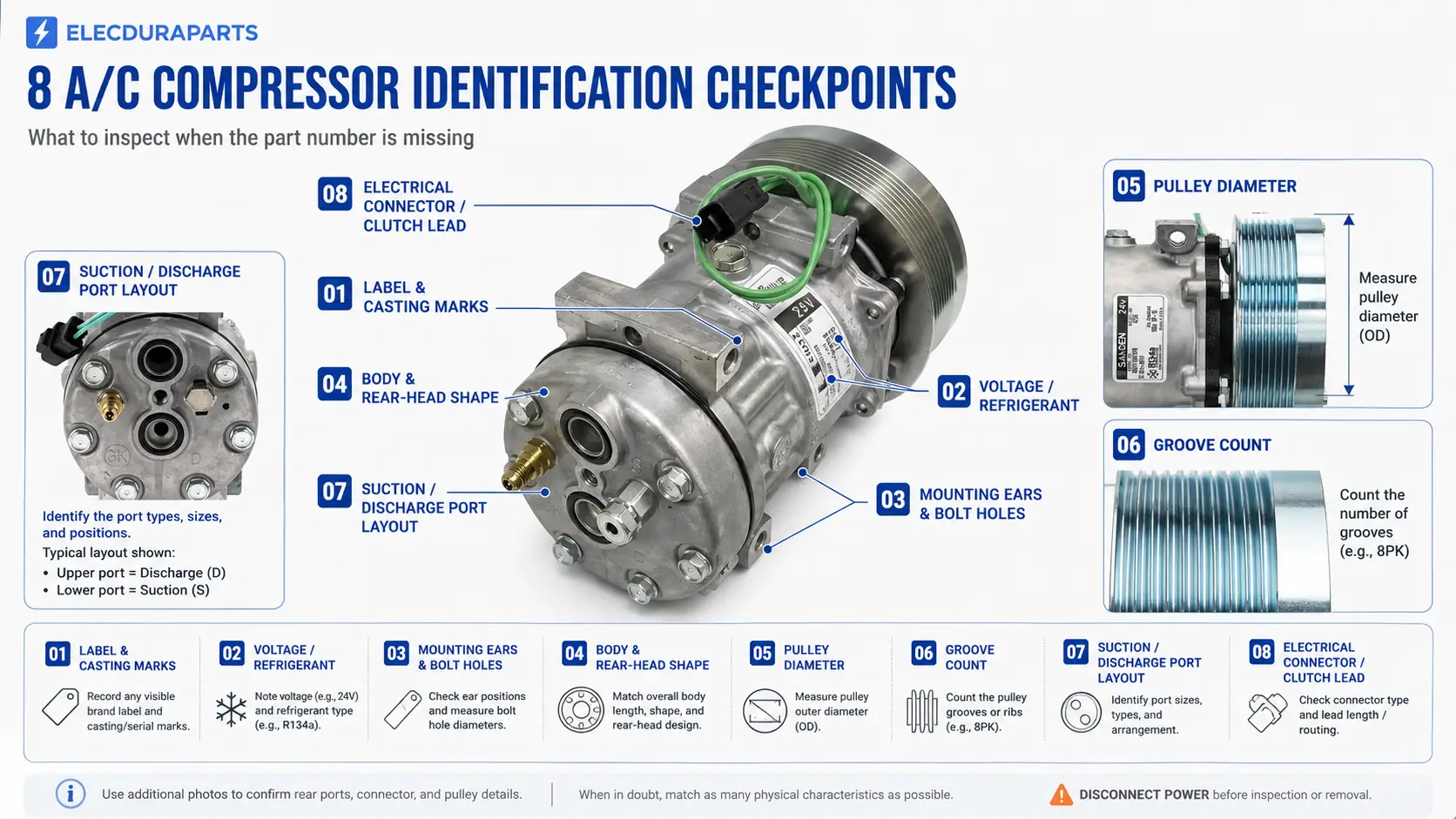
If the AC compressor part number is missing, start with the compressor body, not the vehicle model. The fastest identification path is to record the voltage, pulley diameter, groove count, clutch or plug type, mounting ears, suction and discharge port position, refrigerant, and clear photos from every side. A vehicle model alone is often not enough because the same car, truck, tractor, or machine can use different compressors by engine, market, cabin A/C layout, year range, or supplier.
A VIN can narrow the catalog search, but it does not by itself confirm the exact compressor. Use it to retrieve candidate OE references, then verify voltage, pulley, mounting, port, connector, and application details against the actual unit.
For comparison, the Toyota Corolla 88320-52400 AC compressor and the Toyota Innova, Hilux and Fortuner 10S15C AC compressor illustrate why the vehicle name alone is not enough: the OE reference, compressor family, pulley, ports and mounting pattern still need to match.
This guide gives a practical field checklist for buyers, distributors, and repair teams who need to identify an AC compressor when the label is damaged, the OE number is unreadable, or the old unit has no visible tag.
Check Point | What to Record | Why It Matters |
|---|---|---|
Voltage | 12V, 24V, or high-voltage electric compressor | A 12V passenger compressor cannot replace a 24V truck or machinery compressor. |
Pulley | Outer diameter, belt type, groove count, clutch style | Wrong pulley size or groove count can misalign the belt or change compressor speed. |
Mounting ears | Number of ears, position, bolt hole diameter, distance between holes | Similar compressors may not bolt to the original bracket. |
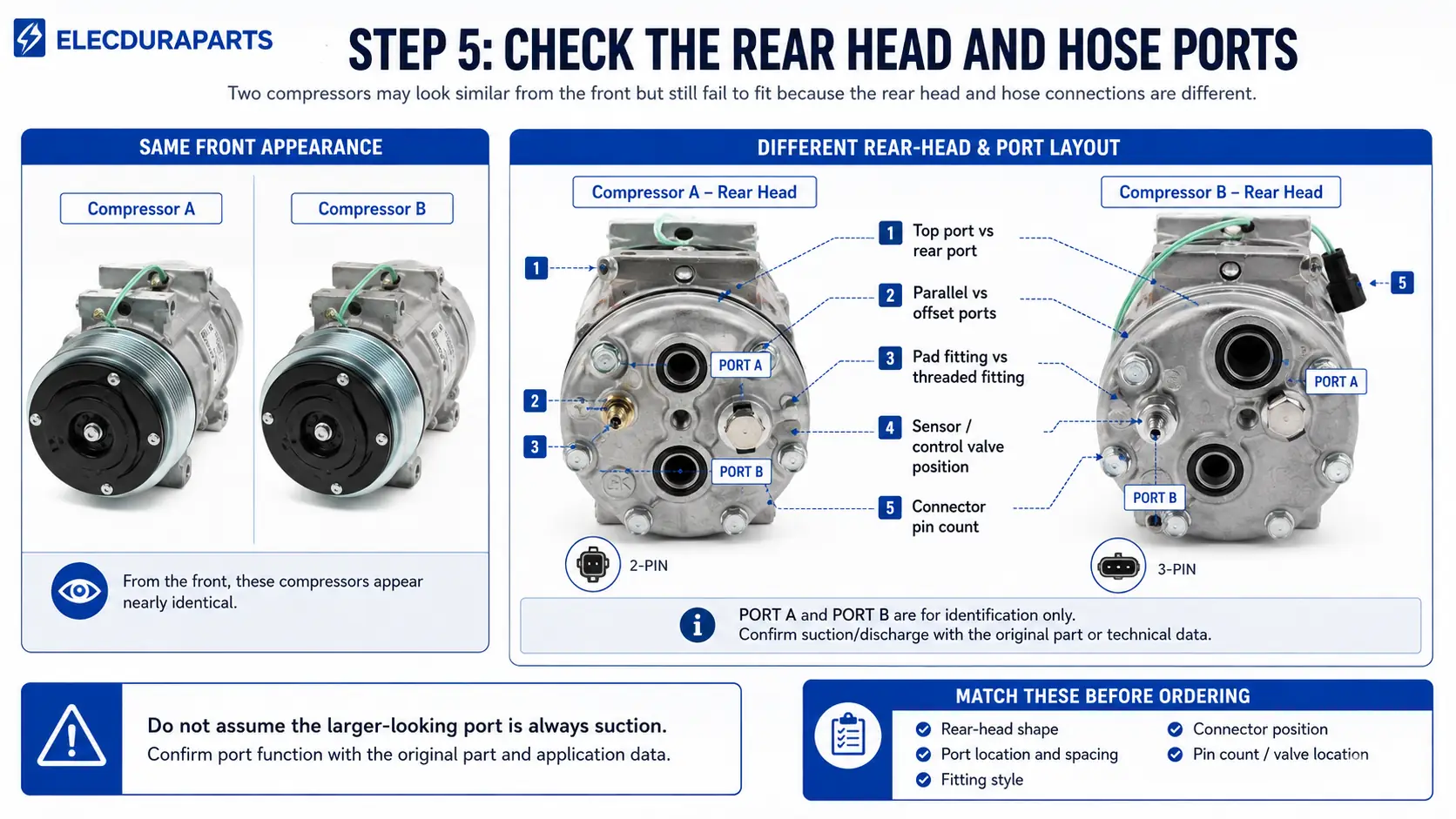
Ports | Suction/discharge location, direction, fitting style, rear head shape | Hose connection is one of the most common mismatch points. |
Connector | Clutch connector, sensor plug, electric compressor plug | Connector shape and pin count must match the original system. |
Body shape | Compressor family, cylinder shape, rear cover, oil plug, label area | Helps distinguish Denso, Sanden-style, Valeo-style, scroll, piston, and electric units. |
Application details | Vehicle or machine model, year, engine, market, serial range | Useful only after the physical compressor features have been checked. |
Visible specifications such as 24V, refrigerant type, pulley diameter, and groove count can narrow the replacement search quickly.
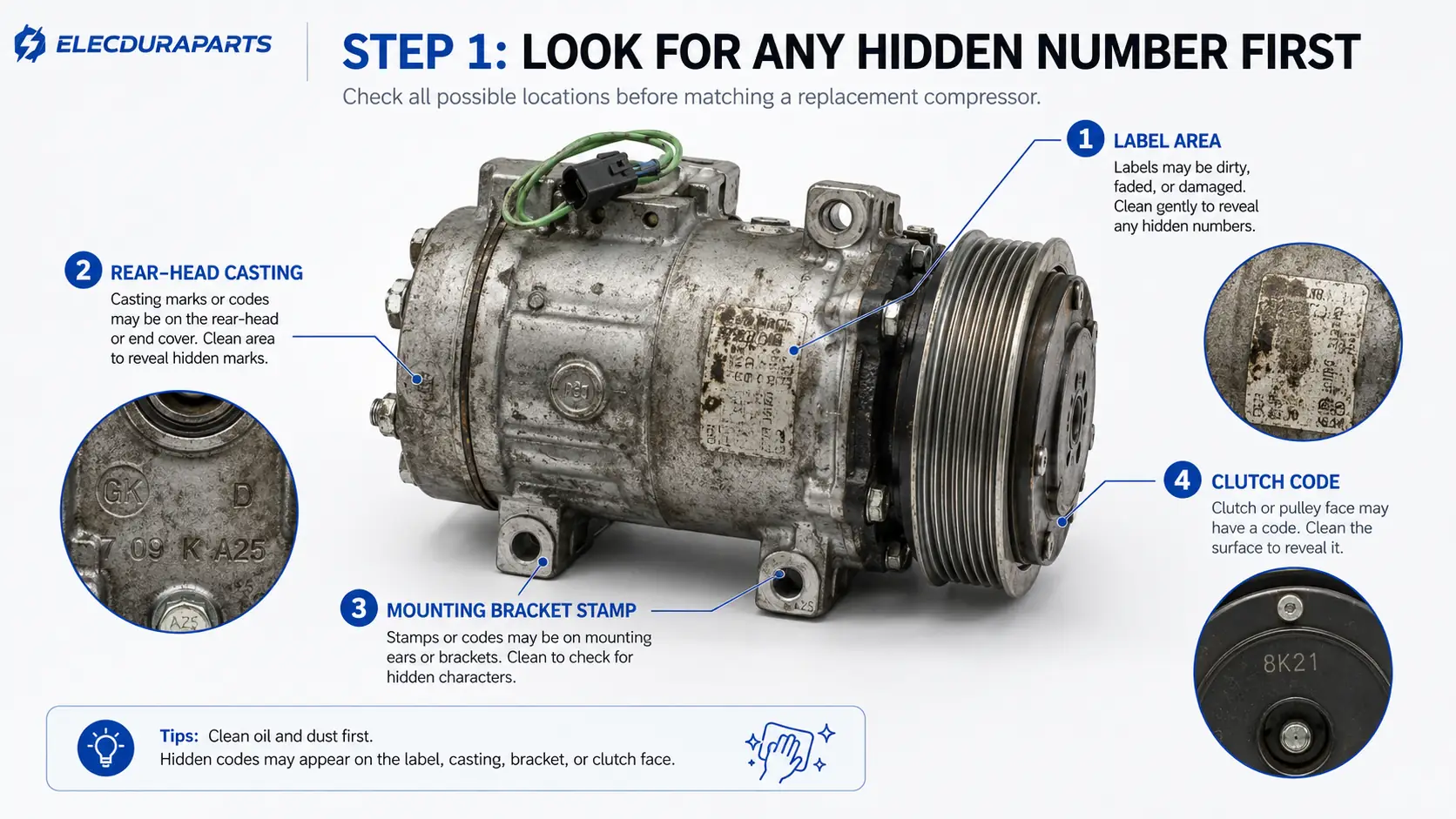
Before measuring the compressor, clean the label area and the casting surfaces. Dirt, oil, paint, and corrosion often hide a useful number. Check:
Original label or sticker on the compressor body
Stamped number on the rear head or mounting bracket
Supplier code on the clutch plate or pulley face
OE number on an invoice, repair record, or old packaging
Vehicle parts catalog number if the VIN, chassis number, or machine serial number is available
If the number is still missing or unreadable, do not guess from the vehicle model alone. Move to physical identification.
The compressor family tells you which direction to search. Most aftermarket matching problems start because the buyer compares only the vehicle model and ignores the compressor type.
Compressor Type | Common Visual Clues | Typical Applications |
|---|---|---|
Belt-driven clutch compressor | Front pulley, magnetic clutch, 1- or 2-wire clutch connector | Passenger cars, trucks, agricultural machines, construction equipment |
Variable displacement compressor | Control valve connector, clutch or clutchless pulley design | Modern passenger cars and light commercial vehicles |
24V heavy-duty compressor | 24V clutch, larger body, truck or machinery bracket layout | Heavy trucks, buses, excavators, tractors, loaders |
Electric AC compressor | No belt pulley, high-voltage plug, sealed electric body | Hybrid and electric vehicles |
For electric compressors, do not substitute a belt-driven unit or mix oil types. High-voltage electric compressors require stricter matching and safety checks than standard clutch compressors.
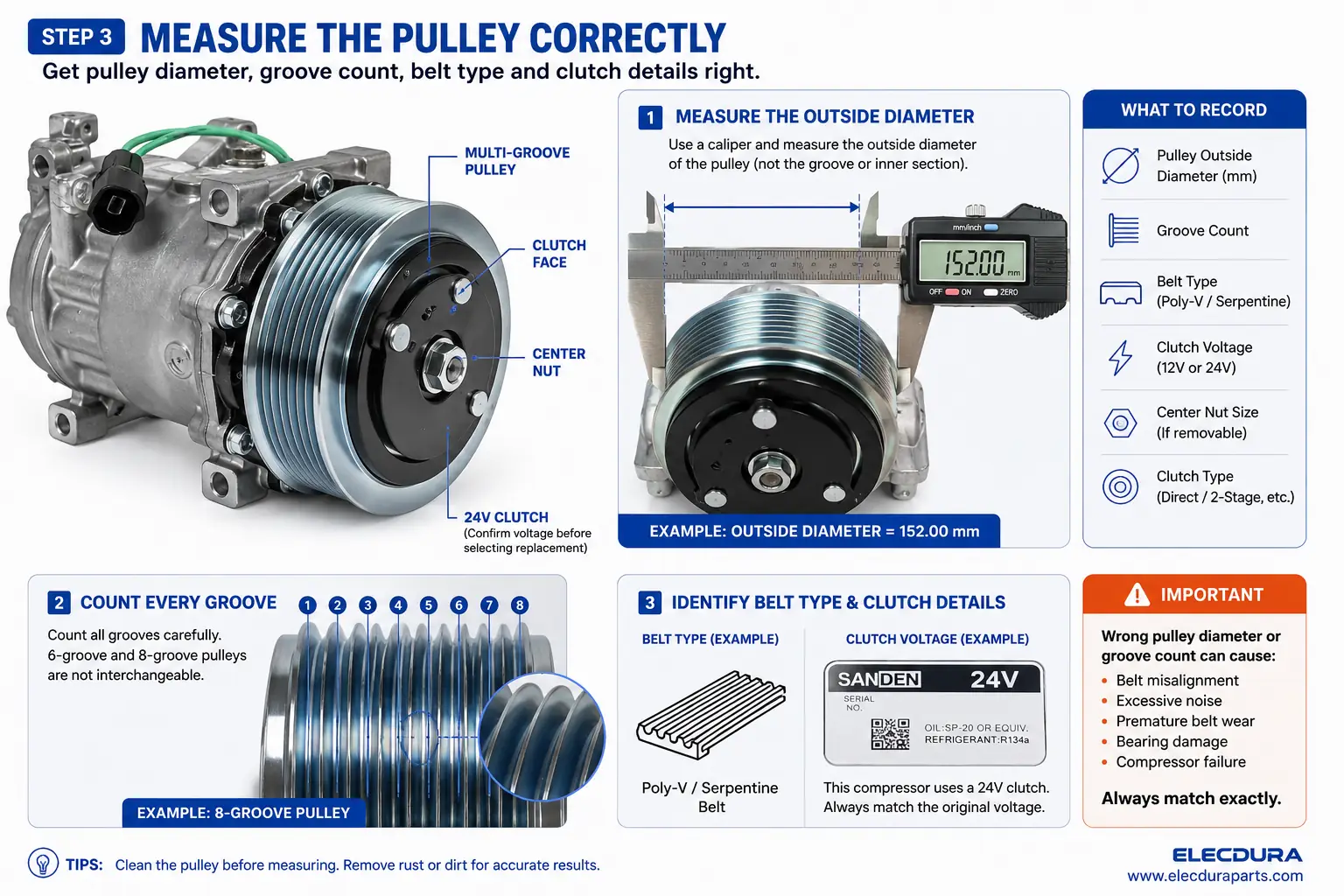
The pulley is one of the easiest places to make a mistake. Record the outer diameter, belt type, groove count, and clutch face style.
A useful visual cross-check is to compare the 22692375 7CVC compressor for Chevrolet Impala and GM V6 platforms with the 25940199 10S20 compressor for Chevrolet, GMC, Cadillac and Hummer. Even within related GM applications, compressor family, pulley and connection details can differ.
Pulley diameter: measure the outside diameter in millimeters.
Groove count: count every rib groove carefully; 6-groove and 8-groove pulleys are not interchangeable.
Belt type: V-belt, multi-rib belt, or special machinery belt layout.
Clutch face: compare the shape of the front plate and retaining nut.
Clutch voltage: confirm 12V or 24V before ordering.
A compressor with the correct mounting ears but the wrong pulley may still install poorly. It can create belt noise, belt wear, poor cooling, or early bearing failure.
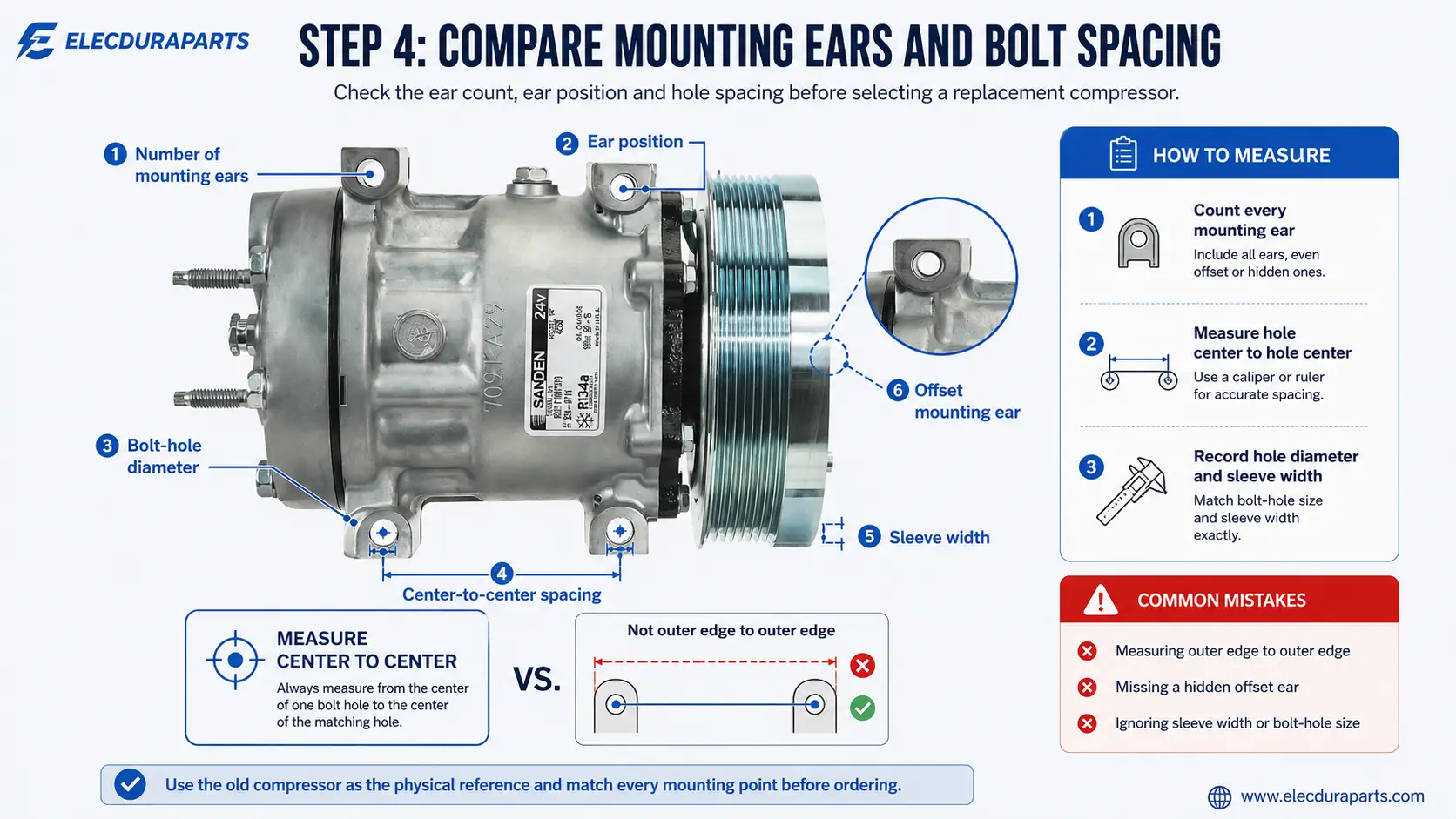
Mounting ears decide whether the compressor physically fits the bracket. Photos are helpful, but measurements make the match safer.
Mounting Detail | How to Check | Common Mistake |
|---|---|---|
Number of ears | Count front and rear mounting lugs | Assuming a similar body means the same bracket fit. |
Ear position | Photograph from front, rear, left, and right | Missing one offset ear hidden behind the body. |
Bolt spacing | Measure center-to-center distance between holes | Using outside-to-outside measurement instead of center distance. |
Bolt hole diameter | Measure hole size and sleeve width | Forcing a compressor into a bracket with the wrong sleeve size. |
The rear head is often more important than the front view. Two compressors can have the same pulley and body but different suction and discharge port positions.
Record these details:
Are the ports on the rear, top, side, or angled body section?
Are the suction and discharge ports parallel, offset, or opposite each other?
Does the compressor use pad fittings, threaded fittings, or flange fittings?
Is there a pressure switch, sensor, or control valve on the rear head?
Does the hose direction match the original vehicle or machine layout?
If the hose cannot connect without twisting, stretching, or changing direction, the compressor is probably not the correct match. This is especially common in tractors, buses, excavators, and imported vehicle variants.
After the physical details are recorded, use the application information to confirm the match. Do not reverse the order. The same model name may cover multiple engines, emissions versions, markets, or production years.
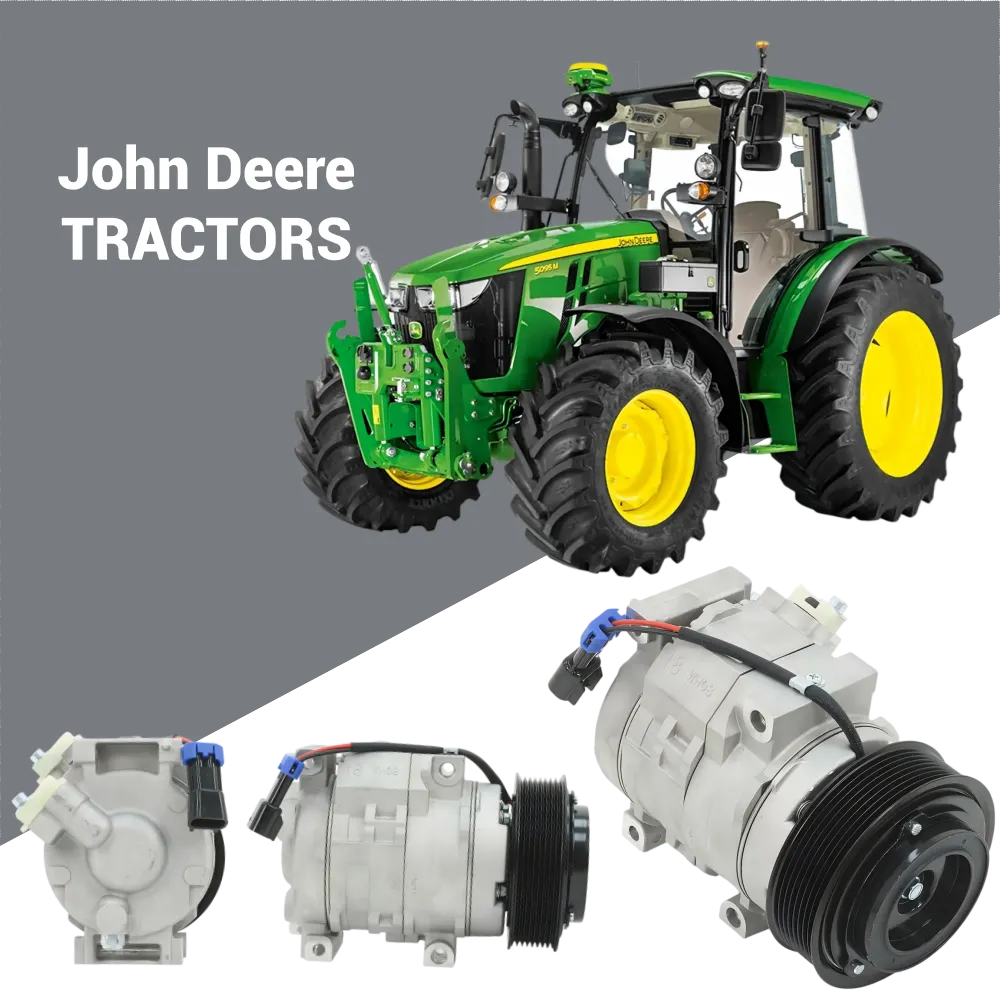
For agricultural and machinery compressors, model and OE number should be checked together with pulley, port, and mounting details.
Application Field | Why It Helps | Risk If Missing |
|---|---|---|
Vehicle brand and model | Defines the general search range | Too broad for final matching. |
Year or production range | Filters generation changes | Early and late versions may use different compressors. |
Engine model | Confirms bracket and belt layout | Same vehicle body can have different engine-side compressor fitment. |
Market or region | Accounts for regional part differences | Imported vehicles may not match domestic catalog assumptions. |
Machine serial number | Important for off-highway equipment | Serial breaks can change the cooling or A/C system layout. |
If you need a supplier to identify the compressor, do not send one blurry front photo. Send a complete set. A good photo set can often replace a missing part number.
Front view showing pulley, clutch plate, and connector
Rear view showing suction and discharge ports
Top view showing body shape and label area
Left and right side views showing mounting ears
Close-up of any remaining label, stamped number, or casting mark
Close-up of the clutch connector or electric compressor plug
Photo of the compressor installed on the engine or machine, if possible
Measurement photo with calipers or ruler for pulley diameter and bolt spacing
"Toyota Camry compressor" or "John Deere tractor compressor" is not precise enough for purchasing. The compressor may change by engine, market, production year, refrigerant, or supplier.
For trucks, buses, and machinery, 24V compressors are common. A 12V compressor may look similar but will not work correctly in a 24V system.
The front view shows the pulley and clutch, but the rear head decides whether the hoses fit. Always compare the ports.
Marketplace listings may combine several reference numbers or applications. Use the listing as a clue, not final proof.
If the old compressor failed internally, the replacement may also require an AC condenser, receiver drier, expansion valve, seals, and system flushing. A wrong or incomplete repair can damage the new compressor quickly.
Elecdura supports aftermarket wholesale AC compressor sourcing for passenger cars, trucks, agricultural machines, construction equipment, and selected electric vehicle applications. If the part number is missing, send us the application details and photo checklist above. We can compare the old unit against compressor references, dimensions, pulley details, port layout, and mounting structure.
For buyers managing mixed orders, it is also useful to share your full compressor list together with related cooling and A/C parts. Elecdura can help consolidate sourcing across AC compressor, AC condenser, cooling fan, and fan control module categories.
When the AC compressor part number is missing, do not rely on the vehicle model alone. Identify the compressor from physical evidence: voltage, pulley diameter, groove count, connector, mounting ears, rear head, hose ports, body shape, refrigerant, and installation photos. Then use the vehicle or machine details as a cross-check.
If you are not sure, send Elecdura clear photos from every side, pulley measurements, bolt spacing, voltage, refrigerant type, and the vehicle or machine model. A careful match before ordering is cheaper than a compressor that cannot bolt on, connect to the hoses, or survive the first repair.