English
Views: 0 Author: Site Editor Publish Time: 2026-07-07 Origin: Site
For replacement parts matching, the OEM number is usually more reliable than the machine model, but the safest answer is to use both. The model tells you the application family. The OEM number points to the actual part design. Photos, dimensions, connector shape, port direction, and serial range confirm whether that part really matches the machine in front of you.
This matters because the same machine model can use different parts by production year, serial range, engine version, market, emissions package, cab A/C layout, or supplier change.
Matching Signal | Strength | Risk | Best Use |
|---|---|---|---|
OEM number | Usually the most precise starting point | Can be superseded, copied incorrectly, or used across variants | Start search and cross-reference replacement options |
Machine or vehicle model | Useful for application filtering | Too broad for final confirmation | Confirm application family and serial range |
Serial/VIN/engine code | Very useful for variant filtering | Still may not reveal prior repairs or retrofits | Separate early/late and market-specific versions |
Photos and dimensions | Best final reality check | Requires clear photos and correct measurements | Confirm ports, brackets, connectors, pulley, core size, and mounting |
A model name such as PC200-8, Hilux, Golf, F-150, or John Deere 6105M does not always identify one exact part. It may cover multiple years, engines, markets, suppliers, and equipment packages.
Radiators may differ with or without automatic transmission cooler fittings.
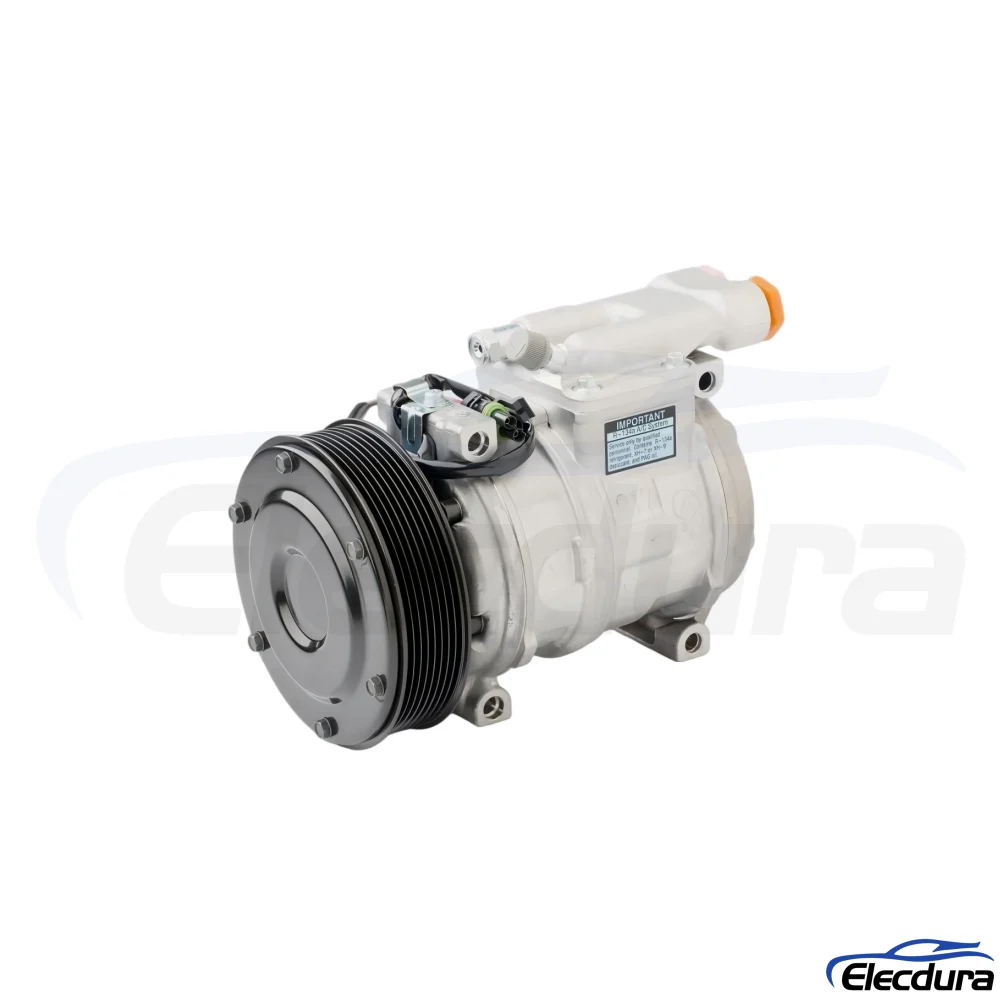
AC compressors may differ by pulley grooves, voltage, clutch connector, or port direction.
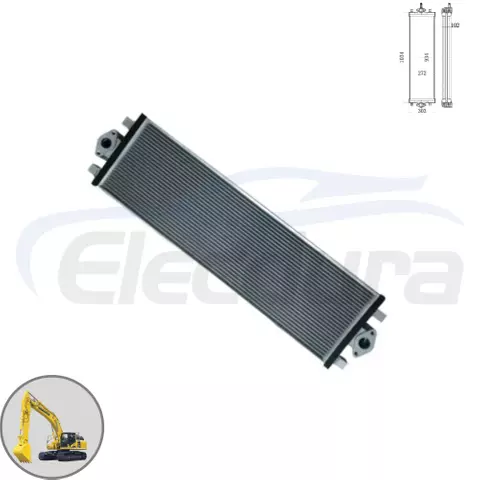
Hydraulic oil coolers may differ by serial range, core size, mounting feet, or port angle.
Fan control modules may use similar housing but different connector pinouts.
Thermostats may share engine family but use different housing shapes or opening temperatures.
For parts like hydraulic oil coolers, the model helps, but dimensions, port direction, mounting points, and OE reference confirm the match.
Step | What to Collect | What It Confirms |
|---|---|---|
1 | OEM number or old part number | Initial part family and cross-reference |
2 | Vehicle/machine model, year, engine, serial range | Application and version filtering |
3 | Photos from every side | Shape, connector, port, bracket, and installed layout |
4 | Critical measurements | Core size, bolt spacing, pulley diameter, port size, or housing dimensions |
5 | Failure or replacement reason | Whether related parts should be checked together |
OEM numbers can be replaced by supersession numbers. A supplier listing may include several cross-references to attract searches, but not every cross-reference is perfect for every version. Old machines may also have been repaired with a non-original part before.
Use the OEM number as the strongest clue, not the only proof. If the old part is available, compare it physically before bulk ordering.
For compressor matching, OE number should be confirmed with voltage, pulley grooves, connector, ports, and mounting details.
Require OE number plus application model for every line item.
Ask for photos when the part is high value, bulky, or variant-sensitive.
Record dimensions for coolers, radiators, condensers, and intercoolers.
Record connector shape and pin count for electrical parts.
Record pulley diameter, groove count, voltage, and ports for AC compressors.
Keep a cross-reference history for repeat customers and fleet orders.
Elecdura can help check matching across AC compressor categories, hydraulic oil cooler, AC compressor, thermostat, and cooling electrical parts. Send OE numbers, model details, old part photos, and measurements before confirming a bulk order.