English
Views: 0 Author: Site Editor Publish Time: 2026-07-13 Origin: Site
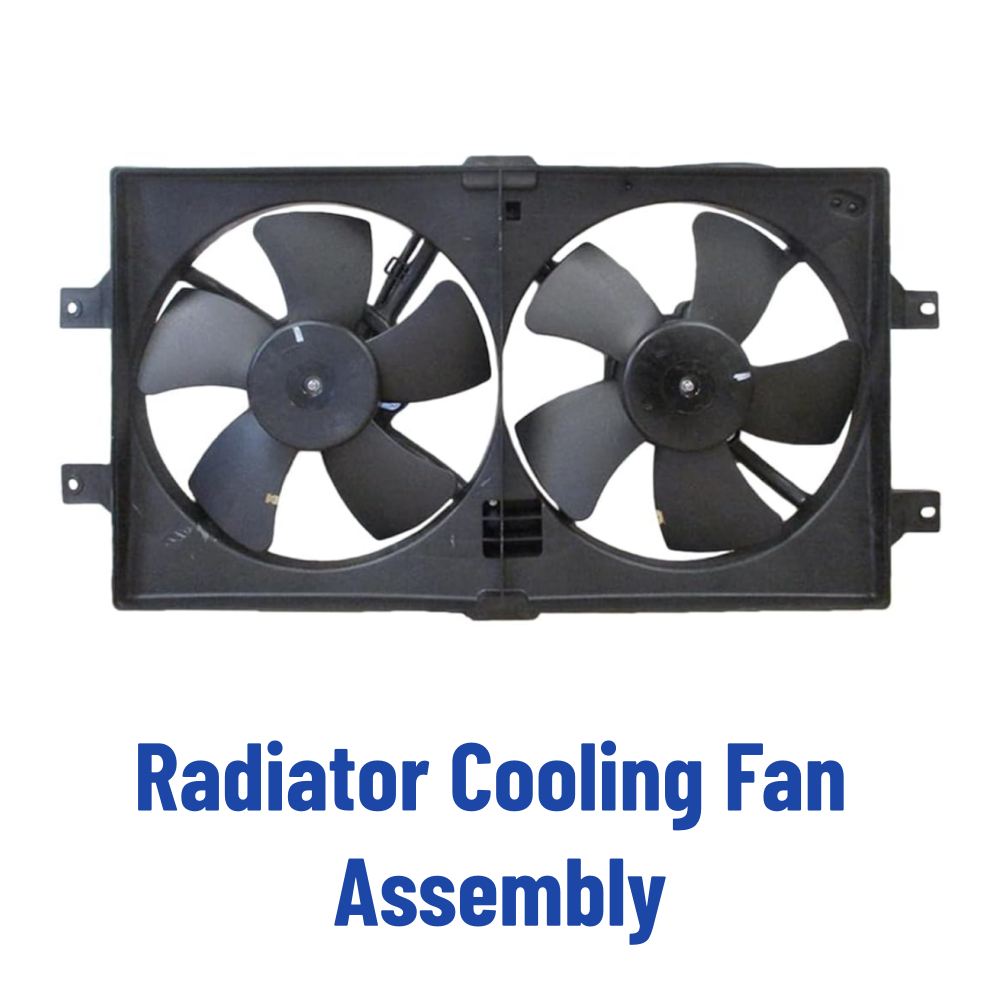
When a cooling fan does not run, the failed part may be the fan assembly, motor, fan control module, relay, fuse, temperature signal, A/C pressure signal, wiring, or ECU command. Replace the complete fan assembly when the shroud, blades, motor, and module are integrated or damaged. Replace only the motor when it is serviceable and the shroud/blade/module are good. Replace the fan control module only after confirming power, ground, command, and motor condition. Elecdura supports radiator fan assemblies, fan control modules, and radiator fan motors.
Searcher's question | Direct answer | Buyer risk |
|---|---|---|
What should be checked first? | Confirm symptoms, measurements, and related system faults before ordering. | Part replacement may not solve the real problem. |
What matching data is needed? | OE number, old-part photos, connector/port/mounting details, and vehicle or machine application. | Visual similarity can hide functional differences. |
What makes this a B2B topic? | Repeat orders, warranty handling, SKU data, packaging, and repair-network communication. | One wrong SKU affects many customers, not one repair. |
Radiator fan assembly fan motor and fan control module diagnosis
Cooling fan failures are often diagnosed too quickly in everyday repair discussions. A fan that does not run may be caused by the motor, relay, fuse, temperature sensor, fan module, wiring harness, ECU command, A/C pressure signal, or a seized blade. For a buyer, the decision path matters as much as the part name because unnecessary replacement creates returns and workshop frustration.
A repair article written only for a vehicle owner often misses the procurement layer. Importers and distributors must decide what information to require from workshops, which SKUs deserve inventory, how to handle claim evidence, and how to communicate fitment limits. That is why the first screen should answer the core symptom or replacement question, then quickly move into practical decision support.
For Elecdura buyers, the useful approach is to build a repeatable confirmation workflow. Each incoming inquiry should capture the failed part photo, OE number, vehicle or machine data, measurable symptom, and replacement goal. This makes quotation faster and reduces the chance that a salesperson, buyer, and workshop are using different assumptions.
A strong buyer resource in this topic area should give symptoms, test steps, cost or risk context, and matching criteria. The B2B layer is how to turn those diagnostic facts into a safer sourcing program for importers, wholesalers, and repair supply chains.
Confirmation field | Why it matters | What to send or record |
|---|---|---|
OE number or old-part label | This is the fastest way to narrow the correct family. | Photo of label, stamped number, packaging, or invoice. |
Connector, port, or fitting view | Many parts look similar from the front but differ at the connection point. | Close photos of connector pins, ports, hose fittings, or threads. |
Vehicle or machine application | Year, engine, market, and chassis range can change the part. | Make, model, year, engine, VIN/chassis when possible. |
Failure symptom | The symptom decides whether related parts must be checked. | Temperature, pressure, leak location, noise, warning code, or performance complaint. |
Installation environment | Heat, dust, vibration, and fleet duty affect durability expectations. | Passenger, truck, off-highway, fleet, or repair-network use case. |
Begin with the symptom, not the catalog. A part that is replaced because it looks suspicious may not be the part that failed. Use simple observations first: leak location, operating temperature, pressure behavior, electrical command, noise, vibration, smell, and warning codes. Then decide whether the part is failed, mismatched, or only affected by another upstream problem.
For workshops, a short diagnostic sequence is easier to follow than a long theory section. For importers, the same sequence becomes a claim-screening tool. When the distributor asks for the test result before approving a replacement, the conversation becomes technical rather than emotional.
If a part is installed in a dirty, overheated, contaminated, or electrically unstable system, the new replacement can fail quickly. That is why the sourcing guide should always include related checks. A supplier should not only ship the part; it should help the buyer avoid repeat failure.
Record the customer complaint in plain language before selecting a SKU.
Take photos of the failed part from front, side, rear, connector, port, bracket, and label.
Check related sensors, wiring, hoses, seals, fluid condition, or airflow before replacement.
Compare the old part with the replacement before installation, especially connector and mounting details.
Keep installation and test evidence for warranty review.
The first mistake is replacing the visible part without checking the system around it. A leaking cover, overheating fan system, or low-boost charge cooler can be caused by related seals, hoses, wiring, sensors, or control logic. The replacement part then receives blame because it is the most recent item installed.
The second mistake is treating aftermarket and OE numbers as perfectly interchangeable without checking supersession and application notes. Aftermarket catalogs are useful, but they can group similar variants. For B2B orders, photos and dimensional checks are still needed.
The third mistake is not defining warranty evidence before selling the part. If the buyer does not know what photos, test values, or installation records are needed, every claim becomes a negotiation. A clear evidence list protects both sides.
Decision point | Recommended check | Sourcing implication |
|---|---|---|
Symptom confirmed | Use measurements or visible evidence, not only customer description. | Quote the part with confidence and note related risks. |
Connection type | Inspect connector, port, thread, fitting, or hose direction. | Avoid wrong functional variant. |
Mounting shape | Compare brackets, holes, tabs, and core dimensions. | Avoid installation-time return. |
System condition | Check contamination, heat, pressure, airflow, or fluid quality. | Protect warranty and repeat repair outcome. |
Stock priority | Use inquiry frequency, vehicle population, and SKU uniqueness. | Keep fast movers in stock and quote long-tail items by order. |
A procurement team should build an inquiry form for this part family. The form should include OE number, application, old-part photos, measurable symptom, quantity, packaging requirement, and market. Over time, this form becomes a database that shows which applications generate repeat demand and which ones are risky long-tail orders.
When comparing suppliers, do not judge only by unit price. Ask whether the supplier can confirm variants, provide photos before shipment, support neutral or private-label packaging, and explain warranty evidence. For small importers, technical communication can be more valuable than saving a small amount per unit.
Elecdura's role is strongest when the buyer sends enough matching information. With old-part photos, OE numbers, and target quantities, Elecdura can help confirm the replacement route and recommend related categories when the fault may involve more than one component.
Fast-moving SKUs deserve clean labels, stable cartons, and reorder points. Slow-moving SKUs should be handled through quotation unless the buyer has confirmed fleet demand. This prevents inventory from becoming a shelf full of similar-looking but hard-to-identify parts.
For repair networks, include a one-page confirmation sheet with each product family. It should show the main checks, common misdiagnosis traps, and warranty evidence requirements. This reduces repeated questions and improves claim quality.
If the part is sold under a private label, keep the supplier's technical data internally. The customer-facing brand can be simple, but the distributor's internal file should preserve OE crosses, photos, application notes, and replacement warnings.
Repair networks should report not only the failed part but also the reason it was diagnosed. A photo plus a symptom is good; a photo, symptom, measurement, and related-system check is much better.
Distributors should compare repeated claims by workshop, vehicle model, and failure type. If many claims share the same symptom, the issue may be diagnosis, installation, or a related component rather than the product itself.
For related Elecdura categories, buyers can cross-check aftermarket applications, on-highway parts, and off-highway solutions depending on vehicle type.
Confirm OE number, application, and old-part photos before quotation.
Check connector, port, thread, fitting, mounting, and dimensional details.
Ask the repair network for symptom evidence, not only a part name.
Decide whether related parts should be inspected or offered as a kit.
Keep warranty evidence rules visible before the first bulk order.
Send the final part list to Elecdura through Contact for matching support.
If you are building a replacement program for this product family, send Elecdura your OE numbers, old-part photos, current demand list, target market, packaging needs, and claim concerns. Our team can help confirm fitment and prepare aftermarket sourcing options for importers and distributors.
The replacement choice should follow the failure evidence. If the fan has power and ground but the motor does not spin, the motor or complete assembly is suspect. If the motor runs when powered directly but not under vehicle command, the relay, module, sensor, wiring, or ECU command should be checked. If the fan runs only at one speed, the resistor or control module may be the correct repair.
A complete assembly is often safer when the shroud, blade, motor, and module are integrated. A motor-only replacement can save money when the assembly is serviceable and the motor is available separately. A control module replacement can solve speed-control faults, but it will not fix a worn motor that draws too much current and damages the new module.
Symptom | Likely direction | Do not skip |
|---|---|---|
No fan operation | Motor, relay, fuse, wiring, or command issue. | Power and ground test. |
High speed only | Resistor or module depending on design. | Motor current draw check. |
Fan noise or vibration | Blade, shroud, bearing, or motor wear. | Physical inspection. |
Overheats at idle | Fan airflow, relay, sensor, or radiator restriction. | A/C request and temperature data. |
Distributors should not stock only one product level. Complete assemblies serve workshops that need fast replacement. Motors serve price-sensitive repairs and markets where technicians are comfortable transferring parts. Fan modules serve electronic-control failures and modern vehicles where the motor is still healthy. The right mix depends on local repair habits and vehicle parc.
For warranty control, keep the three product levels separated in the claim process. If a module fails after installation, ask whether the motor current draw was tested. If a motor fails, ask whether the blade was blocked or the shroud was damaged. If an assembly claim arrives, inspect connector melting, fan obstruction, and signs of overheating.
Fan assemblies must match shroud outline, mounting points, connector, blade count, blade direction, motor power, and control module design. Fan motors must match shaft, rotation direction, mounting face, connector, and voltage. Modules must match connector pinout, communication or PWM strategy, heat-sink design, and application. A buyer should never approve a fan order from diameter alone.
Elecdura can help compare radiator fan assemblies, fan motors, and fan control modules when the buyer sends old-part photos and target OE numbers. This is especially useful for markets where the same vehicle name may use different cooling packages across engines and model years.
Fan systems fail in layers. The blade and shroud move air. The motor converts electrical power into motion. The resistor or control module changes speed. Relays, fuses, sensors, wiring, and ECU commands decide when the fan should run. Replacing one layer without checking the others can create an expensive wrong repair.
A simple rule helps customer service teams: verify command, verify power and ground, verify motor response, then verify airflow. If command is missing, look upstream. If command and power are present but the motor does not run, the motor or assembly is likely. If the motor runs but speed control is wrong, inspect the module, resistor, or current draw.
Step | Question | Part direction |
|---|---|---|
Command | Is the ECU or relay requesting fan operation? | Sensor, relay, wiring, control logic |
Power | Does the fan receive power and ground? | Fuse, relay, harness, connector |
Motor | Does the motor run under correct supply? | Motor or complete assembly |
Control | Does speed change correctly? | Module, resistor, or PWM issue |
Complete assemblies cost more and occupy more warehouse space, but they can reduce labor and mismatch risk. They are often the better choice when the shroud is brittle, blade balance is uncertain, the motor is integrated, or the module is attached to the assembly. They also simplify warranty because the supplier can evaluate the full cooling fan unit rather than a transferred motor.
Motor-only replacement is still valuable where repair culture supports it. The important point is to sell it honestly: motor-only saves part cost but requires correct transfer and inspection. If the old blade or shroud is damaged, the buyer should not expect the motor alone to solve noise, vibration, or airflow complaints.
Fan assembly: confirm shroud shape, mounting, blade count, connector, module, and application.
Fan motor: confirm voltage, shaft, mounting, rotation, connector, and current draw.
Fan module: confirm pinout, heat-sink style, control method, and motor condition.
For all three: collect OE number, old-part photos, and symptom evidence before quotation.
For private label: keep separate labels so assembly, motor, and module SKUs are not mixed.
Before the order is confirmed, the buyer should make sure the part information, failure evidence, and commercial expectation all point in the same direction. Many aftermarket problems begin when one team talks about price, another team talks about fitment, and the warehouse receives only a short part name. A small amount of structure before payment saves much more time after arrival.
Build separate SKU files for assembly, motor, and module even when they belong to the same vehicle.
For module claims, ask whether motor current draw was checked.
For assembly claims, ask whether the fan was blocked or the radiator overheated.
For motor-only orders, confirm shaft, connector, voltage, rotation, and mounting before shipping.
For repeat programs, the supplier should be asked to preserve the matching record. This includes the old-part photo, OE number, confirmed replacement, packaging label, and any warning about related components. When the same inquiry returns later, the buyer can reorder from a controlled record instead of starting diagnosis again from memory.
A cooling fan program becomes easier to manage when every inquiry is translated into one of three decisions: replace the complete air-moving unit, replace the motor, or replace the speed-control electronics. Keeping those decisions separate reduces wrong quotes and cleaner warranty review.
For distributors, a useful customer-service script is to ask what has already been tested. If the answer is only 'the fan does not work', the inquiry is not ready for a confident replacement decision. Ask whether the motor was powered directly, whether the relay or fuse was checked, whether scan data shows fan command, and whether the A/C request triggers fan operation. These questions protect both the buyer and the workshop because the correct part level becomes clearer before money is spent.
Before adding radiator fan assembly vs fan motor vs fan control module: what to replace first to a repeat purchasing file, the buyer should save the final approved specification, the customer-facing part name, the internal matching notes, and the photos used for confirmation. This file should travel with the SKU from quotation to warehouse packing and later warranty review. A clean ordering file is especially useful when staff change, when the same customer reorders after several months, or when a similar-looking variant appears in a new inquiry. It turns the first successful order into a repeatable supply process instead of a one-time match.