English
Views: 0 Author: Site Editor Publish Time: 2026-07-29 Origin: Site
A fan clutch roar for the first few seconds after a cold start can be normal. A fan clutch that keeps roaring after the engine settles is not normal. The key difference is time, temperature, and change in fan speed. A thermal fan clutch may engage briefly on startup because silicone fluid has settled inside the clutch while the vehicle was parked. As the clutch turns, the fluid redistributes, the fan slips more, and the roar usually fades within 30 seconds to about two minutes. A locked fan clutch does not fade. It continues to pull heavy air, sounds like a constant truck fan, reduces engine response, and can stress the belt, water pump bearing, fan blade, and shroud.
For repair shops, fleet buyers, importers, and distributors, this is not only a noise complaint. It is a parts identification and warranty-control problem. Replacing a normal cold-start fan clutch wastes labor and inventory. Ignoring a locked fan clutch can create repeat complaints, fuel-use concerns, broken fan blades, belt noise, or cooling-system damage. This article explains how to separate normal startup roar from a locked, slipping, or heat-sensitive fan clutch, what evidence to record before ordering, and how to specify the correct replacement for a wholesale or fleet program.
Cold-start fan roar can be normal for a short time, but a clutch that stays locked after warm-up needs further inspection.
Observation | Normal cold-start roar | Likely locked or failing clutch |
|---|---|---|
How long the roar lasts | Usually fades after several seconds to about two minutes | Continues after warm-up, even at steady idle or light throttle |
Sound pattern | Strong fan sound at first, then clearly becomes quieter | Constant heavy rushing-air noise that follows engine speed |
Engine feel | No lasting power loss once the roar fades | Sluggish acceleration, extra load, or excessive fan drag |
Temperature behavior | Coolant temperature reaches normal range without unusual fan behavior | Fan may over-engage cold, stay engaged too long, or fail to respond correctly hot |
Physical evidence | No silicone leakage, no wobble, no bearing noise, no blade damage | Silicone leakage, rough bearing, shaft play, damaged bi-metal spring, or wrong replacement spec |
The most useful first test is simple: listen during a cold start, note the duration, then listen again after the engine is warm. A healthy thermal clutch should not sound fully locked all the time. It should change behavior as air temperature through the radiator changes. If the fan roar never fades, if the fan appears nearly locked with the engine off and cold, or if the clutch has leakage and roughness, replacement becomes more defensible.
A thermal fan clutch uses a controlled amount of silicone fluid between internal drive plates. When the vehicle sits overnight, some fluid can settle in a way that increases temporary coupling. At startup, the fan may move a large volume of air until the clutch rotates long enough for the fluid to move back into its normal operating area. That short roar can sound dramatic, especially on trucks, SUVs, vans, and rear-wheel-drive vehicles with large mechanical fans.
This startup sound is often more noticeable after the vehicle has sat for many hours, after cold weather, or when the driver starts the engine inside a garage or service bay where sound reflects from walls. The sound alone is not proof of failure. What matters is whether the clutch releases as expected. If the roar fades and the vehicle drives normally, the fan clutch may be doing exactly what its design allows.
A buyer should avoid treating every loud cold start as a defect. In a repair chain or fleet operation, that assumption can create unnecessary warranty returns. A better report says: "Fan roar is present for 45 seconds after overnight cold start, then fades; no silicone leak, no shaft play, normal temperature." That report is very different from: "Fan roar is constant during warm idle and light acceleration; visible silicone leak at clutch body; fan remains heavily engaged." The second case supports replacement much more strongly.
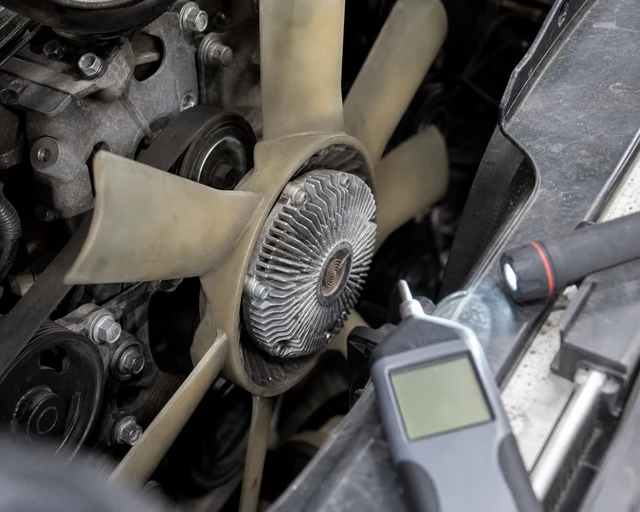
A locked fan clutch should be checked in the vehicle for shroud clearance, belt load, fan blade condition, and clutch engagement after warm-up.
A locked fan clutch behaves as though the fan is connected too firmly to engine speed. The driver usually hears a loud rushing-air sound during acceleration, cruising, and warm idle. The engine may feel less responsive because the fan is consuming more power than it should. In severe cases, the excessive load can contribute to belt complaints, water pump bearing stress, and fan blade fatigue.
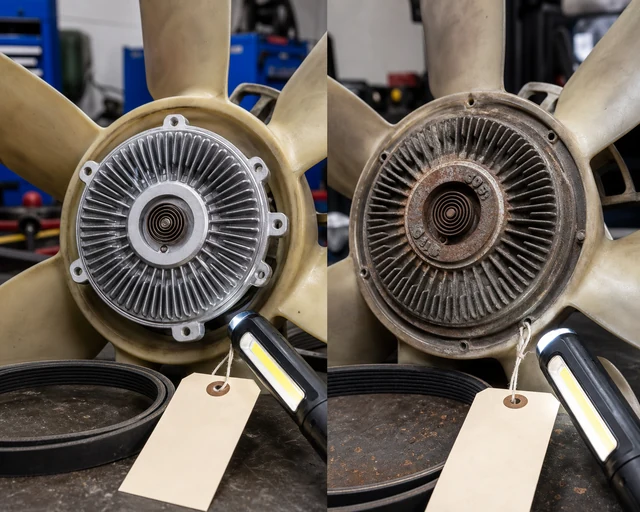
Physical checks can support the diagnosis. With the engine off and safe to touch, the fan may feel unusually stiff when turned by hand. The clutch may show dark silicone fluid leakage around the body, front seal, or shaft area. The bi-metal spring on a thermal clutch may be missing, damaged, blocked with debris, or bent. The fan blade may show stress cracks if it has been oversped or vibrated for a long time.
For B2B purchasing, locked-clutch evidence should be included in the inquiry rather than described only as "noisy fan clutch." Useful evidence includes a short cold-start video, a warm-idle video, photos of the clutch face, photos of the shaft area, fan blade condition, and the exact vehicle or engine application. That evidence helps a supplier distinguish a real clutch failure from a normal startup characteristic, an incorrect fan blade, an aftermarket shroud issue, or a wrong clutch specification.
A weak fan clutch can create the opposite complaint. Instead of too much fan engagement, it does not pull enough air when the engine needs cooling. The driver may report higher temperature during traffic, towing, long idle, slow climbs, or hot weather. The fan may spin freely by hand when cold and show little resistance even after the engine has warmed. The sound may be quiet when a stronger fan pull should be present.
This failure is often misreported because the driver may not complain about the fan itself. They may describe overheating at low speed, temperature rise while waiting, or a cooling complaint that disappears at road speed. A fan clutch that cannot engage correctly may still look clean from the outside. That is why airflow behavior and temperature condition matter more than appearance alone.
Weak-clutch diagnosis should also check the belt drive, fan blade, shroud, radiator blockage, thermostat operation, and coolant level. Those checks are not distractions; they prevent the fan clutch from being blamed for a wider cooling problem. If the clutch is replaced but the shroud is missing or the radiator face is packed with debris, the cooling complaint may continue and the replacement part may receive a false warranty claim.
Some fan clutches behave normally during a short shop inspection but fail after real heat soak. A thermal clutch may not engage strongly until heated by air leaving the radiator. If the vehicle is tested only for a few minutes, the technician may miss the condition that caused the complaint. This is common in fleet and repair-network disputes because the shop test does not match the driver's route, load, or idle time.
For a meaningful test, record the operating condition: ambient temperature, idle time, road speed, load, towing status, engine temperature trend, and whether the fan sound changes as the cooling system heats up. A clutch that roars briefly on cold start and then behaves normally is different from a clutch that fails to engage during a long hot idle. A clutch that stays locked cold is different again.
Electronic fan clutches add another layer. They may use a wiring connector, control signal, speed feedback, or duty-cycle command. A noise complaint on an electronic clutch can come from the clutch, the control circuit, wiring damage, corrosion, or an incorrect replacement version. For these designs, the inquiry should include connector photos, pin count, wiring condition, fault codes if available, and the old part label.
Fan roar is an airflow sound, but sound level alone does not tell the whole story. A large mechanical fan can be loud even when normal. A cracked fan blade, loose shroud, misaligned fan, bad bearing, or belt issue can create noise that sounds like clutch roar. A technician should separate sound, engagement, and physical condition before choosing the replacement.
One practical method is to compare four states: cold start, warm idle, throttle raise while warm, and hot operation after load. During each state, note whether the fan sound increases or decreases, whether the engine temperature remains controlled, whether the fan has wobble, and whether any contact marks appear on the shroud. If the fan roar is constant across all states, a locked clutch is more likely. If the fan is quiet while temperature rises, a weak clutch or poor airflow path may be more likely.
Video is useful for wholesale after-sales review. A 20-second cold-start clip and a 20-second warm-idle clip can show whether the roar fades. Photos of the fan blade tips and shroud clearance can show whether a mechanical interference problem is being mistaken for a clutch problem. For repair networks, this evidence reduces arguments between the installer, parts counter, distributor, and supplier.
A locked fan clutch may still cool the engine, so some drivers ignore it. That is risky. Constant high fan engagement increases mechanical load and noise. It can reduce fuel economy, make acceleration feel heavy, and raise stress on the belt drive. Over time, the extra vibration and airflow load can affect the fan blade, water pump shaft, and clutch bearing.
The risk is higher on trucks, vans, and work vehicles because they often idle longer and operate under heavier heat load. A locked clutch on a delivery vehicle may run for hours in traffic. A locked clutch on a service truck may spend long periods at work sites. If the fan blade is old or the shroud clearance is poor, excessive engagement can create safety and downtime concerns.
For fleet buyers, the cost is not just the part. It includes driver complaints, repeat shop visits, possible tow events, and uncertainty about which vehicles need inspection. A documented replacement policy helps. If a vehicle shows constant fan roar after warm-up plus physical clutch leakage, rough bearing, or abnormal drag, it belongs in the replacement queue. If it only roars briefly after an overnight cold start and then releases, monitor it rather than replacing automatically.
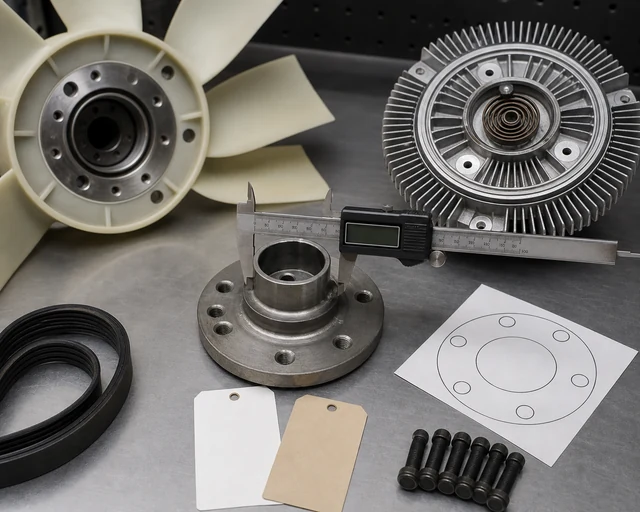
Before ordering, confirm pilot diameter, bolt pattern, fan mounting style, rotation direction, and thermal or electronic control type.
Specification field | Why it affects fitment | Evidence to send |
|---|---|---|
OE number or casting mark | Confirms the base reference and helps identify supersessions | Clear photo of label, stamping, or old packaging |
Thermal or electronic design | Different control strategy changes both function and connector needs | Clutch face photo and connector photo if present |
Rotation direction | Wrong rotation can reduce airflow or damage the clutch/fan assembly | Application data and old clutch orientation photos |
Pilot diameter and shaft fit | Controls centering and vibration risk | Measured pilot diameter and mounting face photo |
Fan mounting bolt pattern | Similar clutches may use different bolt circle or thread size | Measured bolt spacing, hole count, and thread details |
Overall height and offset | Affects fan-to-shroud clearance and radiator-side spacing | Side photo with measurement from mounting face to fan face |
Bi-metal spring condition | Indicates thermal response and possible damage | Front photo of spring, valve plate, and debris condition |
Bearing and silicone leakage | Supports failure confirmation for warranty and replacement | Close-up photos of seal area and shaft play notes |
These fields are more useful than asking for "one fan clutch for this model." Many aftermarket catalogs contain several versions for the same broad vehicle family, especially across production years, engine options, and regional applications. The safest purchasing process compares the replacement against the old part before shipment.
A distributor handling fan clutch returns should collect the same evidence every time. The minimum package includes vehicle model, engine, year, market region, OE number, photos of the old clutch, photos of the fan blade, measured bolt pattern, pilot diameter, overall height, and the complaint condition. If the clutch is electronic, include connector photos, pin count, wire color position if visible, and any diagnostic code reported by the shop.
The symptom description should be precise. "Roars on startup" is not enough. A better note is: "Roars for 40 seconds after overnight cold start, then fades." Another useful note is: "Roars continuously after 20 minutes of driving and remains loud during warm idle." A third possible note is: "No strong fan sound during long hot idle, engine temperature rises, no visible clutch leakage." Each note points to a different diagnostic path.
For stocking programs, save the confirmed part record after a successful installation. The record should include the final part number, matched OE number, vehicle or engine application, photos, measurements, and any known variants. This makes repeat orders faster and helps prevent a counterperson from selecting a visually similar clutch with a different offset or bolt circle.
Before installation, compare the new fan clutch with the removed unit on a bench. Check the mounting face, pilot diameter, bolt holes, fan blade fit, height, connector shape if applicable, and rotation marking. The new part should not be forced into place. If the fan sits too far forward or backward, shroud clearance and airflow can change. If the pilot fit is loose, vibration risk increases.
Also inspect the surrounding parts. A replacement clutch should not be installed with a cracked fan blade, damaged shroud, loose belt, worn water pump bearing, or dirty radiator face. These items can make a correct clutch appear defective. For heavy-duty and fleet work, documenting these checks protects both the installer and the parts supplier.
After installation, retest under the condition that created the complaint. If the complaint was cold-start roar, compare first-start duration before and after. If the complaint was constant warm roar, confirm that the fan releases after warm-up when appropriate. If the complaint was overheating at idle, confirm temperature behavior during a long idle or controlled load test. A short start-and-stop test is not enough for a heat-sensitive complaint.
Evidence found | Most likely decision | Risk if ignored |
|---|---|---|
Short cold roar that fades, no leakage, no play, normal temperature | Monitor; replacement may not be needed | Unnecessary part cost and false warranty return |
Constant warm roar, heavy drag, sluggish acceleration, no release | Replace fan clutch after confirming fitment | Higher mechanical load, noise, belt and bearing stress |
Weak airflow during hot idle, temperature rises, fan remains quiet | Test clutch engagement and related cooling airflow path | Overheating, repeat roadside or shop complaint |
Silicone leakage, rough bearing, shaft play, damaged spring | Replace clutch and inspect fan blade/shroud | Vibration, blade damage, safety risk, repeat failure |
Electronic clutch with code, wiring damage, or wrong connector | Verify circuit and match connector before ordering | New clutch may not respond to command or may trigger faults |
A strong fan clutch RFQ gives the supplier enough information to prevent a wrong match. Include the old part number, vehicle or engine application, production year, photos from all sides, front spring or connector detail, mounting-face detail, fan blade mounting detail, pilot diameter, bolt pattern, and overall height. If the vehicle is used in a demanding environment, include the operating condition, such as delivery idle, towing, construction site use, high ambient temperature, or long highway routes.
Elecdura's Fan Clutch category is the most relevant internal reference for buyers preparing a replacement inquiry. For symptom comparison, 10 Signs Your Fan Clutch Is Going Bad helps separate noise, overheating, weak airflow, and bearing symptoms. If the complaint includes idle vibration, Can A Bad Fan Clutch Cause Rough Idle explains when fan load or imbalance may be part of the problem. For vehicles that use electric cooling fans rather than a mechanical clutch, Radiator Fan is a better starting point.
For wholesalers and repair supply chains, the goal is repeatable selection. A single successful shipment is useful; a saved fitment record is more valuable. Once a part is confirmed, keep the OE cross reference, buyer market, application notes, measurements, and installation result. That record reduces repeated questions and helps the next order move faster.
Vehicle A arrives with a loud fan sound after sitting overnight. The sound fades in less than one minute. There is no silicone leakage, the fan has no wobble, temperature remains stable, and the driver reports no power loss after the first minute. In this case, the report supports normal cold-start engagement. The buyer may keep the vehicle in observation rather than ordering a clutch immediately.
Vehicle B has a constant roar after warm-up. The fan sound rises sharply with engine speed, acceleration feels heavy, and a close photo shows silicone fluid around the clutch body. The fan also has slight wobble at the blade. This case supports replacement and a fan blade/shroud inspection. The RFQ should include photos, measurements, OE number, and the failure condition so the supplier can match the correct version.
This difference matters for brand trust. If Vehicle A receives an unnecessary replacement, the customer may still hear a short startup roar and assume the new part is poor. If Vehicle B is ignored, the driver may continue operating with excessive fan load until another component complains. Good diagnosis protects both the repair outcome and the parts program.
A fan clutch roaring noise is normal only when it is brief, changes with operating condition, and is not supported by failure evidence. Treat constant warm roar, silicone leakage, rough bearing feel, shaft play, damaged thermal spring, incorrect electronic control, or weak hot-idle airflow as reasons for deeper inspection and likely replacement. For B2B ordering, do not rely on the sound description alone. Match the clutch by OE reference, physical dimensions, fan mounting pattern, pilot diameter, design type, rotation, and application data.
Elecdura can support importers, distributors, repair networks, and fleet buyers with fan clutch fitment review, photo comparison, replacement sourcing, packaging discussion, and repeat-order planning. Send the old part number, photos, measurements, symptom timing, vehicle application, and target quantity. The more specific the evidence, the easier it is to select a replacement that solves the actual complaint instead of merely matching the title of the problem.