
English
Views: 0 Author: Site Editor Publish Time: 2026-07-07 Origin: Site
To test a fan clutch correctly, do not rely on the cold spin test alone. Begin with a visual and mechanical inspection, compare resistance when the engine is fully cold, observe cold-start behavior, and then verify whether fan speed and airflow increase as hot air leaves the radiator. A clutch that freewheels when hot, leaks silicone fluid, develops bearing play, or stays fully engaged may require replacement. Before making that decision, rule out restrictions in the radiator, condenser, fan shroud, thermostat, water pump, and coolant circuit. Buyers can review the fan clutch product range while preparing the original part number and application details.
Safety: Never place hands, tools, cables, test leads, or loose clothing near a running fan. A temperature-controlled fan clutch can engage suddenly even when the fan appears to be turning slowly. Follow the vehicle manufacturer's service procedure and use suitable guarding and measuring equipment.
Test | Healthy Result | Possible Fault | Next Step |
|---|---|---|---|
Visual inspection | No oil leakage, looseness, cracks, or contact marks | Leakage, wobble, bearing wear, or damaged blades | Inspect the mounting, water pump, and fan assembly |
Cold spin test | Smooth movement with some resistance | Freewheeling, binding, or uneven resistance | Continue with the hot engagement test |
Cold-start sound | Initial roar may reduce after a short period | Roar remains strong at all temperatures | Check for a clutch stuck engaged |
Hot engagement test | Fan speed and airflow rise as radiator outlet air becomes hot | Fan remains weak under valid hot-test conditions | Verify radiator airflow and clutch response |
RPM or scan-tool test | Actual fan response changes with temperature or command | Command and actual response disagree | Check the clutch, wiring, and control circuit |
No single check applies equally to every mechanical, thermal, electronic, or pneumatic fan clutch. Use several matching observations before condemning the part.
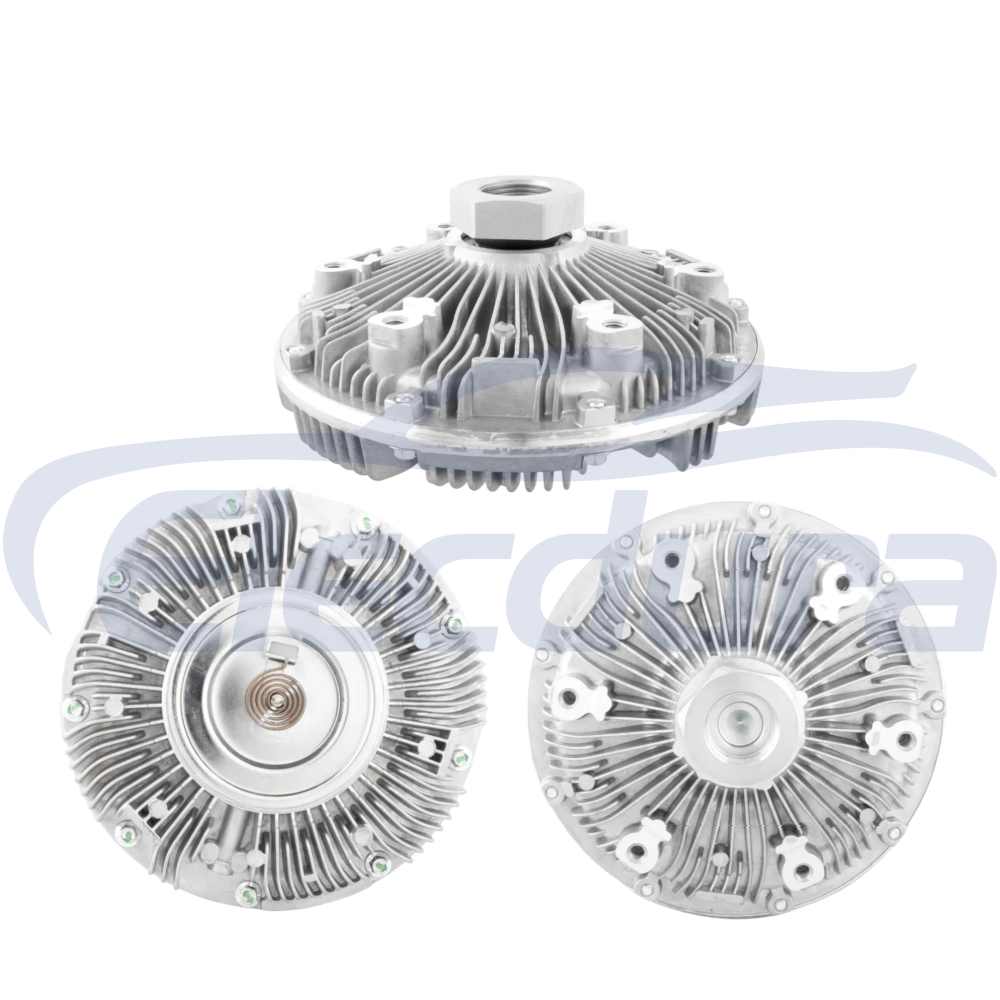
A viscous fan clutch transfers torque through silicone fluid. It should slip when maximum airflow is unnecessary and transmit more torque as cooling demand rises. A seized unit may create constant roar and load; a weak unit may rotate but fail to drive the fan fast enough when hot. A practical mechanical reference is the 2T2121302 fan clutch for Ford Cargo and VW Constellation trucks.
Many thermal clutches respond to air leaving the radiator, not directly to dashboard coolant temperature. If the thermostat has not opened, circulation is weak, or the radiator is restricted, the engine may be hot while the air reaching the clutch is not. Confirm the thermal path before judging engagement. Brief cold-start roar can be normal; use the fan clutch roaring-noise guide when the sound remains strong.
Clutch Type | Typical Identification | Best Test Direction |
|---|---|---|
Thermal viscous | Bimetal spring or thermal valve on the front | Cold inspection plus radiator-air hot engagement |
Non-thermal viscous | No obvious temperature-sensing spring | Resistance, slip, noise, and load behavior |
Electronic viscous | Electrical connector and wiring | Mechanical inspection plus command and feedback data |
Pneumatic | Air lines, control valve, or air-actuated mechanism | Air pressure, valve command, and mechanical engagement |
An electronic clutch requires both mechanical and electrical checks. Inspect the connector, terminals, harness routing, supply, ground, and control signal. Then compare the requested fan command with actual fan speed where scan-tool data is available. The electronic viscous fan clutch diagnosis page covers this control-specific route in more detail. For a concrete electronic configuration, compare the 2U2121302A electronic fan clutch and its application-specific connector and control requirements.
Inspect the clutch body and seams for oily residue, especially a circular track that has collected dust. Confirm that the residue originates from the clutch rather than the engine, water pump, or nearby components. Clear silicone-fluid leakage combined with weak hot engagement is stronger evidence than surface dirt alone.
With the engine off and fully cool, hold the fan carefully and check for axial and radial movement. Rotate it slowly and listen for grinding or roughness. Excess movement can indicate clutch-bearing wear, but fan wobble may also come from a worn water-pump bearing, loose mounting hardware, a distorted mounting surface, or a damaged blade. Identify the actual moving joint before ordering parts.
Look for cracked, bent, or incorrectly installed blades. Confirm that the fan is centered in the shroud and does not contact it. A missing or poorly positioned shroud allows air to recirculate around the fan instead of being pulled through the radiator. That can produce idle overheating even when the clutch is operating.
Park on a level surface, switch the engine off, remove the key, and allow the engine to cool fully.
Confirm that the fan cannot start automatically and that no tools or clothing are near the drive system.
Inspect for interference, leakage, cracked blades, and loose mounting points.
Turn the fan slowly by hand and feel whether resistance is smooth and repeatable.
Check for freewheeling, binding, scraping, roughness, or side play.
A serviceable viscous clutch often turns smoothly with noticeable resistance. It should not normally feel like an unloaded bearing that spins without control, but resistance varies with design, ambient temperature, storage position, and the distribution of silicone fluid. Compare the complete behavior rather than relying on a single sensation.
There is no reliable rule that every good fan clutch must stop within one, two, or three rotations. Different clutch designs and test temperatures produce different results. A cold clutch can feel acceptable yet fail to transfer enough torque when hot. Conversely, a unit that moves relatively freely when cold may still engage correctly after radiator outlet air reaches its trigger range.
Start the fully cold engine from a safe position. A temporary increase in fan noise may be normal as silicone fluid redistributes, but the sound should usually reduce. Constant strong roar through warm-up may indicate stuck engagement, while noise combined with visible wobble requires immediate mechanical inspection. No obvious sound change is inconclusive; continue with the hot airflow or RPM test.
Before warming the engine, confirm the coolant level, visible hose condition, belt drive, shroud position, and cleanliness of the condenser and radiator faces. Severe debris between the condenser and radiator can restrict airflow. If the cooling system has a known leak, circulation fault, or unsafe operating condition, repair that problem before continuing.
Start the engine and monitor coolant temperature using appropriate service data.
Allow the thermostat to open and confirm that the radiator is receiving hot coolant.
Observe whether air leaving the radiator becomes hot enough to create a valid test condition.
From a safe distance, compare fan sound and airflow with the cold condition.
If suitable equipment is available, record engine speed, fan speed, temperature, and commanded engagement.
Stop the test if temperature exceeds the safe limit stated in service information.
As cooling demand increases, a thermal clutch should transmit more torque. Fan sound may become stronger, airflow behind the radiator should increase, and fan speed should respond. If engagement restores airflow and coolant temperature stabilizes or falls, the clutch is probably contributing correctly. Exact engagement temperature differs by application; consult model-specific information rather than applying one universal number. The fan clutch engagement-temperature test explains the thermal relationship further.
A weak clutch may show little difference between cold and hot behavior even though hot air is reaching its sensing area. The vehicle may overheat at idle, during towing, or at low road speed and improve once vehicle speed forces air through the radiator. A stuck-engaged clutch may produce constant roar and load at temperatures where full airflow is not needed. These patterns are evidence, not a diagnosis by themselves.
When the service procedure allows it, measure fan and engine speed during cold, warming, and valid hot conditions from a protected position. Apply any reflective marker only while the engine is off. The useful evidence is whether fan response increases as radiator-air temperature and cooling demand rise.
Fan-to-engine speed ratio varies by design, pulley ratio, temperature, load, and control strategy. Use manufacturer data when available. Without a model-specific threshold, combine the RPM trend with airflow, leakage, mechanical condition, and temperature evidence.
Before disconnecting parts, read trouble codes and review requested fan command, actual fan speed, coolant temperature, and relevant enable conditions. Inspect the connector, terminals, power, ground, control signal, and harness.
If the diagnostic tool and vehicle support bidirectional control, command several engagement levels and compare the request with actual fan response. Observe fan speed and airflow from a protected position. A command with no mechanical response may indicate a clutch, supply, ground, signal, or harness fault. No command at all may direct diagnosis toward sensors, enable conditions, the control module, or software logic.
Command | Actual Response | Diagnostic Direction |
|---|---|---|
Command present | Fan responds correctly | Investigate other cooling-system causes |
Command present | No fan response | Check power, ground, signal, wiring, and clutch |
No command | No response | Check enable conditions, sensors, codes, and controller logic |
Command present | Intermittent response | Inspect terminals, harness movement, heat effects, and internal failure |
Do not use paper, cardboard, or another object to stop a running fan; the method is unsafe and inconsistent. Sound, dashboard temperature, or one cold-spin result is also insufficient. Confirm the radiator-air temperature, airflow, RPM response, and cooling-system condition before replacing the clutch.
Symptom | Fan-Clutch Possibility | Other Items to Check |
|---|---|---|
Overheats at idle but improves at road speed | Moderate to high | Shroud, radiator, condenser blockage, and airflow sealing |
Overheats at all speeds | Uncertain | Coolant level, thermostat, water pump, radiator, combustion leakage |
A/C becomes warm when stopped | Possible airflow problem | Condenser restriction, refrigerant pressure, auxiliary fan |
Constant fan roar | Possible stuck engagement | Normal cold-start behavior and electronic or pneumatic command |
Fan wobble | High mechanical risk | Water-pump bearing, blade, mounting face, and fasteners |
Clutch replaced but overheating remains | Original diagnosis may be incomplete | Coolant circulation, radiator efficiency, airflow path, and engine condition |
If the vehicle is still at the symptom-identification stage, compare the case with 10 signs a fan clutch is going bad. Symptoms should guide testing, but they should not replace it.
A blocked radiator face, debris between heat exchangers, missing seals, or an incomplete shroud reduces the air the fan can pull. A thermostat, water pump, trapped air, low coolant, or internal radiator restriction can prevent the correct heat from reaching the clutch. Correct these conditions before using fan behavior as final proof.
A weak mechanical fan can reduce condenser airflow at idle, but warm A/C at a stop may also result from refrigerant charge, pressure-control, condenser, or auxiliary-fan problems. Check system pressures and airflow before connecting the symptom to the clutch.
Clear silicone-fluid leakage with weak hot engagement
Bearing looseness, grinding, or unsafe fan wobble traced to the clutch
No fan-speed or airflow increase under a valid hot-test condition
Repeated command-versus-response failure on an electronic clutch
Continuous unwanted engagement after control conditions are verified
Other major cooling-system causes have been checked
Cold hand movement, lack of audible roar inside the cab, one temperature rise, high mileage, or a change in A/C performance cannot confirm failure without a valid hot test and checks of the rest of the cooling system.
Leakage from a sealed viscous unit, bearing damage, or confirmed failure to engage commonly leads to replacement. For borderline cases, compare the evidence, vehicle duty, and overheating risk. Use the fan clutch repair-or-replace guide for the focused decision path. For an OE-specific heavy-duty comparison, see the 9062001823 fan clutch for Mercedes-Benz Atego trucks.
Record the original OE or cross-reference number, vehicle model, production year, engine, and target market. A vehicle name alone may cover several cooling configurations. For commercial vehicles and equipment, include chassis or engine details where available.
Compare rotation direction, mounting-thread direction, pilot diameter, bolt circle, hole count, overall height, mounting offset, fan diameter, and blade bolt spacing. A visually similar clutch can still place the fan incorrectly inside the shroud. The fan clutch dimensions and fitment guide provides a structured matching checklist.
Identify whether the original part is thermal viscous, non-thermal, electronic, or pneumatic. For electronic units, compare the connector body, lock, pin count, harness direction, and control application. Similar connectors do not guarantee interchangeable control logic.
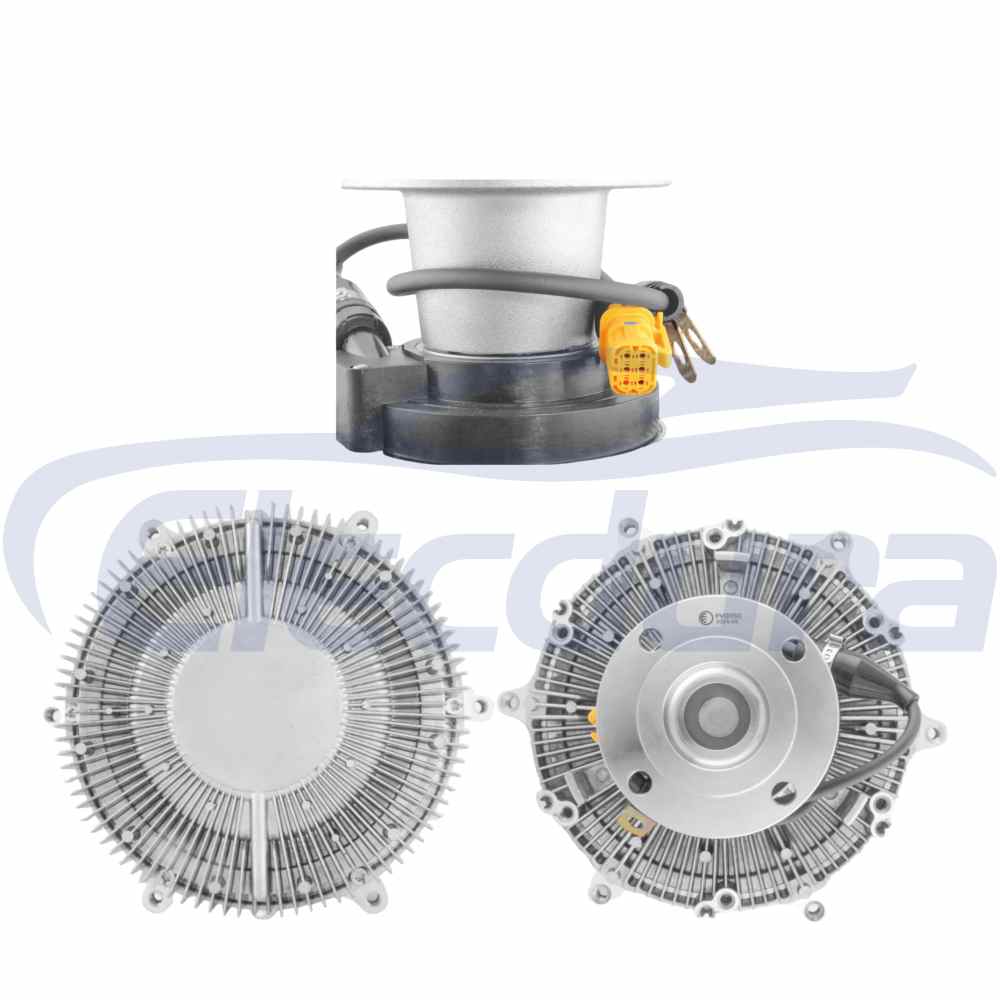
Provide clear front, rear, side, mounting-face, label, connector, and installed-position photos. Include dimensions and the original fault evidence. Distributors and fleet buyers planning repeated orders can review wholesale fan clutch sourcing after the application has been technically confirmed.
Combined Evidence | Recommended Decision |
|---|---|
Normal cold resistance, clear hot engagement, and stable temperature | The clutch is likely responding; investigate elsewhere if symptoms remain |
Relatively free cold movement but normal hot engagement | Do not replace based on the cold test alone |
Hot radiator air reaches the clutch but airflow and RPM do not respond | Confirm the application procedure and consider clutch failure |
Visible clutch-fluid leakage plus weak hot response | Replacement is strongly supported |
Wobble, bearing noise, or blade contact | Stop operation and identify the unsafe mechanical source |
Continuous roar under verified low-demand conditions | Check for stuck engagement or an incorrect control command |
Electronic command present but actual speed does not respond | Test wiring and clutch operation before replacement |
A cold viscous clutch may turn by hand, but it should normally feel smooth and show some resistance. The amount varies by design and temperature. Free movement alone does not prove failure; verify hot engagement.
There is no universal rotation count. Ambient temperature, internal fluid position, and clutch design change the result. Treat spin count as a clue, not a specification.
Confirm that hot air is leaving the radiator, then observe whether fan sound, airflow, and measured speed increase. Use service data or a scan-tool command where applicable.
Yes. A cold spin test cannot prove that the clutch will transmit sufficient torque when cooling demand rises. This is why the hot engagement test is essential.
Yes, because road speed can provide airflow that masks weak fan performance. However, a missing shroud or restricted radiator can create the same pattern and must be checked.
Not always. Brief cold-start roar may be normal. Strong noise that never releases under verified low-demand conditions requires further diagnosis.
A reliable fan clutch diagnosis uses a sequence: identify the clutch type, inspect for leakage and mechanical play, compare cold behavior, confirm the thermal and airflow conditions, test hot engagement, and measure RPM or electronic response where possible. Do not condemn the clutch from hand-spin feel, sound, or dashboard temperature alone. If replacement is supported, match the OE reference, application, rotation, dimensions, mounting offset, control type, and connector. For product matching or a wholesale requirement, contact Elecduraparts with the original reference, engine information, dimensions, connector details, and clear photos of the old part. Another electronic OE-reference example is the 0002007722 / 4572001122 fan clutch for Mercedes-Benz Axor trucks.


