English
Views: 0 Author: Site Editor Publish Time: 2026-07-08 Origin: Site
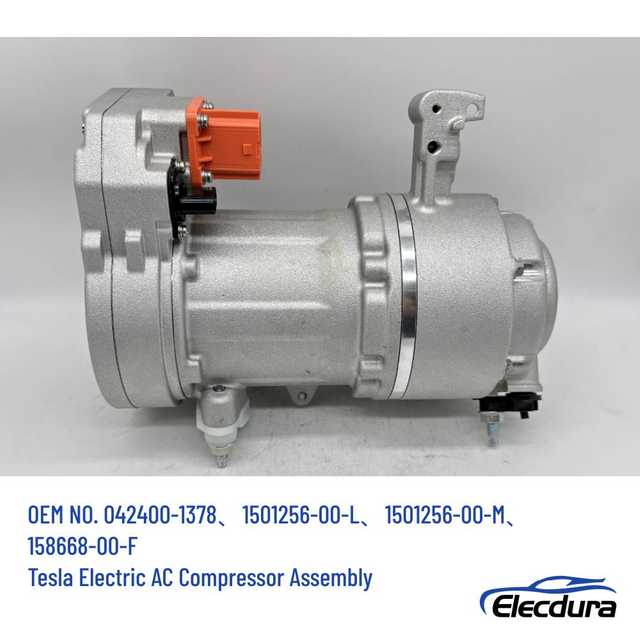
Electric AC compressors and belt-driven AC compressors do the same basic job: they compress refrigerant so the air conditioning system can move heat. For buyers, however, they are not interchangeable product types. A belt-driven compressor depends on the engine belt system, pulley, clutch or control valve, and mechanical mounting. An electric AC compressor is driven by an electric motor, often powered by a hybrid or EV high-voltage battery, and may depend on inverter control, non-conductive oil, specific connectors, and vehicle safety logic.
The right choice depends on the vehicle platform, not on which design sounds more modern. Gasoline and diesel vehicles commonly use belt-driven compressors. Hybrid, plug-in hybrid, and battery electric vehicles often use electric compressors so cabin cooling can continue when the engine is stopped or absent. Some early hybrids and specialty vehicles can blur the line, so importers and repair networks should match by OE number, vehicle system, connector, oil, and application data instead of assuming every hybrid uses the same compressor type.
Comparison point | Electric AC compressor | Belt-driven AC compressor | Buyer impact |
|---|---|---|---|
Power source | Electric motor, often high-voltage battery on HEV/PHEV/EV. | Engine belt drive through pulley and clutch or variable control. | Do not substitute one type for the other unless the vehicle system is designed for it. |
Cooling at engine stop | Can operate when the engine is off if the vehicle control system allows it. | Usually stops or loses output when the engine stops. | Important for stop-start, hybrid, EV, and idle comfort applications. |
Matching focus | Voltage, connector, inverter/control, oil, refrigerant, OE number, mounting. | Pulley, clutch, grooves, displacement, ports, mounting, OE number. | Sales teams need different intake checklists. |
Oil risk | Often requires vehicle-specific non-conductive oil. | Often uses PAG oil by application, but always follow specification. | Wrong oil can be especially costly on high-voltage compressors. |
Service risk | High-voltage safety, isolation faults, dedicated A/C service tools. | Belt, clutch, pulley bearing, shaft seal, debris, and refrigerant circuit issues. | Warranty review must consider different failure causes. |
Electric compressor orders should confirm voltage, connector, oil, and OE application; belt-driven compressor orders should confirm pulley, clutch, ports, and mounting.
A belt-driven compressor is mechanically connected to the engine accessory drive. The engine crankshaft turns the belt, the belt turns the compressor pulley, and the compressor runs when the clutch engages or when the internal control system changes displacement. This design is common on gasoline and diesel passenger vehicles, trucks, buses, agricultural machines, and construction equipment. It is familiar to most workshops because the visible checks are mechanical: belt condition, pulley alignment, clutch gap, bearing noise, mounting bracket, and refrigerant line connection.
An electric AC compressor uses an electric motor inside or integrated with the compressor assembly. In many hybrid and EV systems, the motor is powered through high-voltage electronics. DENSO's eCompressor guidance describes high-voltage battery output between about 200 and 400 volts for many applications and explains that safety disconnection is required before service. Delphi's hybrid compressor guidance also notes that newer hybrids commonly use inverter compressors, with high-voltage supply allowing compressor operation independent of the engine belt.
This difference affects procurement immediately. A belt-driven compressor buyer may ask about pulley grooves, clutch voltage, and compressor displacement. An electric compressor buyer should ask about voltage class, high-voltage connector, signal connector, oil specification, refrigerant, control compatibility, and OE number. Elecdura separates the electric compressor category at /electric-ac-compressor.html because hybrid and EV compressor matching needs a different checklist from conventional AC compressor sourcing.
A belt-driven compressor's speed is tied to engine speed. At idle, output can be lower. At higher engine speed, compressor speed rises, though modern variable displacement designs can regulate output. This is usually acceptable for conventional vehicles because the engine runs whenever the vehicle needs A/C. Problems appear when the engine stops during idle-stop operation or when low-speed cooling demand is high, such as in traffic, hot climates, buses, or machinery cabins.
An electric compressor can run independently of engine rpm. In a hybrid or EV, the vehicle can command compressor speed according to cooling demand, cabin target, battery thermal needs, and energy strategy. Off-highway electric compressor discussions often highlight this advantage: because speed is not tied to engine speed, the compressor can provide strong cooling even when the engine is off or operating at low rpm. For battery electric vehicles, this independence is not optional; there is no engine belt to drive a conventional compressor.
The buying implication is that "cooling capacity" should be discussed differently. A belt-driven compressor's field complaint may involve idle cooling, clutch cycling, belt slip, or condenser airflow. An electric compressor complaint may involve command signal, high-voltage supply, inverter fault, isolation fault, refrigerant charge, or software-controlled speed. If a buyer reports "no cooling at idle," the correct compressor family depends on whether the vehicle is conventional, stop-start, hybrid, or EV.
Conventional gasoline and diesel vehicles most often use belt-driven compressors. Their A/C systems are designed around an engine-driven accessory layout. Replacement sourcing normally begins with OE number, vehicle model, engine code, pulley type, clutch voltage, displacement, mounting ears, port orientation, and refrigerant. A wrong pulley groove or clutch connector can stop installation even if the body looks similar.
Hybrid vehicles vary by generation and manufacturer. Some older hybrids used belt-driven or mixed systems. Many modern hybrids use electric compressors so the A/C can work when the engine shuts off. Plug-in hybrids usually need electric compressor operation because the vehicle may drive with the engine off for longer periods. Battery electric vehicles require electric compressors because there is no engine accessory belt. They may also use the A/C system for battery thermal management, not only passenger comfort.
This is why buyers should avoid broad assumptions such as "hybrid equals electric compressor" or "gasoline equals belt-driven compressor" without checking the actual platform. The safer order path is OE number first, then compressor label, vehicle year, market, powertrain, and connector photos. If the old part has no readable number, use Elecdura's photo and measurement workflow at /identify-ac-compressor-without-part-number.html before approving shipment.
Oil is one of the most important differences between electric and belt-driven compressors. Conventional belt-driven compressors commonly use PAG oil specified for the application and refrigerant, though the exact viscosity and oil type still matter. Many high-voltage electric compressors require non-conductive oil, such as specific POE formulations, because the motor windings and compressor internals operate in an electrically sensitive environment. DENSO notes that ND-Oil 11 is a highly insulating POE oil used in many eCompressor cases, while also emphasizing that the vehicle maker specification must be checked.
Delphi's hybrid compressor guidance warns that dye or oil intended for non-hybrid systems can contaminate hybrid electric A/C systems. The concern is not just lubricant performance. PAG oil or the wrong dye carrier can reduce the insulating properties around the compressor motor windings and contribute to compressor malfunction. NHTSA-linked service material similarly warns that very small amounts of standard PAG oil can reduce dielectric properties of approved non-conductive oils. For repair networks, this is a service-process issue as much as a parts issue.
A distributor should therefore list the oil note clearly. "Pre-filled" is not enough. The listing should state the oil type if known, oil quantity if provided, and the instruction to follow the vehicle maker specification. Repair customers should use dedicated hybrid/EV A/C service equipment where required to avoid cross-contamination. If a shop installs an electric compressor with contaminated equipment and later reports an isolation fault, the supplier needs a fair warranty review process that considers oil contamination and service procedure.
Service item | Electric compressor concern | Belt-driven compressor concern |
|---|---|---|
Oil | Non-conductive oil and insulation resistance are critical on many HV systems. | Correct PAG/PAO/other oil viscosity and quantity by application. |
Dye | Use only dye approved for hybrid/EV systems if allowed by the vehicle maker. | Use the correct dye amount and refrigerant-compatible carrier. |
Service equipment | Dedicated or properly flushed equipment may be required to avoid oil cross-contamination. | Standard A/C service equipment may be suitable when matched to refrigerant and oil. |
Failure review | Check isolation faults, wiring, oil contamination, and HV safety history. | Check clutch, pulley, belt, shaft seal, debris, condenser, and oil balance. |
Belt-driven compressor matching is still technical. It should not be treated as a simple "same car, same compressor" decision. Buyers need the OE number, vehicle model, engine code, year, market, refrigerant, pulley groove count, pulley diameter, clutch connector, mounting ear layout, port style, and body position. Diesel and gasoline versions of the same vehicle may differ. Left-hand-drive and right-hand-drive markets can also affect hose routing or bracket clearance on some platforms.
Common wrong-order points include pulley groove mismatch, clutch connector mismatch, rear head or port orientation differences, and body length differences. A compressor that physically bolts up can still create belt alignment problems if the pulley offset is wrong. A compressor with the correct pulley can still fail installation if the suction and discharge ports do not match the hose block. This is why Elecdura buyers should send old part photos from the pulley side, rear head, port side, mounting side, and label.
Failure context also matters. If the old belt-driven compressor seized, the system may contain metal debris. The condenser, drier, expansion valve, and hoses may need service before installing the new unit. If the clutch failed but the compressor internals are clean, the repair path may differ. If the customer reports noise, verify whether it is clutch bearing, pulley bearing, belt tensioner, or internal compressor noise. These details affect warranty discussions and related-part recommendations.
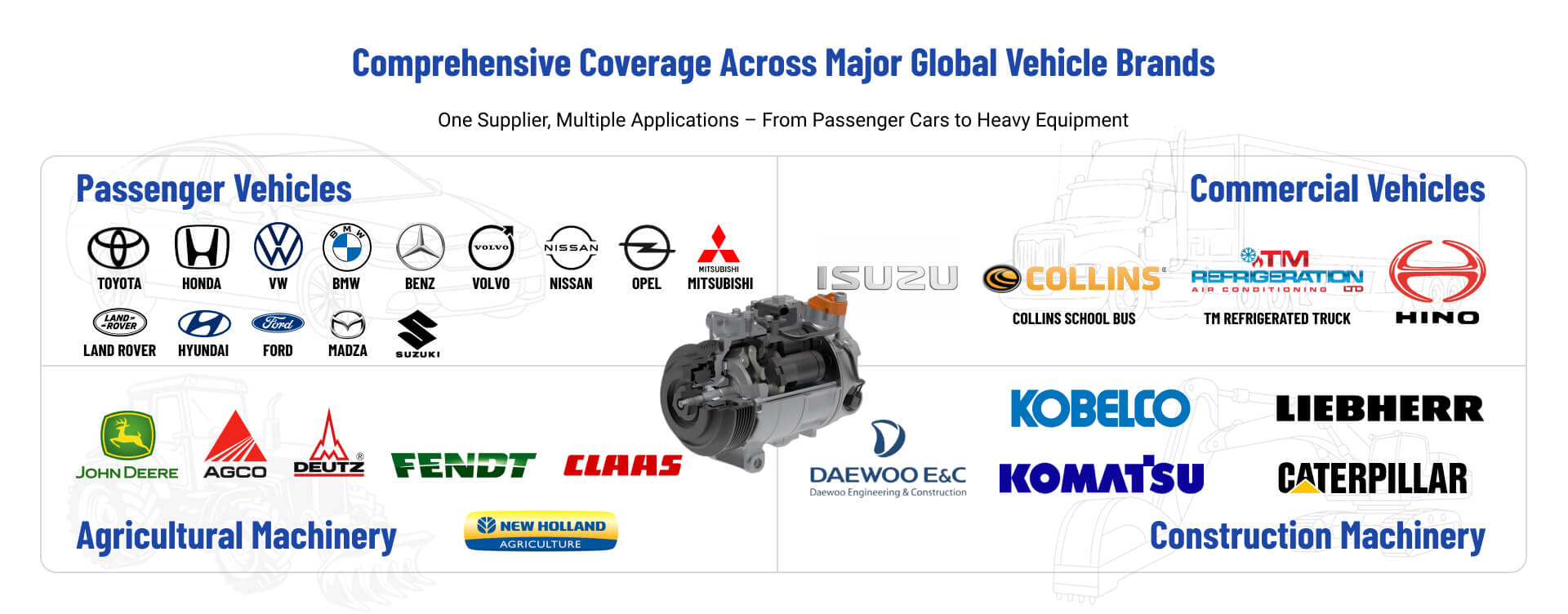
Conventional compressor programs often cover many passenger, commercial, agricultural, and construction applications, but pulley, clutch, port, and bracket details still decide fitment.
Electric compressor matching begins with the OE number and vehicle platform, then adds electrical and oil details. Request clear photos of the old compressor label, high-voltage connector, low-voltage signal connector, mounting ears, refrigerant ports, and body shape. Record the vehicle model, year, market, hybrid/EV type, and refrigerant. Confirm whether the compressor has internal inverter electronics or depends on an external inverter/control arrangement.
Do not approve an electric compressor order from the housing shape alone. Similar electric compressors may use different connectors, pin layouts, voltage classes, or control logic. A compressor may fit mechanically but still fail to communicate with the vehicle or trigger a fault. If the old compressor failed after previous A/C service, ask whether the system may have been contaminated with the wrong oil or dye. If the old compressor failed after collision repair or water intrusion, inspect wiring and connectors before blaming the part.
Elecdura's detailed electric compressor buying guide at /electric-ac-compressor-buying-guide-voltage-connector-oil-matching.html covers voltage, connector, oil, and vehicle matching in more detail. Use that guide as a checklist when a customer sends incomplete information.
Electric compressors are often more expensive than many conventional belt-driven units because they include an electric motor, high-voltage insulation requirements, integrated electronics, and application-specific connectors. They may also require more careful packaging and handling. Belt-driven compressors can also be expensive, especially for heavy-duty, imported, or variable displacement applications, but their matching risk is usually more mechanical than electrical.
For inventory planning, this means the two categories should be stocked differently. Belt-driven compressors can often be planned around high-volume vehicle models, pulley and port families, and known fast-moving OE references. Electric compressors should be planned around hybrid/EV vehicle population, repair frequency, OE references, connector variants, and oil/control requirements. A distributor entering the EV and hybrid compressor market should not copy the stocking logic used for conventional compressors.
Repair-cost expectations also differ. Electric compressor jobs can include high-voltage safety steps, insulation checks, fault-code diagnosis, refrigerant recovery, oil control, and possible related part replacement. Belt-driven compressor jobs may include belt service, clutch inspection, condenser/drier replacement, flushing, and debris control. Elecdura's cost guide at /ac-compressor-replacement-cost.html can help repair networks explain why compressor replacement quotes vary by vehicle and failure type.
There is no useful universal answer. Electric compressors avoid belt and clutch wear, can operate independently of engine speed, and can be quieter and more efficient in hybrid/EV systems. DENSO notes benefits such as controlled compressor revolution, cooling during engine-off operation, and lower energy use that can support vehicle range. However, electric compressors introduce high-voltage electronics, insulation requirements, oil sensitivity, and connector/control compatibility. A wrong service procedure can damage a good compressor.
Belt-driven compressors are mechanically familiar, widely available, and easier for many workshops to diagnose visually. Their common failure points include clutch wear, pulley bearing noise, shaft seal leakage, belt alignment, internal wear, and debris after seizure. They depend on engine operation, so they are less suitable for vehicles that spend significant time in electric mode or with engine stop-start operation. In the right vehicle, they remain the correct and practical design.
For buyers, the better question is not "which type is better?" The better question is "which type did the vehicle system require, and what must be verified before replacement?" Reliability comes from correct matching, clean system service, correct oil, correct refrigerant, and qualified installation. A high-quality compressor installed into a contaminated A/C system or ordered with the wrong connector will not produce a reliable repair.
Sales teams often receive incomplete requests: "need AC compressor for hybrid Corolla," "electric compressor for EV," or "compressor for diesel truck." A good intake process should identify the compressor family first. Ask whether the old unit has a pulley and belt drive. Ask whether the vehicle is gasoline, diesel, HEV, PHEV, or EV. Ask for OE number and label. Ask for photos of connectors, pulley, ports, and mounting. Ask what happened to the old compressor.
For belt-driven compressors, sales should ask for pulley groove count, clutch connector, port shape, and engine code. For electric compressors, sales should ask for voltage class if known, high-voltage connector, signal connector, oil specification, refrigerant, and vehicle market. If the customer cannot provide the information, the safest response is to request photos rather than guess. This protects the buyer and the supplier.
Distributors can also improve website listings. Use separate category pages for electric and conventional compressors. Show connector and pulley photos clearly. Include OE references and warnings about oil specifications. Avoid using one generic compressor image for multiple variants. Add a note that hybrid/EV compressor service requires proper safety procedures and vehicle maker oil specifications. These details help serious repair buyers trust the listing.
Many importers and wholesalers need both electric and belt-driven compressors because their customer base includes conventional vehicles, hybrids, EVs, and commercial equipment. The categories should work together but remain clearly separated in catalog data. A repair network may order belt-driven compressors for older gasoline fleets and electric compressors for hybrid taxis or EV service. A regional distributor may stock conventional compressors as fast movers while adding selected EV compressor SKUs for growing demand.
When building a mixed compressor program, start with local vehicle population and repair demand. Identify high-volume conventional applications and high-growth hybrid/EV applications separately. For conventional compressors, prioritize proven OE references, pulley styles, and port configurations. For electric compressors, prioritize accurate connector photos, oil notes, voltage class, and application confirmation. Keep warranty rules separate because the likely failure causes and service risks are different.
Elecdura can support both categories for aftermarket buyers. For conventional compressors, send OE number, pulley photo, clutch connector, port view, and vehicle data. For electric compressors, send OE number, label, connector photos, powertrain type, refrigerant and oil information, and estimated demand. The more precise the intake data, the easier it is to quote the correct part and maintain stable repeat supply.
Choose an electric AC compressor when the vehicle was designed for an electric compressor, especially in HEV, PHEV, and EV applications where cooling must operate independently of engine belt drive. Confirm voltage, connector, oil, refrigerant, OE number, mounting, and control compatibility before ordering. Treat oil and service equipment as part of the buying decision because the wrong lubricant or contamination can damage high-voltage systems.
Choose a belt-driven AC compressor when the vehicle uses an engine-driven accessory system. Confirm pulley, clutch, ports, displacement or control type, mounting, OE number, refrigerant, and failure context. Inspect related parts when the old compressor failed mechanically. Do not compare the two compressor types as simple upgrades or downgrades. They are different solutions for different vehicle architectures.
For sourcing support, send Elecdura the OE number, old compressor photos, vehicle model and year, powertrain type, connector or pulley photos, refrigerant, oil specification, and target quantity. With that information, our team can help match the correct electric or belt-driven AC compressor for import, wholesale, and repair supply programs.