You are here:Home » Blog » Technical Guides » Toyota 16400-0C140 Radiator: Hilux Core Size, Tank Layout, and Hot-Climate Replacement Checks
Toyota 16400-0C140 Radiator: Hilux Core Size, Tank Layout, and Hot-Climate Replacement Checks
Views: 0 Author: Site Editor Publish Time: 2026-08-10 Origin: Site
Toyota 16400-0C140 is commonly searched as a radiator replacement reference, often by buyers checking Hilux and related Toyota applications. Before ordering, confirm the OE number, vehicle model, engine, transmission, market specification, core size, tank layout, inlet and outlet position, cap neck, drain, mounting points, and whether the vehicle operates in a hot-climate or heavy-load environment. A radiator that looks close in a catalog can still fail the job if the hose angle, bracket, or cooling package is wrong.
This article explains Toyota 16400-0C140 radiator fitment and replacement checks for repair shops, distributors, fleet buyers, and importers. It covers symptoms, core measurement, tank details, hot-climate risk, packaging, and aftermarket sourcing controls. Elecdura supports automotive radiators, cooling fan assemblies, fan clutches, and thermostats for buyers building a complete Toyota cooling-system program.
What 16400-0C140 Buyers Should Confirm First
The OE number is the strongest starting point, but a professional buyer should still verify the physical radiator. Toyota applications can vary by engine, transmission, region, cooling package, and duty cycle. Hilux-type vehicles may be used for towing, off-road work, fleet service, desert travel, mining support, agriculture, or daily urban driving. The radiator must match both the vehicle and the operating environment.
Check Field
Why It Matters
Evidence to Request
Core height, width, thickness
Determines fit and cooling surface
Measurement photo
Tank layout
Hose neck and cap position must match
Top and side photos
Mounting points
Wrong brackets create vibration or installation failure
Bracket spacing and lower pin photos
Transmission cooler provision
Automatic and manual variants may differ
Fitting photos and application note
Packaging
Radiators are easily damaged in freight
Carton and inner protection photos
Symptoms That May Lead to Radiator Replacement
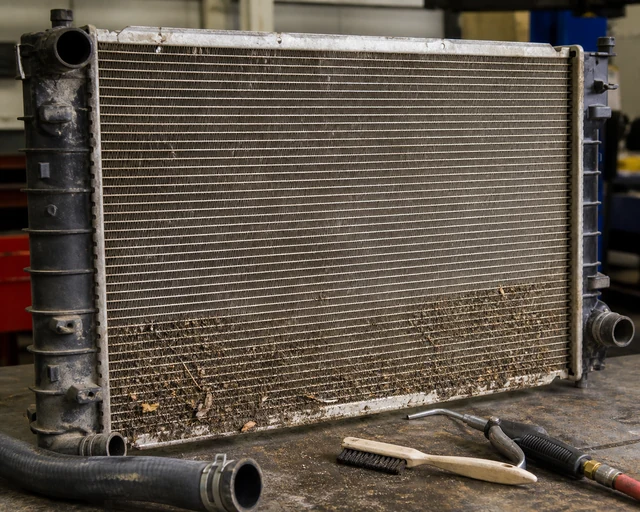
Common symptoms include coolant leak from the tank seam, cracked plastic tank, green or pink residue near the radiator, overheating under load, coolant smell, repeated low coolant level, damaged fins, restricted core, or poor cooling after contamination. On hard-working Toyota vehicles, the customer may report that temperature rises while towing, climbing, idling with A/C, or driving in high ambient heat.
Radiator replacement should follow diagnosis. A thermostat stuck closed, weak fan clutch, blocked condenser face, damaged water pump, air in the system, wrong radiator cap, or combustion-gas issue can create overheating that is not solved by a radiator alone. The radiator should be replaced when leakage, restriction, physical damage, or confirmed capacity loss points toward it.
Core Size and Cooling Capacity
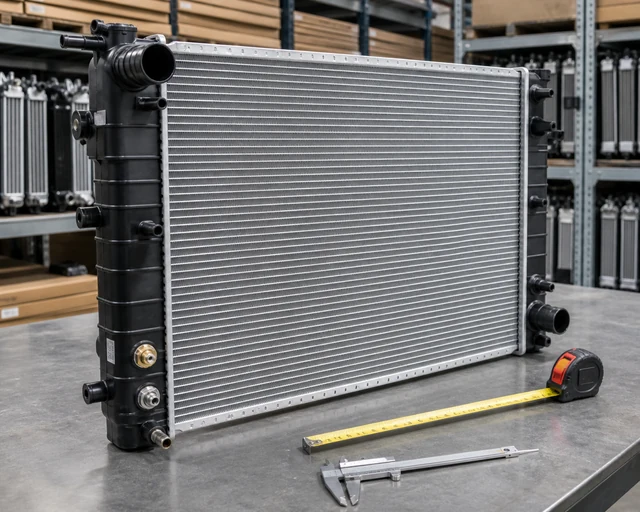
Core size is one of the most important matching details. Record core height, width, thickness, and overall dimensions. A radiator with a smaller core may fit the opening but reduce heat rejection. A thicker core may interfere with fan shroud or surrounding components if the vehicle was not designed for it. Fin density and tube design also affect cooling, but those details must be compared carefully because visible thickness alone does not guarantee better performance.
For hot-climate or heavy-duty use, buyers should be cautious about accepting a reduced-spec radiator. Hilux-type vehicles often operate in markets where ambient temperature, dust, load, and low-speed operation stress the cooling system. If the replacement radiator has less cooling area than the original, the vehicle may overheat under the exact conditions where reliability matters most.
Tank Layout and Hose Position
The top and bottom tank design must match the old radiator. Inlet and outlet direction, diameter, cap neck position, drain plug, overflow connection, lower pins, and side brackets all matter. A hose neck that points at a slightly different angle can create hose stress or contact with other parts. A cap neck that is too high or low can interfere with covers or service access.
Buyers should request photos of the old and new radiator from the same angles. If the supplier only provides a front view, ask for more. The side view often reveals differences that stop installation. For distributors, an image sheet for each Toyota radiator number helps sales teams prevent wrong orders before the customer opens the box.
Automatic Transmission Cooler Provision
Some radiators include transmission cooler fittings for automatic vehicles, while manual-transmission applications may not require them. Buyers must confirm whether 16400-0C140 replacement stock is intended for the correct transmission and market version. A radiator without required cooler fittings cannot replace a radiator that uses integrated transmission cooling.
If cooler fittings are present, inspect thread quality, plug protection, and sealing. Contamination or damaged fittings can create leaks after installation. If the vehicle has had transmission cooler problems, ensure lines are flushed or repaired as needed. The radiator is part of a system, and repeated leakage may come from lines or fittings rather than the radiator tank alone.
Hot-Climate Replacement Checks
Hot-climate vehicles need more careful radiator evaluation. A replacement should maintain cooling performance under long idle, high A/C load, towing, sand exposure, and slow-speed work. The radiator face, condenser face, fan shroud, fan clutch, coolant mixture, and thermostat must work together. If a new radiator is installed behind a blocked condenser or weak fan, temperature complaints may continue.
After installation, the repairer should verify fan operation, coolant bleeding, pressure cap function, and road-test behavior. A temperature problem that appears only under load should not be signed off after a short idle check. For fleets, record the operating condition that caused the failure so the replacement can be judged fairly.
Packaging and Freight Risk
Radiators can be damaged easily during shipping. Fins can crush, tanks can crack, brackets can bend, and necks can be stressed. Importers should inspect the first shipment's carton design, not only the radiator itself. Edge protection, foam supports, bagging, and strong outer cartons reduce claims. If the radiator is shipped into export or rough-handling markets, packaging quality becomes part of product quality.
Warehouse teams should not stack heavy parts on radiators or drag cartons by one corner. Similar Toyota radiator numbers should be labeled clearly with OE references, dimensions, and photos where possible. Picking errors are common when several large radiators look similar from the front.
Aftermarket Supplier Evaluation
A good supplier should provide OE cross-reference, application notes, physical dimensions, tank photos, pressure-test information, packaging photos, and warranty terms. For sample approval, compare the radiator to the old part or a known OE sample. Check core dimensions, bracket position, hose necks, drain, cap neck, transmission cooler fittings, and lower mounting pins.
For bulk orders, ask whether the supplier can maintain stable construction across shipments. A silent change in tank mould, bracket position, or core thickness can create fitment complaints. Keep approved sample photos in the purchasing file and compare future shipments against them.
Repair and Warranty Evidence
Radiator warranty claims should include leak location, pressure-test result, installation photos, coolant type, cap condition, fan or fan clutch operation, and whether the vehicle overheated before replacement. If a radiator leaks at a tank seam, photos and pressure-test data help confirm product failure. If the vehicle overheats but the radiator does not leak, the claim needs system diagnosis.
For distributors, separating leak claims from overheating claims is important. A leaking tank may be a product or handling issue. Overheating may involve radiator restriction, airflow, thermostat, water pump, air bleeding, or engine condition. Good evidence prevents unnecessary product returns and helps improve the product line.
Procurement Checklist
Confirm OE number 16400-0C140 and any valid cross-reference.
Confirm Toyota model, engine, year, transmission, and market specification.
Measure core height, width, thickness, and overall dimensions.
Compare top tank, bottom tank, cap neck, drain, brackets, and lower pins.
Check transmission cooler fittings where applicable.
Inspect packaging for fin, tank, neck, and bracket protection.
Require pressure-test and installation evidence for claims.
Verify fan clutch, fan shroud, thermostat, cap, and condenser/radiator stack cleanliness after installation.
Decision Table for 16400-0C140 Replacement
Vehicle Condition
Radiator Decision
Extra Check
Tank seam leak with correct temperature behavior
Radiator replacement likely
Pressure-test and inspect cap
Overheats while towing or climbing
Radiator may be restricted or underperforming
Fan clutch, thermostat, coolant mixture, condenser blockage
Runs hot only at idle with A/C on
Airflow issue may be stronger than radiator issue
Fan clutch, shroud seal, condenser face
Coolant disappears with no external leak
Do not blame radiator first
Pressure test and combustion-gas checks if needed
New radiator does not fit hoses
Likely wrong tank or neck layout
Compare old-part photos and dimensions
This table helps purchasing and repair teams decide whether 16400-0C140 is the right direction. A radiator part number should not be used as a shortcut around diagnosis. If the old radiator leaks, is restricted, or is physically damaged, replacement is logical. If the complaint is only temperature rise, airflow and coolant circulation must be checked first.
How to Measure the Old Radiator
Measure the core, not only the overall radiator. Core height and width usually exclude the tanks. Overall height and width include tanks, brackets, and necks. Thickness should be measured at the core, then checked against fan shroud clearance. A buyer should photograph the tape measure on the core so the supplier can see exactly how the measurement was taken.
Also measure inlet and outlet diameter. Hose necks that differ by a small amount may appear usable but can create leaks, hose stress, or clamp problems. Record the angle of each neck and whether the cap neck sits on the radiator or another part of the system. If lower mounting pins are used, measure spacing and pin diameter. These details matter more than a generic vehicle title.
Hot-Climate Field Examples
Example one: a Hilux used for construction delivery overheats while idling with A/C. The radiator is replaced, but the complaint remains. Inspection shows a weak fan clutch and debris between the condenser and radiator. The radiator was not the main cause. A supplier that asks about airflow can prevent this type of unnecessary claim.
Example two: a vehicle used for towing has a plastic tank seam leak and dried coolant at the radiator side. A pressure test confirms leakage at the tank. Replacement is justified, but the buyer should choose a radiator that matches the original core size and tank layout. A reduced-spec replacement may fit but perform poorly during towing.
Example three: an importer receives several radiators with bent brackets. The parts are not defective in cooling function, but packaging is inadequate. The supplier adds corner protection and inner supports for the next shipment. Claim rate drops. This shows why packaging review belongs in radiator sourcing, especially for export markets.
Manual and Automatic Variants
Transmission configuration can affect radiator selection. Some automatic vehicles use radiator-mounted transmission cooler fittings, while manual vehicles may not. If a buyer orders a radiator without the required fittings, the installation cannot be completed. If a radiator includes unused fittings for an application that does not need them, the buyer should confirm whether plugs are supplied and whether the part is approved for that use.
Do not assume the transmission from a model name. Ask for VIN, old-part photos, and fitting photos. In markets with imported used vehicles, specification differences are common. A supplier that understands these variations can help the buyer avoid stocking one version and discovering too late that local vehicles need another.
How to Judge Aftermarket Quality
Radiator quality can be judged by tube and fin consistency, tank molding, bracket strength, neck finish, drain plug fit, pressure-test results, and packaging. Fins should not be crushed before installation. Neck surfaces should be smooth. Brackets should be aligned without forcing. Tanks should not show thin or uneven areas around stress points.
Ask whether every radiator is pressure-tested or whether batch testing is used. Ask how the supplier handles leak claims and freight damage. For private-label orders, request consistent labels and carton markings. A good radiator supplier gives the buyer enough information to sell confidently and handle claims fairly.
What to Record After Installation
After installation, record coolant type, bleed procedure, cap condition, fan operation, thermostat behavior, and road-test result. For vehicles that work in heat or load, a short idle check may not be enough. The technician should confirm that temperature remains stable under conditions similar to the original complaint.
This record is useful for fleets and distributors. If the vehicle returns, the team can compare before-and-after data instead of guessing. If many vehicles with the same radiator number show the same complaint, the buyer can review whether the radiator specification, application choice, or surrounding system checks need improvement.
Quotation Fields for Importers
A proper quotation should include OE cross-reference, core size, overall size, inlet and outlet diameter, tank material, transmission cooler fitting status, cap neck position, drain position, mounting details, pressure-test standard, packaging photos, carton quantity, and lead time. If the supplier only quotes a part title and price, the buyer does not have enough information for bulk approval.
For repeat programs, ask the supplier to keep the approved construction stable. If material, mould, bracket, or packaging changes, the buyer should be notified before shipment. Radiator programs become profitable when the same part number keeps fitting correctly across orders.
Distributor Stocking Strategy for Toyota Radiators
Toyota radiator demand can be steady in markets where Hilux, Fortuner, Hiace, Land Cruiser, and related commercial vehicles are common. But the range should be organized by application and physical specification. Do not place several Toyota radiators with similar front appearance in the same stock group without dimensions and photo labels. Staff should be able to confirm the part by OE number, core size, tank layout, and transmission fitting status before the customer opens the carton.
Fast-moving numbers can justify deeper stock if fitment data is stable and packaging damage is low. Slower or specification-sensitive numbers should be confirmed by photo before shipment. For export buyers, ask destination-market questions because vehicles in the Gulf, Africa, Australia, Southeast Asia, and Latin America may not share the same cooling package even when the Toyota model name is familiar.
Warranty Evidence for 16400-0C140 Claims
A radiator leak claim should show where the leak occurs: tank seam, core, drain, neck, fitting, or physical damage point. A pressure-test result helps separate product leakage from installation or handling damage. If the claim is overheating without leakage, ask for fan clutch operation, thermostat behavior, coolant bleed confirmation, cap pressure, and cooling-stack cleanliness.
Freight damage should be recorded separately from product defect. Bent brackets, crushed fins, broken necks, and cracked corners often point toward packaging or handling. If these issues appear repeatedly, the solution may be stronger cartons rather than changing the radiator design. Good warranty classification helps the buyer improve the program instead of arguing over each individual claim.
Final Recommendation
Toyota 16400-0C140 radiator replacement should be confirmed by OE number, physical dimensions, tank layout, mounting points, transmission cooler provision, and hot-climate operating needs. Symptoms such as leaks, overheating, coolant loss, and restricted cooling may point toward radiator replacement, but related cooling-system faults should be checked before the radiator is blamed.
When requesting a quotation, send the OE number, vehicle model, engine, transmission, market specification, old radiator photos, core measurements, tank and bracket details, and packaging requirements. Elecdura can help buyers match Toyota radiators and related cooling parts so the replacement fits correctly and performs under the conditions where Hilux-type vehicles are actually used.