English
Views: 0 Author: Site Editor Publish Time: 2026-08-03 Origin: Site
A melted blower motor resistor connector is usually not a random plastic failure. It is a heat problem caused by too much current, too much resistance at the terminal, poor connector tension, corrosion, an aging blower motor, incorrect parts, or a combination of these issues. Replacing only the resistor may make the fan work again for a short time, but if the connector, harness, and blower motor current draw are not checked, the new resistor can overheat again and the customer will see the same failure return.
For distributors and repair networks, this failure deserves a different sourcing approach from a normal blower resistor replacement. The buyer should not ask only for the resistor part number. The safer question is: should the order include the blower motor resistor, the connector pigtail, and the blower motor assembly together? That decision depends on how badly the connector is burned, whether the terminals lost tension, whether the motor draws excessive current, and whether the resistor design requires good airflow to stay cool.
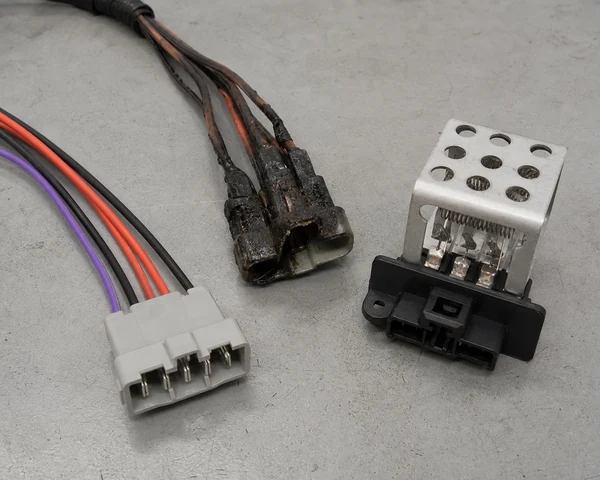
A melted blower resistor connector is evidence of heat at the electrical interface, not only a damaged plastic shell.
The connector melts because heat is generated faster than the plastic housing can tolerate. In a blower circuit, heat can come from two places. The first is normal resistor heat. Traditional resistor packs control lower fan speeds by dropping voltage through resistive elements. They are designed to run hot and must sit in the HVAC air stream so moving air can cool them. The second source is abnormal electrical heat at the connector or wiring. That heat is created when current flows through a poor contact, undersized wire, loose terminal, corroded pin, damaged crimp, or overloaded circuit.
When the plastic plug is blackened, distorted, or brittle around one terminal, the failure often points to a local high-resistance connection. The blower motor may still run, but the terminal area becomes a heater. If several terminals are burned, the failure may involve high current draw, a failing motor, repeated overload, or a resistor design that is not being cooled properly. If the harness has hardened insulation near the plug, the damage may extend beyond the visible connector body.
For wholesale buyers, this is important because a resistor-only sale can become a repeat claim. The repair shop installs a new resistor into a burned connector. The terminal no longer grips tightly. Contact resistance remains high. Heat returns, the plastic melts again, and the shop blames the new part. In reality, the installation reused a damaged electrical interface.
Repeat failure usually happens because the visible failed part was not the only failed part. A blower resistor is part of a circuit, not an isolated component. The circuit includes the battery feed, fuse, relay, HVAC control, resistor or regulator, connector terminals, ground path, blower motor, and air duct. A problem anywhere in that circuit can push heat back into the connector or resistor.
The most common repeat-failure pattern is a failing blower motor that draws more current than the circuit was designed to carry. As motor bearings wear, brush contact degrades, debris enters the blower wheel, or the fan cage rubs, the motor can require more current to spin. That extra current passes through the resistor and connector. The system may still operate, but the terminals run hotter every time the fan is used. The customer may notice intermittent fan speeds, a burning smell, a fan that works only on high, or a resistor plug that melts again soon after replacement.
The second repeat-failure pattern is poor terminal contact. A connector can look usable from the outside but have weak spring tension inside. Once a terminal overheats, it can lose its clamping force. A loose terminal creates more resistance, resistance creates more heat, and heat weakens the terminal further. This cycle can destroy the new resistor even if the resistor itself is correct.
The third pattern is airflow loss. Many resistor packs are cooled by the blower air stream. If the cabin filter is blocked, the duct is clogged, the blower wheel is dirty, or the resistor is not seated correctly in the air duct, heat may not leave the resistor body. This can accelerate connector and resistor damage, especially on lower fan speeds where resistor elements carry more heat.
Not every speed-control part is the same. Older systems commonly use a resistor pack with coils or resistive elements. Many newer systems use an electronic blower motor regulator or control module. Both may be casually called a blower resistor, but their failure modes and matching requirements can differ. A traditional resistor pack often fails with burned coils, open circuits, or melted connectors. An electronic regulator may fail because of transistor heat, module electronics, poor ground, motor overload, or water intrusion.
Before ordering, buyers should identify whether the original part is a simple resistor, a resistor-and-regulator assembly, or an electronic control module. The blower motor resistor and regulator category includes different designs, so photos are useful. A part with a heat sink, circuit board, or more complex connector may not be interchangeable with a coil-style resistor pack even if the application name sounds similar.
Part Type | Typical System | Common Failure Signs | Buying Risk |
|---|---|---|---|
Coil resistor pack | Manual fan-speed control with stepped speeds | Fan works only on high, open resistor circuit, melted plug | Ignoring connector pigtail or blower motor current draw |
Thermal-fuse resistor pack | Manual HVAC systems with thermal protection | No lower speeds, thermal fuse open, heat discoloration | Replacing the resistor without checking airflow through duct |
Electronic blower regulator | Automatic climate control or variable-speed blower | Intermittent fan, no fan, fan stuck high or low | Matching the wrong module family or connector pinout |
Connector pigtail | Repair of burned terminal or melted plug | Loose terminal, blackened plastic, hardened wire insulation | Selling resistor only when connector damage is already present |
If the connector body is melted, warped, blackened, or brittle, replacement is usually the safer decision. Even if the plug still snaps into the resistor, the terminal inside may no longer hold correct tension. A loose terminal can cause heat at the exact same point again. The wire insulation near the plug should also be checked. If it feels hard, cracked, or discolored, the heat traveled into the harness and the repair should include a pigtail section rather than only the plastic shell.
For repair chains, a practical rule is to replace the connector when any terminal shows discoloration, loss of tension, melted plastic, or evidence of arcing. For distributors, it often makes sense to offer resistor-and-pigtail combinations for applications known to burn connectors. That reduces returns because the shop receives the parts needed to repair the electrical interface instead of reusing the old damaged plug.
The pigtail must still be matched correctly. Confirm wire gauge, terminal count, connector shape, lock tab position, seal type, and wire length. A connector with thinner wire than the original harness can create a new heat problem. A universal connector repair may be acceptable for some markets, but high-volume distributors should prefer application-matched pigtails whenever possible.
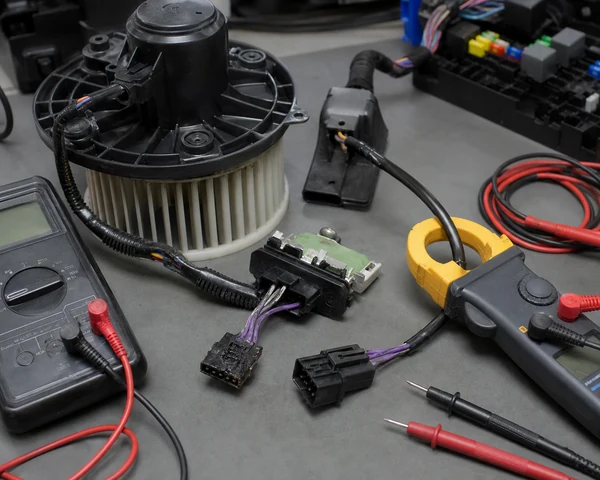
A blower motor that draws too much current can overheat the resistor and connector even when both replacement parts are new. The test method depends on the vehicle and shop equipment, but the concept is straightforward: compare blower motor current draw to the expected range for that application. The motor should be tested at high speed and at lower speeds where the resistor is active. The fan wheel should spin freely, and there should be no rubbing, debris, or bearing noise.
If current draw is high, replacing only the resistor is a temporary repair. The motor may continue to overload the circuit. If the motor is noisy, slow to start, intermittent, water-damaged, or full of debris, the order should include a blower motor assembly. In many real repairs, the correct package is resistor, connector pigtail, and blower motor. That package costs more than a resistor alone, but it reduces comeback risk.
Current draw, terminal condition, and airflow should be checked before treating a melted connector as a resistor-only repair.
Many blower resistor packs are mounted in the HVAC duct because they need airflow for cooling. If the resistor is not installed fully into the duct, if the mounting gasket leaves a gap, or if the blower airflow is weak, the resistor can overheat. A clogged cabin filter, blocked evaporator surface, dirty blower wheel, or restricted intake can reduce cooling airflow across the resistor.
This is one reason a resistor can fail on lower speeds while the fan still works on high. On high speed, many systems bypass part of the resistor circuit. On lower speeds, the resistor elements carry the heat load. If airflow is weak, the resistor area becomes hotter. If the connector is already loose or corroded, the combined heat can damage the plug quickly.
For B2B content, this detail matters because it changes the customer conversation. A buyer may think the resistor failed because the part quality was poor, but the shop may have installed it into a system with poor blower airflow. Distributors should include installation notes for known high-failure applications: inspect the blower wheel, cabin filter, water leaks, duct blockage, and connector condition before claiming the replacement part is faulty.
A resistor-only quote is reasonable when the connector is clean, the blower motor current draw is normal, the resistor failed open, and there is no evidence of heat damage in the harness. A resistor-and-connector quote is better when the plug is discolored, loose, cracked, melted, or heat-hardened. A resistor-connector-motor quote is the safest when the blower motor is noisy, slow, intermittent, drawing high current, water damaged, or has high mileage in a fleet application.
For importers and wholesalers, the kit decision should be based on return history. If a certain application repeatedly returns burned resistors, the market may need a pigtail with the resistor. If the resistor returns continue even after pigtails are sold, the blower motor may be the driver. Tracking claims by application, connector condition, and customer notes helps define the right stock mix.
Observed Condition | Likely Risk | Recommended Parts to Quote |
|---|---|---|
Fan only works on high, connector clean | Open resistor circuit or thermal fuse | Resistor or regulator, with airflow check |
Connector blackened at one terminal | High resistance at loose or corroded terminal | Resistor plus connector pigtail |
Connector melted across several terminals | High current draw, poor contact, or repeated overload | Resistor, connector pigtail, and motor current test |
New resistor fails again quickly | Root cause not corrected | Resistor, pigtail, blower motor, and airflow inspection |
Blower noisy or slow to start | Motor bearing or brush wear causing high load | Blower motor assembly plus resistor and connector check |
The first mistake is buying only by vehicle model. Many platforms use different HVAC systems, manual or automatic climate control, front or rear blower options, and different connector styles. The old part photo and connector photo are more reliable than the model name alone.
The second mistake is ignoring pigtails. A melted connector is often no longer a good connector. A new resistor installed into that plug may fail again. If the market has known connector-melting issues, a pigtail option should be part of the product program.
The third mistake is treating every speed-control part as a resistor. Some parts are electronic regulators. They may require different testing and matching. A wrong regulator can cause no operation, unstable speed control, or overheating.
The fourth mistake is accepting every return as a part defect. A melted connector, high motor current, water leak, blocked duct, or poor ground can destroy a correct resistor. Better return analysis protects both the supplier and the distributor.
When a customer returns a burned blower resistor, the returned part should be treated as evidence. The first useful question is where the heat is concentrated. If only one connector corner is blackened, the likely problem is terminal contact, weak spring tension, corrosion, or an overheated crimp. If the resistor board or coil area is burned but the connector is clean, airflow or resistor overload may be more likely. If both the resistor body and connector are burned, the shop should check motor current, duct airflow, and harness condition before installing another part.
Distributors can reduce repeated claims by asking for three photos with every warranty request: the resistor, the connector, and the blower motor area. A photo of the vehicle-side plug is especially valuable because it shows whether the customer reused a damaged connector. If the plug is visibly melted and the customer replaced only the resistor, the claim should not be treated the same as a clean electrical failure. The repair did not restore the circuit interface.
For high-volume programs, classify returns by cause instead of counting every return as one bucket. Use categories such as connector melted, resistor open, regulator electronics failed, wrong connector, wrong mounting shape, water damage, high motor current suspected, and no fault found. This gives the buyer a clearer stocking decision. If many returns include melted connectors, add pigtails. If many returns include noisy or slow motors, add blower motor assemblies. If many returns are wrong-connector cases, improve application notes and product photos.
Passenger car blower resistor failures often appear in compact HVAC boxes with cabin-filter restrictions, water leaks, and high usage in city driving. The connector may be small, and access may be tight. In these applications, connector shape and mounting depth are critical because a resistor that does not seat fully in the duct can overheat or allow an air leak.
Heavy-duty trucks and commercial vehicles can create a different problem. Cab HVAC systems may run for long periods at high fan speeds. Dust, vibration, and harness movement can weaken terminals. Some trucks also have sleeper HVAC circuits or multiple blower configurations. A buyer sourcing for Freightliner, International, Kenworth, Peterbilt, or similar truck applications should check whether the resistor is for main cab HVAC, auxiliary HVAC, or a specific module family.
Agricultural and off-highway equipment adds dust, moisture, and vibration. Tractors, loaders, excavators, and harvesters may use cab HVAC systems in harsh environments, where debris can reduce airflow and connectors can corrode. For these markets, robust packaging, connector quality, and application notes matter as much as the resistor element. A cheap resistor without the correct terminal fit may survive a bench test but fail quickly in a vibrating cab.
A good blower resistor program should not be organized only by price. It should be organized by application risk. Fast-moving passenger vehicle resistors may need strong photo-based identification because repair shops order by connector shape. Truck and agricultural resistors may need application notes that separate main HVAC, auxiliary HVAC, and cab variants. Known connector-burn applications should have pigtails available. High-mileage fleet applications should have matching blower motors in the same purchasing plan.
For warehouse teams, separate visual families clearly. Resistor packs, electronic regulators, and pigtails should not be stored under vague labels. The product label should show OE number, application family, connector count, and whether the item is resistor-only or resistor-with-pigtail. This prevents a counter team from shipping a resistor-only item to a customer who already reported a melted plug.
For importers, the sampling stage should include connector-fit review, terminal inspection, mounting fit, and package drop protection. Resistor terminals can bend during shipping if the part is loose in the box. If a terminal is bent or pushed back, contact pressure may be poor after installation. A low-cost packaging mistake can become an electrical heat complaint later.
For reliable matching, send the OE number or supplier number, front and rear photos of the resistor, connector close-up, terminal view, vehicle model, HVAC type, and notes on whether the plug is melted. If the request involves repeat failures, include blower motor condition and any current-draw information. For heavy-duty or agricultural applications, include cab model and harness photos because equipment variants can differ from passenger vehicles.
Packaging should also be planned around the failure mode. A resistor with delicate terminals should be protected from bending. A pigtail kit should include clear labels and enough wire length for repair. For distributors, separate labels for resistor-only and resistor-with-pigtail items can prevent warehouse mistakes.
A reliable blower resistor program should connect the part number with the failure evidence. For a clean sourcing request, send the original resistor photos, connector condition, OE number, application, and expected monthly demand. If your customers report melted connectors or repeat resistor failures, the supplier should help review whether the product program should include connector pigtails and blower motors rather than a resistor-only offer.
The goal is not only to make the fan work after installation. The goal is to prevent the same heat problem from coming back. A better order starts with the circuit: resistor or regulator type, connector condition, motor current, airflow, harness quality, and application match. When those details are checked before ordering, distributors reduce returns, repair networks save labor, and customers receive a more reliable HVAC repair. Elecdura can review resistor photos, pigtail evidence, blower motor condition, and demand estimates when importers or distributors need a matched HVAC speed-control sourcing plan.